

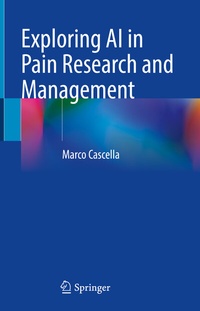
Exploring AI in Pain Research and Management
Description

The book presents a unique and structured interdisciplinary approach, integrating insights from medicine, computer science, bioengineering, and other relevant fields. Due to this distinctive feature, the book offers a comprehensive exploration of the intricate relationship between potential AI applications and pain research and management. For example, one of its key aims is to provide valuable knowledge about AI for clinicians who may have limited familiarity with the subject, as well as for professionals in computer science and engineering. This approach is aimed at bridging the existing gap between these fields, offering clinicians insights into AI's potential applications, and providing computer scientists and engineers with a translational perspective on the practical needs in the clinical context. As widely demonstrated, the practical application of research faces a serious obstacle related to the limited communication and collaboration between research areas that are often very distant from each other. Therefore, this dual perspective could be useful to collocate the book as a valuable tool for fostering collaboration and understanding between these traditionally distinct domains.
Furthermore, the structured framework of the book could not only facilitate learning but also serve as a foundation for future projects in the realm of AI and medicine. Specifically, it will be developed by following a framework useful for additional editorial projects, focusing more acutely on AI applications in anesthesia and critical care. By doing so, the book aims to contribute to the ongoing discourse and advancements in these specialized areas, filling a gap in the current literature. Therefore, the book seeks to make a meaningful contribution to the integration of AI in pain medicine, but also in other medical fields.
More details
Other editions
Additional editions
Person
Marco Cascella, MD, PhD, is an Associate Professor of Anesthesia, Intensive Care, and Pain Medicine at the University of Salerno. He graduated with honors in Medicine and Surgery in 1997 from the University "Vanvitelli" of Naples and later pursued postgraduate studies in anesthesia and intensive care in 2001. Prof. Cascella obtained his PhD in IT for Health from the University of Naples Federico II, further strengthening his expertise in the intersection of healthcare and technology. He is actively engaged in research, with a particular focus on automatic pain assessment using AI techniques. He serves as an editorial board member for several medical journals and has delivered presentations at numerous conferences and conventions. With an extensive academic background, he has authored approximately 200 scientific publications, books, and chapters covering various domains, including anesthesia, pathophysiology, pain treatment, oncology, and palliative care. Prof. Cascella is a leader and actively participates in different research projects, showcasing his commitment to advancing medical knowledge and technology.
Content
Introduction.- Basic Knowledge of AI for Clinicians.- Research in Automatic Pain Assessment.- Clinical Applications of AI in Pain Medicine.- Suggestions for APA Research and Translational Perspective.
