

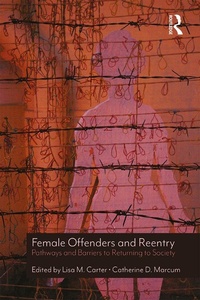
Female Offenders and Reentry
Pathways and Barriers to Returning to Society
1st Edition
Published on 20. July 2017
350 pages
978-1-351-65119-6 (ISBN)
Description

Often, research concerning the female offender is scarce. This book adds to the criminological literature on the topic of reentry for women, focusing on the barriers women face as they return to society and adjust to life after incarceration. Each chapter addresses specific issues, challenges, and obstacles affiliated with the hindrance of successful reentry processes associated with female offenders, as well as data-driven empirical studies.
While corrections has often misunderstood or overlooked the needs of returning offenders, the shortcomings of the institutions have a greater impact on women than on their male counterparts, particularly regarding the occurrence of social and medical problems, especially those related to mental health and substance abuse. Female Offenders and Reentry helps criminal justice students and practitioners see the full picture when considering the challenges faced by female offenders reintegrating into society.
While corrections has often misunderstood or overlooked the needs of returning offenders, the shortcomings of the institutions have a greater impact on women than on their male counterparts, particularly regarding the occurrence of social and medical problems, especially those related to mental health and substance abuse. Female Offenders and Reentry helps criminal justice students and practitioners see the full picture when considering the challenges faced by female offenders reintegrating into society.
Reviews / Votes
Finally-a comprehensive text that covers all aspects of the challenges faced by female offenders in their reentry journeys. Featuring evidence-based research, current demographic and trend data, policy and best practices analyses, and in-depth case studies, this monograph provides insightful examinations of critical gender barriers to societal reintegration-transportation, housing, employment, issues of chronic illness and reproductive health, mental health and substance abuse disorders, and child reunification.-Rosemary Gido, Indiana University of Pennsylvania
The editors have put together a well-balanced collection of chapters that discuss in depth the multiple problems female ex-offenders face when returning to their communities. This text provides an excellent forum for discussion on the topic of female offenders and reentry that will leave students as well as policy makers and educators thinking about how they can effect change. -Danielle McDonald, Northern Kentucky University
In Female Offenders and Reentry, Carter and Marcum have expertly conveyed the challenges facing women as they work towards reestablishing a life outside of prison. This compelling and comprehensive text is essential to understanding the contemporary female reentry experience. -Ashley G. Blackburn, University of Houston-Downtown
More details
Edition
1. Auflage
Language
English
Place of publication
London
United Kingdom
Publishing group
Taylor & Francis Ltd
Target group
College/higher education
Product notice
Reflowable
Illustrations
12 Tables, black and white
File size
2,29 MB
ISBN-13
978-1-351-65119-6 (9781351651196)
Copyright in bibliographic data and cover images is held by Nielsen Book Services Limited or by the publishers or by their respective licensors: all rights reserved.
Schweitzer Classification
Other editions
Additional editions

Lisa M. Carter | Catherine D. Marcum
Female Offenders and Reentry
Pathways and Barriers to Returning to Society
Book
10/2019
1st Edition
Routledge
€66.10
Shipment within 15-20 days

Lisa M. Carter | Catherine D. Marcum
Female Offenders and Reentry
Pathways and Barriers to Returning to Society
Book
07/2017
1st Edition
Routledge
€175.50
Shipment within 15-20 days
Persons
Dr. Lisa M. Carter is an assistant professor in the Criminology Department at Florida Southern College. She also teaches courses for the Women and Gender Studies program. She earned her B.A. in Sociology with a specialization in Deviant Behavior from the University of Kentucky, and her M.S. in Corrections and Juvenile Justice Studies from Eastern Kentucky University. She completed her Ph.D. in Criminology at Indiana University of Pennsylvania. Her research interests include topics pertaining to female criminality, reintegration, and the death penalty.
Dr. Catherine D. Marcum is an associate professor of Justice Studies at Appalachian State University. Her areas of expertise include cybercrime offending and victimization, correctional issues, and sexual victimization, and she has multiple journal publications and books in the areas. She recently received 2015 Outstanding Criminal Justice Educator of the Year in the southern region, and is the editor of Corrections: Policy, Practice and Research for 2018-2021.
Dr. Catherine D. Marcum is an associate professor of Justice Studies at Appalachian State University. Her areas of expertise include cybercrime offending and victimization, correctional issues, and sexual victimization, and she has multiple journal publications and books in the areas. She recently received 2015 Outstanding Criminal Justice Educator of the Year in the southern region, and is the editor of Corrections: Policy, Practice and Research for 2018-2021.
Content
Chapter 1: Introduction
Catherine D. Marcum and Lisa M. Carter
Chapter 2: Transportation Issues
Miriam Northcutt Bohmert
Chapter 3: Physical Health Needs and Treatment for Female Offenders Returning to Society
Valerie R. Anderson and Shabnam Javdani
Chapter 4: Mental Health Needs and Treatment
Kyle C. Ward and Mary K. Evans
Case Study 4A: Female Offenders, Mental Illness, and Recidivism: An Examination of Mental Illness and Substance Use Disorders Among a Sample of Female Parolees Released to the City of Philadelphia
Kimberly Houser and Eric S. McCord
Chapter 5: Women With Substance Use Disorders Reentering the Community
Wendy P. Guastaferro and Laura Lutgen
Case Study 5A: Women Offenders and Drug Courts: Does Gender Matter?
Kimberly Houser and Christine Saum
Chapter 6: Reproductive Health Needs and Treatment
Jennifer Mooney and Aalap Bommaraju
Chapter 7: Educational and Vocational Attainment During Reintegration
Linda Keena and Ashley Hluska
Chapter 8: Having to Check Yes: The Stigma of a Criminal Record and Other Challenges to Obtaining Meaningful Employment for Released Female Offenders
Kerry Richmond
Chapter 9: Centering Women's Reentry With Safe, Secure, and Affordable Housing
Faith Lutze and Jenny Lau
Chapter 10: Reunification With Family and Children During the Reentry Process
Suzanne M. Godboldt
Chapter 11: Female Sex Offenders and Reintegration
Jennifer Klein and Danielle Cooper
Chapter 12: Making It on the Outside: Reintegration Challenges of Girls and Women of Color
Vera Lopez and Lisa Pasko
Chapter 13: Wrongful Convictions
Kaitlyn Clarke and Philip D. McCormack
Chapter 14: Future Directions/Best Practices
Lindsey Vigesaa
Case Study 14A: Desistance from Crime During Reintegration
Kecia R. Johnson and Dave C. May
Catherine D. Marcum and Lisa M. Carter
Chapter 2: Transportation Issues
Miriam Northcutt Bohmert
Chapter 3: Physical Health Needs and Treatment for Female Offenders Returning to Society
Valerie R. Anderson and Shabnam Javdani
Chapter 4: Mental Health Needs and Treatment
Kyle C. Ward and Mary K. Evans
Case Study 4A: Female Offenders, Mental Illness, and Recidivism: An Examination of Mental Illness and Substance Use Disorders Among a Sample of Female Parolees Released to the City of Philadelphia
Kimberly Houser and Eric S. McCord
Chapter 5: Women With Substance Use Disorders Reentering the Community
Wendy P. Guastaferro and Laura Lutgen
Case Study 5A: Women Offenders and Drug Courts: Does Gender Matter?
Kimberly Houser and Christine Saum
Chapter 6: Reproductive Health Needs and Treatment
Jennifer Mooney and Aalap Bommaraju
Chapter 7: Educational and Vocational Attainment During Reintegration
Linda Keena and Ashley Hluska
Chapter 8: Having to Check Yes: The Stigma of a Criminal Record and Other Challenges to Obtaining Meaningful Employment for Released Female Offenders
Kerry Richmond
Chapter 9: Centering Women's Reentry With Safe, Secure, and Affordable Housing
Faith Lutze and Jenny Lau
Chapter 10: Reunification With Family and Children During the Reentry Process
Suzanne M. Godboldt
Chapter 11: Female Sex Offenders and Reintegration
Jennifer Klein and Danielle Cooper
Chapter 12: Making It on the Outside: Reintegration Challenges of Girls and Women of Color
Vera Lopez and Lisa Pasko
Chapter 13: Wrongful Convictions
Kaitlyn Clarke and Philip D. McCormack
Chapter 14: Future Directions/Best Practices
Lindsey Vigesaa
Case Study 14A: Desistance from Crime During Reintegration
Kecia R. Johnson and Dave C. May
