

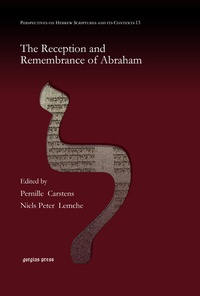
The Reception and Remembrance of Abraham
Reception and Remembrance of Abraham
Published on 15. April 2019
160 pages
978-1-4632-2169-0 (ISBN)
Description

This book explores the role of the biblical patriarch Abraham in the formation and use of authoritative texts in the Persian and Hellenistic periods. It reflects a conference session in 2009 focusing on Abraham as a figure of cultural memory in the literature of these periods. Cultural memory is the shared reproduction and recalling of what has been learned and retained. It also involves transformation and innovation. As a figure of memory, stories of Abraham served as guidelines for identity-formation and authoritative illustration of behaviour for the emerging Jewish communities.
More details
Edition
Digital original
Language
English
Place of publication
Piscataway, NJ
United States
Target group
Professional and scholarly
US School Grade: College Graduate Student
Edition type
Digital original
File size
3,26 MB
ISBN-13
978-1-4632-2169-0 (9781463221690)
Copyright in bibliographic data and cover images is held by Nielsen Book Services Limited or by the publishers or by their respective licensors: all rights reserved.
Schweitzer Classification
Persons
Content
- Table of Contents (page 5)
- Acknowledgements (page 7)
- Abbreviations (page 9)
- List of Contributors (page 11)
- Introduction (page 13)
- From Moses to Abraham: Jewish Identities in the Second Temple Period (page 17)
- Cultural Memory in Biblical Studies (page 17)
- Who Does Abraham Represent? (page 19)
- Why Remember Abraham? Memories in Conflict (page 24)
- Bibliography (page 27)
- The Memory of Abraham in Late Persian/Early Hellenistic Period Yehud (page 29)
- Introduction (page 29)
- The Triad ?Abraham, Isaac and Jacob' and Related Matters (page 34)
- Memories of a Token of Possession/Landmarks and Their Meanings Within the General Discourse of the Community (page 47)
- Abraham and the Nations in the Land: Practical Accommodations and Future Replacement (page 50)
- Divine Choice, Obedience and Test (page 54)
- Obedience and ?Torah' (page 58)
- Circumcision (page 60)
- Individual and Collective Punishment? (page 61)
- Abraham, Exile and Return (Mesopotamia, Egypt) (page 63)
- Remembering the Aram Connection (page 67)
- Tensions, Minority Reports and Preferences and Dis-preferences (page 68)
- Preferences and Dis-preferences: The Case of a Substantial Omission (page 73)
- In Sum (page 76)
- Remembering Abraham in Pseudo-Philo's Liber Antiquitatum Biblicarum (page 77)
- 1. Abraham in Pseudo-Philo (page 79)
- 2. The Historical Background of Pseudo-Philo's Abraham Narrative (page 82)
- 3. Conclusion: Remembering Abraham in Pseudophilo (page 84)
- Bibliography (page 86)
- Abraham in the Patriarchal Texts of the Book of Genesis and the Reception of this Tradition in the Book of Isaiah (page 93)
- I. Proto-Isaiah (page 97)
- II. Deutero-Isaiah (Isa. 40.55) (page 98)
- III. ?Trito-Isaiah' (Isaiah 1 and 56-66) (page 99)
- Bibliography (page 100)
- Abraham and the ?Law and the Prophets' (page 103)
- Introduction: The Patriarchs and the Exodus (page 103)
- Reversal of the Exodus Ideology in Gen. 12:10.20 and Genesis 16 (page 106)
- Genesis 15 in the Context of the Redaction of the Pentateuch (page 107)
- The Formation of Genesis 15 (page 108)
- Genesis 15 as Summary of the Torah (page 111)
- Abraham, the First King (page 113)
- Abraham, the First Prophet (page 114)
- Abraham, the ?First Moses' (page 115)
- Conclusion (page 117)
- Memories of Return and the Historicity of the ?Post-Exilic' Period (page 119)
- Cultural Memory and Intertextual Discourse (page 119)
- Genesis 2-5 and the Land (page 122)
- The Destruction of the Innocent and the Irascible Divine (page 123)
- Shall Not the Judge of All the Earth be Just? (page 127)
- The Fire Next Time (page 130)
- An Allegory of Exile and Return (page 131)
- Memories of Return and Abraham's Wandering (page 135)
- On the Historicity of the ?Post-Exilic' Period (page 143)
- Index of Authors (page 147)
- Index of Biblical References (page 151)
- Acknowledgements (page 7)
- Abbreviations (page 9)
- List of Contributors (page 11)
- Introduction (page 13)
- From Moses to Abraham: Jewish Identities in the Second Temple Period (page 17)
- Cultural Memory in Biblical Studies (page 17)
- Who Does Abraham Represent? (page 19)
- Why Remember Abraham? Memories in Conflict (page 24)
- Bibliography (page 27)
- The Memory of Abraham in Late Persian/Early Hellenistic Period Yehud (page 29)
- Introduction (page 29)
- The Triad ?Abraham, Isaac and Jacob' and Related Matters (page 34)
- Memories of a Token of Possession/Landmarks and Their Meanings Within the General Discourse of the Community (page 47)
- Abraham and the Nations in the Land: Practical Accommodations and Future Replacement (page 50)
- Divine Choice, Obedience and Test (page 54)
- Obedience and ?Torah' (page 58)
- Circumcision (page 60)
- Individual and Collective Punishment? (page 61)
- Abraham, Exile and Return (Mesopotamia, Egypt) (page 63)
- Remembering the Aram Connection (page 67)
- Tensions, Minority Reports and Preferences and Dis-preferences (page 68)
- Preferences and Dis-preferences: The Case of a Substantial Omission (page 73)
- In Sum (page 76)
- Remembering Abraham in Pseudo-Philo's Liber Antiquitatum Biblicarum (page 77)
- 1. Abraham in Pseudo-Philo (page 79)
- 2. The Historical Background of Pseudo-Philo's Abraham Narrative (page 82)
- 3. Conclusion: Remembering Abraham in Pseudophilo (page 84)
- Bibliography (page 86)
- Abraham in the Patriarchal Texts of the Book of Genesis and the Reception of this Tradition in the Book of Isaiah (page 93)
- I. Proto-Isaiah (page 97)
- II. Deutero-Isaiah (Isa. 40.55) (page 98)
- III. ?Trito-Isaiah' (Isaiah 1 and 56-66) (page 99)
- Bibliography (page 100)
- Abraham and the ?Law and the Prophets' (page 103)
- Introduction: The Patriarchs and the Exodus (page 103)
- Reversal of the Exodus Ideology in Gen. 12:10.20 and Genesis 16 (page 106)
- Genesis 15 in the Context of the Redaction of the Pentateuch (page 107)
- The Formation of Genesis 15 (page 108)
- Genesis 15 as Summary of the Torah (page 111)
- Abraham, the First King (page 113)
- Abraham, the First Prophet (page 114)
- Abraham, the ?First Moses' (page 115)
- Conclusion (page 117)
- Memories of Return and the Historicity of the ?Post-Exilic' Period (page 119)
- Cultural Memory and Intertextual Discourse (page 119)
- Genesis 2-5 and the Land (page 122)
- The Destruction of the Innocent and the Irascible Divine (page 123)
- Shall Not the Judge of All the Earth be Just? (page 127)
- The Fire Next Time (page 130)
- An Allegory of Exile and Return (page 131)
- Memories of Return and Abraham's Wandering (page 135)
- On the Historicity of the ?Post-Exilic' Period (page 143)
- Index of Authors (page 147)
- Index of Biblical References (page 151)
