

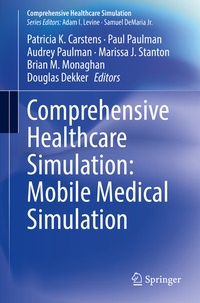
Comprehensive Healthcare Simulation: Mobile Medical Simulation
Description

This concise reference introduces programs that bring necessary training to providers and offers step by step guidance on how to establish and run a mobile medical simulation program. Divided into two main sections, the first analyzes the methods and techniques to implement a program, including marketing, finances, and program evaluation. The second section then delves into greater detail regarding the actual teaching and training, including chapters on educational methodology, scenario design, and how to prepare for a simulation session.
Part of the groundbreaking Comprehensive Healthcare Simulation Series, Mobile Medical Simulation is an ideal guide for administrators and managers who design and implement mobile simulation training programs, as well as educators and trainers working in the field.
More details
Other editions
Additional editions
Persons
Patricia K. Carstens MS, CHSE
Education and Simulation Program Coordinator
Children's Hospital & Medical Center
Department of Education
Omaha, NE 68114, USA
Paul Paulman MD
Associate Dean
University of Nebraska Medical Center
Department of Family Medicine
Nebraska Medical Center
Omaha, NE
USA
Audrey Paulman MD, MMM
Clinical Professor
University of Nebraska Medical Center
Department of Family Medicine
Nebraska Medical Center
Omaha, NE
USA
Marissa Stanton PhD, MBA
Director of Simulation, Assistant Professor
College of Nursing
Creighton University
Omaha, NE
USA
Brian M. Monaghan MPA, BS
Manager of Advanced Simulation Operations
University of Nebraska Medical Center
Nebraska Medical Center
Omaha, NE
USA
Douglas Dekker NRP, BS
Program Manager of Simulation in Motion-Nebraska
University of Nebraska Medical Center
Nebraska Medical Center
Omaha, NE
USA
Content
Section 1: Mobile Simulation Program Development.- Overview/Purpose/Justification.- Staff.- Equipment.- Marketing.- Finances.- Session Design.- Program Design.- Program Evaluation.- Logistics.- Special Cases/Utility of Training.- Recording/Feedback.- Research in mobile simulation.- Do's/Don'ts.- Section 2: Training and Teaching in a Mobile Simulation Program.- Overview.- Personnel.- Educational methodology.- Scenario design.- Session recording and feedback.- Facilities.- Logistics.- Session Design.- Needs Assessment.- Session and scenario assessment.- Educational Method (SPs, mannequins, augmented or virtual reality).- How to prepare for a simulation session (instructor and learner).- Instructor Development/qualifications.- Pre/post session measurement.
