

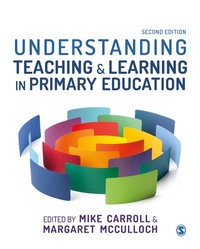
Understanding Teaching and Learning in Primary Education
2nd Edition
Published on 21. August 2018
432 pages
978-1-5264-5239-9 (ISBN)
Description

This textbook gives you guidance and insights into the knowledge, values and commitments necessary to succeed in the primary classroom, supported by links to theory and research literature and realistic scenarios you may encounter as a new teacher.
Fully updated throughout, key features of this second edition include:
? A new chapter on inclusive education
? Newly expanded coverage of digital learning, engaging with educational research and the role of the primary teacher
? New 'View from Practice' examples
? Cross-referenced links to the Teachers' Standards in England and the GTCS Professional Standards in Scotland and where they are covered within the book
This is essential reading for professional studies modules on primary initial teacher education courses, including university-based (PGCE, PGDE, BA QTS, BEd), school-based (SCITT, School Direct) and employment-based routes into teaching.
Fully updated throughout, key features of this second edition include:
? A new chapter on inclusive education
? Newly expanded coverage of digital learning, engaging with educational research and the role of the primary teacher
? New 'View from Practice' examples
? Cross-referenced links to the Teachers' Standards in England and the GTCS Professional Standards in Scotland and where they are covered within the book
This is essential reading for professional studies modules on primary initial teacher education courses, including university-based (PGCE, PGDE, BA QTS, BEd), school-based (SCITT, School Direct) and employment-based routes into teaching.
Reviews / Votes
'Understanding Teaching and Learning in Primary Education covers all the key issues for beginning or developing teachers. The writing style is clear and accessible with 'Thinking points' providing opportunities for reflection. The inclusion of links to relevant theory allow the reader to explore areas of interest in greater depth.' -- Richard Holme This is the second edition of a practical and comprehensive book that is valuable reading for all aspiring teachers, whatever route their training takes (school, university or employment based). Based on practical experience, this textbook gives teachers of the future guidance and insights into the knowledge, values and commitments necessary to succeed in the primary classroom; insights that it can otherwise take much practical experience to accumulate.... An insightful and comprehensive book, ideal for on-going reference. -- Sarah Brew * Parents in Touch *More details
Edition
Second Edition
Language
English
Place of publication
London
United Kingdom
Target group
College/higher education
Product notice
Reflowable
File size
3,71 MB
ISBN-13
978-1-5264-5239-9 (9781526452399)
Copyright in bibliographic data and cover images is held by Nielsen Book Services Limited or by the publishers or by their respective licensors: all rights reserved.
Schweitzer Classification
Other editions
Additional editions
Mike Carroll | Margaret McCulloch
Understanding Teaching and Learning in Primary Education
Book
09/2018
2nd Edition
SAGE Publications Ltd
€172.33
Shipment within 15-20 days
Mike Carroll | Margaret McCulloch
Understanding Teaching and Learning in Primary Education
Book
09/2018
2nd Edition
SAGE Publications Ltd
€67.90
Shipment within 15-20 days
Persons
Dr Mike Carroll is a retired Senior Lecturer in Education at the University of Glasgow. Mike was formerly the Director of the MEd Professional Learning and Enquiry. Mike contributed to a range of masters-level programmes for serving teachers, with a particular interest in the development of leadership at all levels in the school. As a retired member of staff Mike continues to contribute as an Associate Tutor involved in supporting students on school placements as well as working as an Education Consultant contributing to Teacher Induction Programmes. Mike co-edited the successful Understanding Teaching and Learning in Primary Education text published by SAGE.
Margaret McCulloch is a lecturer in the School of Education, University of Glasgow. She worked for many years as a primary teacher, specialising in Support for Learning, before becoming an Inclusion Development Officer, and she has extensive experience of working collaboratively with parents, teachers and colleagues from other professions. She teaches educational studies, with a particular focus on inclusive education and related issues, on a number of undergraduate programmes. She also works with international students and practising teachers from Scotland on the Masters programme in Inclusive Education: Policy, Practice and Research. Her research interests include professional identity in teacher education, inclusive education and dyslexia. She has written on inter-professional approaches to practice (Forde et al., 2011); she contributed to the Literature Review on Teacher Education in the 21st Century (Scottish Government, 2010) and to the Assessment at Transition report (Scottish Government, 2012).
Margaret McCulloch is a lecturer in the School of Education, University of Glasgow. She worked for many years as a primary teacher, specialising in Support for Learning, before becoming an Inclusion Development Officer, and she has extensive experience of working collaboratively with parents, teachers and colleagues from other professions. She teaches educational studies, with a particular focus on inclusive education and related issues, on a number of undergraduate programmes. She also works with international students and practising teachers from Scotland on the Masters programme in Inclusive Education: Policy, Practice and Research. Her research interests include professional identity in teacher education, inclusive education and dyslexia. She has written on inter-professional approaches to practice (Forde et al., 2011); she contributed to the Literature Review on Teacher Education in the 21st Century (Scottish Government, 2010) and to the Assessment at Transition report (Scottish Government, 2012).
Content
Chapter 1: The context for primary education in the twenty-first century - Mike Carroll and Margaret McCulloch
Chapter 2: Childhood and diversity - Julie McAdam and Jennifer Farrar
Chapter 3: Early years' education - Mary Wingrave
Chapter 4: Models of teaching and learning - Mike Carroll
Chapter 5: Planning for learning and teaching in the primary classroom - Maureen Farrell and A. Graeme Pate
Chapter 6: Social and emotional contexts for learning - Margaret McCulloch
Chapter 7: Identity, relationships and behaviour - George Head
Chapter 8: The evolving concept of inclusive education - Margaret McCulloch and Margaret Sutherland
Chapter 9: Collaborative learning - Mike Carroll
Chapter 10: Integrated learning - Mike Carroll and Fiona McGregor
Chapter 11: Creating Challenge in the classroom - Margaret Sutherland and Niamh Stack
Chapter 12: Assessment for Learning - Louise Hayward and Ernest Spencer
Chapter 13: Education for citizenship, global citizenship and learning for sustainability - Alan Britton, Liz Moorse and Mary Young
Chapter 14: Spiritual Devolpment - Leonardo Franchi and Leon Robinson
Chapter 15: Teaching for creativity and creative teaching - Moyra Boland, Margaret Jago and Jan Macdonald
Chapter 16: Digital learning - Stephen Boyle and David McKinstry
Chapter 17: Transitions - George MacBride and Margaret McCulloch
Chapter 18: Working with other audults - Mike Carroll
Chapter 19: How teachers learn: the role of research in teaching - Beth Dickson and Irene McQueen
Chapter 20: Teacher leadership and learning: the evolving role of the primary teacher - Christine Forde and Margery McMahon
Chapter 2: Childhood and diversity - Julie McAdam and Jennifer Farrar
Chapter 3: Early years' education - Mary Wingrave
Chapter 4: Models of teaching and learning - Mike Carroll
Chapter 5: Planning for learning and teaching in the primary classroom - Maureen Farrell and A. Graeme Pate
Chapter 6: Social and emotional contexts for learning - Margaret McCulloch
Chapter 7: Identity, relationships and behaviour - George Head
Chapter 8: The evolving concept of inclusive education - Margaret McCulloch and Margaret Sutherland
Chapter 9: Collaborative learning - Mike Carroll
Chapter 10: Integrated learning - Mike Carroll and Fiona McGregor
Chapter 11: Creating Challenge in the classroom - Margaret Sutherland and Niamh Stack
Chapter 12: Assessment for Learning - Louise Hayward and Ernest Spencer
Chapter 13: Education for citizenship, global citizenship and learning for sustainability - Alan Britton, Liz Moorse and Mary Young
Chapter 14: Spiritual Devolpment - Leonardo Franchi and Leon Robinson
Chapter 15: Teaching for creativity and creative teaching - Moyra Boland, Margaret Jago and Jan Macdonald
Chapter 16: Digital learning - Stephen Boyle and David McKinstry
Chapter 17: Transitions - George MacBride and Margaret McCulloch
Chapter 18: Working with other audults - Mike Carroll
Chapter 19: How teachers learn: the role of research in teaching - Beth Dickson and Irene McQueen
Chapter 20: Teacher leadership and learning: the evolving role of the primary teacher - Christine Forde and Margery McMahon
