

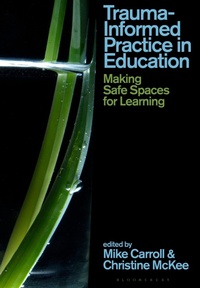
Trauma-Informed Practice in Education
Making Safe Spaces for Learning
Will be published approx. on 9. July 2026
264 pages
978-1-350-49826-6 (ISBN)
Description

We often hear that all behaviour is communication, but how do we fully understand what children are telling us when they act in distressed and often challenging ways in our settings? And how do we respond? This book offers a practice-oriented look at current theory around early childhood adversity, attachment, trauma and brain development. Traumatic experiences such as abuse, neglect, domestic violence, bereavement, bullying and others can have long-lasting effects on children, making responding to their impact a complex task for education professionals. But it is precisely through their enlightened response that healing can begin.
Providing children with positive childhood experiences is dependent upon knowledgeable practitioners who can determine children's different needs and use this understanding to create flexible, responsive learning environments. This book draws on up-to-date research informing the conceptualisation of trauma and trauma-informed interventions and uses this to establish links to practice, highlighting relationship-based interventions. Real world vignettes of trauma-aware schools and professional dialogue with experts in the field allow for a strong focus on practice.
Each chapter begins with key ideas outlining the content of the chapter, and ends with a summary paragraph to link back to the key ideas. Each chapter also provides suggestions for further reading as well as thinking points, in the form of questions for reflection. Each of the four parts of the book ends with a chapter providing insights from experts in the field, schools utilising trauma-informed and attachment-aware approaches as well as several Local Authorities seeking to introduce systemic change.
This book is essential reading for all those interested in how theory, research and policy developments can help to enhance practice in developing trauma-informed and trauma-responsive educational environments.
Providing children with positive childhood experiences is dependent upon knowledgeable practitioners who can determine children's different needs and use this understanding to create flexible, responsive learning environments. This book draws on up-to-date research informing the conceptualisation of trauma and trauma-informed interventions and uses this to establish links to practice, highlighting relationship-based interventions. Real world vignettes of trauma-aware schools and professional dialogue with experts in the field allow for a strong focus on practice.
Each chapter begins with key ideas outlining the content of the chapter, and ends with a summary paragraph to link back to the key ideas. Each chapter also provides suggestions for further reading as well as thinking points, in the form of questions for reflection. Each of the four parts of the book ends with a chapter providing insights from experts in the field, schools utilising trauma-informed and attachment-aware approaches as well as several Local Authorities seeking to introduce systemic change.
This book is essential reading for all those interested in how theory, research and policy developments can help to enhance practice in developing trauma-informed and trauma-responsive educational environments.
More details
Language
English
Place of publication
London
United Kingdom
Publishing group
Bloomsbury Publishing PLC
Target group
College/higher education
Professional and scholarly
Illustrations
25 bw illus
File size
3,76 MB
ISBN-13
978-1-350-49826-6 (9781350498266)
Copyright in bibliographic data and cover images is held by Nielsen Book Services Limited or by the publishers or by their respective licensors: all rights reserved.
Schweitzer Classification
Other editions
Additional editions
Book
approx. 08/2026
Bloomsbury Academic
€31.50
Not yet published
Persons
Mike Carroll is Associate Tutor at the University of Glasgow, UK, and was formerly the Director of the MEd Professional Learning and Enquiry.
Christine McKee is Lecturer in Education at the University of Glasgow, UK, a former teacher and support for learning assistant, and an adoptive parent. She is also the Vice Chair of the charity Scottish Attachment in Action.
Christine McKee is Lecturer in Education at the University of Glasgow, UK, a former teacher and support for learning assistant, and an adoptive parent. She is also the Vice Chair of the charity Scottish Attachment in Action.
Content
1. Introduction, Mike Carroll
Part One: Informing Ourselves About Trauma
2. The Concept of Trauma, Christine McKee (University of Glasgow, UK)
3. Adverse Childhood Experiences (ACEs), Mike Carroll (Associate Tutor and Education Consultant, UK)
4. A Place for Attachment Theory, Christine McKee (University of Glasgow, UK)
5. In Conversation With..., Matthew Cooke (Virtual School Headteacher and Policy Lead for the National Association of Virtual School Headteachers (NAVSH), England) and Larissa Gordon (Virtual School Headteacher (VSH), Aberdeen City, Scotland)
Part Two: Understanding The Impact Of Trauma
6. Understanding the Brain, Christine McKee (University of Glasgow, UK)
7. Bereavement and Its Impact on Children and Young People, Mary Lappin (University of Glasgow, UK)
8. Children and Young People's Behaviours; Teachers' Responses, Clare Smith and Angela Curley (University of Glasgow, UK)
9. In Conversation With..., Louise Pressley (Heathryburn Primary School, Aberdeen, UK) and Stuart Guest (Colebourne Primary School, Birmingham, UK)
Part Three: Responding To Trauma
10. A Trauma-Informed School System, Mike Carroll (Associate Tutor and Education Consultant, UK)
11. Approaches to Behaviour, Tracey Stewart and Mary Wingrave (University of Glasgow, UK)
12. The Concept of Resilience, Joyce Nicholson (University of Glasgow, UK)
13. Fictitious Places Provide Safe Contexts for Learning, Pauline Cooney (University of Glasgow, UK)
14. In Conversation With..., Hayley Clacy (Spen Valley High School, West Yorkshire, UK), and Staff and pupils from Larbert High School, Falkirk, Scotland
Part Four: Building Systemic Responses
15. Building a Trauma-Informed Education Community, Lorna Aitken (Education Scotland, UK) and Sandra Ferguson (NHS Education for Scotland, UK)
16. Education Workers as Part of a Bigger Picture, Elizabeth Black and Marie McQuade (University of Glasgow, UK)
17. Professional Supervision for Education Staff, Alison MacDonald and Claire Slocombe (Scottish Attachment in Action, UK)
18. In Conversation With..., Elizabeth King MBE (former Principal Educational Psychologist, South Lanarkshire, UK) and Richard Parker (Bath Spa University, UK)
List of References
Index
Part One: Informing Ourselves About Trauma
2. The Concept of Trauma, Christine McKee (University of Glasgow, UK)
3. Adverse Childhood Experiences (ACEs), Mike Carroll (Associate Tutor and Education Consultant, UK)
4. A Place for Attachment Theory, Christine McKee (University of Glasgow, UK)
5. In Conversation With..., Matthew Cooke (Virtual School Headteacher and Policy Lead for the National Association of Virtual School Headteachers (NAVSH), England) and Larissa Gordon (Virtual School Headteacher (VSH), Aberdeen City, Scotland)
Part Two: Understanding The Impact Of Trauma
6. Understanding the Brain, Christine McKee (University of Glasgow, UK)
7. Bereavement and Its Impact on Children and Young People, Mary Lappin (University of Glasgow, UK)
8. Children and Young People's Behaviours; Teachers' Responses, Clare Smith and Angela Curley (University of Glasgow, UK)
9. In Conversation With..., Louise Pressley (Heathryburn Primary School, Aberdeen, UK) and Stuart Guest (Colebourne Primary School, Birmingham, UK)
Part Three: Responding To Trauma
10. A Trauma-Informed School System, Mike Carroll (Associate Tutor and Education Consultant, UK)
11. Approaches to Behaviour, Tracey Stewart and Mary Wingrave (University of Glasgow, UK)
12. The Concept of Resilience, Joyce Nicholson (University of Glasgow, UK)
13. Fictitious Places Provide Safe Contexts for Learning, Pauline Cooney (University of Glasgow, UK)
14. In Conversation With..., Hayley Clacy (Spen Valley High School, West Yorkshire, UK), and Staff and pupils from Larbert High School, Falkirk, Scotland
Part Four: Building Systemic Responses
15. Building a Trauma-Informed Education Community, Lorna Aitken (Education Scotland, UK) and Sandra Ferguson (NHS Education for Scotland, UK)
16. Education Workers as Part of a Bigger Picture, Elizabeth Black and Marie McQuade (University of Glasgow, UK)
17. Professional Supervision for Education Staff, Alison MacDonald and Claire Slocombe (Scottish Attachment in Action, UK)
18. In Conversation With..., Elizabeth King MBE (former Principal Educational Psychologist, South Lanarkshire, UK) and Richard Parker (Bath Spa University, UK)
List of References
Index
