

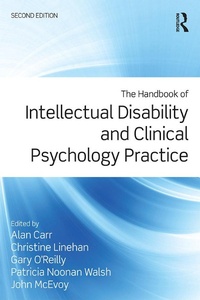
The Handbook of Intellectual Disability and Clinical Psychology Practice
2nd Edition
Published on 12. April 2016
884 pages
978-1-317-57608-2 (ISBN)
Description

The Handbook of Intellectual Disability and Clinical Psychology Practice will equip clinical psychologists in training with the skills necessary to complete a clinical placement in the field of intellectual disability. Building on the success of the previous edition this handbook has been extensively revised. Throughout, the text, references, and website addresses and have been updated to reflect important developments since the publication the first edition. Recent research findings on the epidemiology, aetiology, course, outcome, assessment and treatment of all psychological problems considered in the book have been incorporated into the text. Account has been taken of changes in the diagnosis and classification of intellectual disability and psychological problems reflected in the AAIDD-11 and the DSM-5. New chapters on the assessment of adaptive behaviour and support needs, person-centred active support, and the assessment of dementia in people with intellectual disability have been added.
The book is divided into eight sections:
Section 1: Covers general conceptual frameworks for practice - diagnosis, classification, epidemiology and lifespan development.
Section 2: Focuses on assessment of intelligence, adaptive behaviour, support needs, quality of life, and the processes of interviewing and report writing.
Section 3: Covers intervention frameworks, specifically active support, applied behavioural analysis and cognitive behaviour therapy.
Section 4: Deals with supporting families of children with intellectual disability, genetic syndromes and autism spectrum disorders.
Section 5: Covers issues associated with intellectual disability first evident or prevalent in middle childhood.
Section 6: Deals with adolescent concerns including life skills training, relationships and sexuality.
Section 7: Focuses on residential, vocational and family-related challenges of adulthood and aging.
Section 8: Deals with professional issues and risk assessment.
Chapters cover theoretical and empirical issues on the one hand and practice issues on the other. They close with summaries and suggestions for further reading for practitioners and families containing a member with an intellectual disability. Where appropriate, in many chapters, practice exercises to aid skills development have been included.
The second edition of the Handbook of Intellectual Disability and Clinical Psychology Practice is one of a set of three volumes which cover the lion's share of the curriculum for clinical psychologists in training in the UK and Ireland. The other two volumes are the Handbook of Child and Adolescent Clinical Psychology, Third Edition (by Alan Carr) and the Handbook of Adult Clinical Psychology Practice, Second Edition (edited by Alan Carr & Muireann McNulty).
The book is divided into eight sections:
Section 1: Covers general conceptual frameworks for practice - diagnosis, classification, epidemiology and lifespan development.
Section 2: Focuses on assessment of intelligence, adaptive behaviour, support needs, quality of life, and the processes of interviewing and report writing.
Section 3: Covers intervention frameworks, specifically active support, applied behavioural analysis and cognitive behaviour therapy.
Section 4: Deals with supporting families of children with intellectual disability, genetic syndromes and autism spectrum disorders.
Section 5: Covers issues associated with intellectual disability first evident or prevalent in middle childhood.
Section 6: Deals with adolescent concerns including life skills training, relationships and sexuality.
Section 7: Focuses on residential, vocational and family-related challenges of adulthood and aging.
Section 8: Deals with professional issues and risk assessment.
Chapters cover theoretical and empirical issues on the one hand and practice issues on the other. They close with summaries and suggestions for further reading for practitioners and families containing a member with an intellectual disability. Where appropriate, in many chapters, practice exercises to aid skills development have been included.
The second edition of the Handbook of Intellectual Disability and Clinical Psychology Practice is one of a set of three volumes which cover the lion's share of the curriculum for clinical psychologists in training in the UK and Ireland. The other two volumes are the Handbook of Child and Adolescent Clinical Psychology, Third Edition (by Alan Carr) and the Handbook of Adult Clinical Psychology Practice, Second Edition (edited by Alan Carr & Muireann McNulty).
Reviews / Votes
This is an essential handbook for those working in clinical practice with people with intellectual disabilities. Whilst aimed primarily at clinical psychologists it should have wider appeal for all those concerned with assessing, intervening and providing services to this client group. It is extremely comprehensive and this second edition means that recent developments in diagnosis and classification have been incorporated as well as the most recent research in the field. The handbook maintains its original design providing a coherent and logical progression through from conceptual issues, assessment, intervention to service and professional issues. The recent updates of new chapters on adaptive behaviour, support needs and dementia keep the handbook well up to speed with contemporary developments. The international collection of authors is impressive and includes the most well published researchers in each of the areas. In terms of one book serving as a comprehensive handbook I would recommend this text as being the best currently available in this field of clinical practice. - Prof Jan Burns MBE, Professor of Clinical Psychology, Canterbury Christ Church UniversityMore details
Edition
2nd edition
Language
English
Place of publication
London
United Kingdom
Publishing group
Taylor & Francis Ltd
Target group
College/higher education
Professional and scholarly
Edition type
Revised edition
Illustrations
68 s/w Tabellen, 35 s/w Abbildungen
68 Tables, black and white; 35 Illustrations, black and white
File size
4,25 MB
ISBN-13
978-1-317-57608-2 (9781317576082)
Copyright in bibliographic data and cover images is held by Nielsen Book Services Limited or by the publishers or by their respective licensors: all rights reserved.
Schweitzer Classification
Other editions
Additional editions
Alan Carr | Christine Linehan | Gary O'Reilly
The Handbook of Intellectual Disability and Clinical Psychology Practice
Book
04/2016
2nd Edition
Routledge
€319.93
Shipment within 10-20 days
Alan Carr | Christine Linehan | Gary O'Reilly
The Handbook of Intellectual Disability and Clinical Psychology Practice
Book
04/2016
2nd Edition
Routledge
€114.00
Shipment within 10-20 days
Persons
Alan Carr, PhD, is Professor of Clinical Psychology and Director of the Doctoral Programme in Clinical Psychology at University College Dublin, and a consultant clinical psychologist at the Clanwilliam Institute in Dublin. He has conducted clinical practice in the UK, Canada and Ireland.
Christine Linehan, PhD, is Lecturer in Disability Studies at University College Dublin and Director of the UCD Centre for Disability Studies. She is also Honorary Senior Lecturer with the Tizard Centre, University of Kent, Canterbury, UK; Visiting Senior Research Fellow at the School of Social Work and Social Policy, Trinity College Dublin; and a board member of Epilepsy Ireland.
Gary O'Reilly, PhD, is Senior Lecturer in Clinical Psychology at University College Dublin and Director of the UCD Doctoral Programme in Clinical Psychology. He is Principal Clinical Psychologist at the Children's University Hospital Temple Street; and Principal Clinical Psychologist at Saint John of God, Cluain Mhuire Child and Adolescent Mental Health Service.
Patricia Noonan Walsh, PhD, is Professor Emerita in Disability Studies, University College Dublin; Honorary Professor, Centre for Disability, Law and Policy, National University of Ireland, Galway; and former Director of the UCD Centre for Disability Studies.
John McEvoy, PhD, is a Principal Clinical Psychologist, Prosper Group, Navan, Co. Dublin and Adjunct Senior Lecturer at the School of Psychology, University College Dublin, Ireland.
Christine Linehan, PhD, is Lecturer in Disability Studies at University College Dublin and Director of the UCD Centre for Disability Studies. She is also Honorary Senior Lecturer with the Tizard Centre, University of Kent, Canterbury, UK; Visiting Senior Research Fellow at the School of Social Work and Social Policy, Trinity College Dublin; and a board member of Epilepsy Ireland.
Gary O'Reilly, PhD, is Senior Lecturer in Clinical Psychology at University College Dublin and Director of the UCD Doctoral Programme in Clinical Psychology. He is Principal Clinical Psychologist at the Children's University Hospital Temple Street; and Principal Clinical Psychologist at Saint John of God, Cluain Mhuire Child and Adolescent Mental Health Service.
Patricia Noonan Walsh, PhD, is Professor Emerita in Disability Studies, University College Dublin; Honorary Professor, Centre for Disability, Law and Policy, National University of Ireland, Galway; and former Director of the UCD Centre for Disability Studies.
John McEvoy, PhD, is a Principal Clinical Psychologist, Prosper Group, Navan, Co. Dublin and Adjunct Senior Lecturer at the School of Psychology, University College Dublin, Ireland.
Content
Part I: Conceptual Frameworks. Carr, O'Reilly, Diagnosis, Classification and Epidemiology. Carr, O'Reilly, Lifespan Development and the Family Lifecycle. Part II: Assessment Frameworks. O'Reilly, Carr, Intelligence.Buntix, Adaptive Behaviour and Support Needs. Keith, Quality of Life: The Journey is the Reward. Carr, O'Reilly, Consultation, Interviewing and Report Writing. Section III: Intervention Frameworks. Beadle-Brown, Hutchinson, Person-Centred Active Support - The Cake Not the Icing. O'Reilly, Gevarter, Falcomata, Sigafoos, Lancioni, Applied Behaviour Analysis and Positive Behaviour Supports. Dangan, Jahoda, Stenfert Kroese, Cognitive Behaviour Therapy. Section IV: Infancy and Early Childhood. Blacher, Knight, Kraemer, Abbott Feinfield , Supporting Families Who Have Children With Disability. Baker, Marquis, Abbott Feinfield, Early Intervention and Parent Education. Wiggs, Sleep Disorders. Grey, McClean, Toileting Problems. Sturmey, Reyer, Mayville, Matson, Feeding Difficulties and Eating Disorders. Kuczynski, Udwin, Behavioural Phenotypes in Genetic Syndromes Associated With Intellectual Disability. Hare, Autism Spectrum Disorders. Section V: Middle Childhood. Wehmeyer, Huang Lee, Shogren, Educating Children With Intellectual Disability. Sigafoos, O'Reilly, Lancioni, Green, Communication Difficulties and the Promotion of Communication Skills. McClean, Grey, Positive Behaviour Support for Challenging Behaviour. Section VI: Adolescence. Parmenter, Harman, Yazbeck, Riches, Life Skills Training for Adolescents With an Intellectual Disability. Valenti-Hein, Relationships and Sexuality in Adolescence and Young Adulthood.Section VII: Adulthood. Noonan Walsh, Linehan, Living and Working in the Community. Zaman, Bouras, Managing Mental Health Problems in People With Intellectual Disability. Murphy, Sexual Relationships and Adults With Intellectual Disabilities. McCarron, McCallion, Supporting Families With Aging Members Who Have Intellectual Disability. Holland, Walpert, The Presentation, Diagnosis and Support of People With Intellectual Disabilities Who Develop Dementia. Section VIII. Professional Issues. McGuire, McEvoy, Service Models, the Macrosystem and Professional Issues in Clinical Practice. McGuire, McEvoy, Risk Assessment.
