

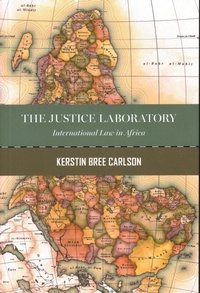
The Justice Laboratory
International Law in Africa
1st Edition
Published on 14. March 2023
1 pages
978-0-8157-4164-0 (ISBN)
Description

Examining how international criminal law has¿and hasn't¿brought justice following war crimes in Africa
Ever since World War II, the United Nations and other international actors have created laws, treaties, and institutions to punish perpetrators of genocide, war crimes, and crimes against humanity. These efforts have established universally recognized norms and have resulted in several high-profile convictions in egregious cases. But international criminal justice now seems to be a declining force¿its energy sapped by long delays in prosecutions, lagging public attention, and a globally rising authoritarianism that disregards legal niceties.
This book reviews five examples of international criminal justice as they have been applied across Africa, where brutal civil conflicts in recent decades resulted in varying degrees of global attention and action. The first three chapters examine key international mechanisms: the International Criminal Court, the International Criminal Tribunal for Rwanda, and the hybrid tribunal established in Senegal to try state crimes committed in Chad. These chapters illustrate how the design and practice of the institutions led to similarly unexpected and unsatisfying outcomes.
The final two chapters examine emerging and proposed international criminal justice mechanisms. One is a tribunal intended to facilitate peace in the new but war-torn country of South Sudan, not yet operational and unlikely to perform better than its predecessors. Finally, the book considers the developing human rights practice of the little-studied East African Court, a regional commercial court in Arusha, Tanzania, to show how local judicial creativity can win a role for courts in facilitating good governance.
Written in an accessible style, this book explores the connections between politics and the doctrine of international criminal law. Highlighting little-known institutional examples and under-discussed political situations, the book contributes to a broader international understanding of African politics and international criminal justice, as well as the lessons the African experiences offer for other regions.
Ever since World War II, the United Nations and other international actors have created laws, treaties, and institutions to punish perpetrators of genocide, war crimes, and crimes against humanity. These efforts have established universally recognized norms and have resulted in several high-profile convictions in egregious cases. But international criminal justice now seems to be a declining force¿its energy sapped by long delays in prosecutions, lagging public attention, and a globally rising authoritarianism that disregards legal niceties.
This book reviews five examples of international criminal justice as they have been applied across Africa, where brutal civil conflicts in recent decades resulted in varying degrees of global attention and action. The first three chapters examine key international mechanisms: the International Criminal Court, the International Criminal Tribunal for Rwanda, and the hybrid tribunal established in Senegal to try state crimes committed in Chad. These chapters illustrate how the design and practice of the institutions led to similarly unexpected and unsatisfying outcomes.
The final two chapters examine emerging and proposed international criminal justice mechanisms. One is a tribunal intended to facilitate peace in the new but war-torn country of South Sudan, not yet operational and unlikely to perform better than its predecessors. Finally, the book considers the developing human rights practice of the little-studied East African Court, a regional commercial court in Arusha, Tanzania, to show how local judicial creativity can win a role for courts in facilitating good governance.
Written in an accessible style, this book explores the connections between politics and the doctrine of international criminal law. Highlighting little-known institutional examples and under-discussed political situations, the book contributes to a broader international understanding of African politics and international criminal justice, as well as the lessons the African experiences offer for other regions.
More details
Other editions
Additional editions
Book
04/2022
Brookings Institution
€48.20
Shipment within 10-20 days
Person
Kerstin Bree Carlson is associate professor of international law at the Department of Social Science and Business, Roskilde University, where she teaches topics in law and society, global studies, international politics, and Nordic migration.
