

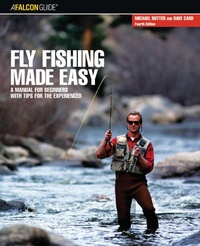
Fly Fishing Made Easy
A Manual For Beginners With Tips For The Experienced
4th Edition
Published on 1. December 2006
240 pages
978-1-4617-4845-8 (ISBN)
Description

Clearly written and generously illustrated, this book presents a practical, informative approach, geared specifically toward novice and intermediate anglers.
You'll learn how to select the right equipment, master basic as well as intermediate casting techniques, read the water in order to find the fish, study various types of water bugs to determine what the fish are feeding on and pick the right fly for the job.
You'll learn how to select the right equipment, master basic as well as intermediate casting techniques, read the water in order to find the fish, study various types of water bugs to determine what the fish are feeding on and pick the right fly for the job.
More details
Series
Edition
4th Edition
Language
English
Place of publication
New York
United States
File size
11,33 MB
ISBN-13
978-1-4617-4845-8 (9781461748458)
Copyright in bibliographic data and cover images is held by Nielsen Book Services Limited or by the publishers or by their respective licensors: all rights reserved.
Schweitzer Classification
Other editions
Additional editions
Dave Card | Michael Rutter
Fly Fishing Made Easy
Book
02/2007
4th Edition
Falcon Guides
€16.60
Shipment within 10-20 days
Persons
Michael Rutter has written numerous articles on fishing for Outdoor Life and Sports Afield as well as specialized fly fishing pieces for Fly Fishing and The Flyfisher. He is author the author of Camping Made Easy and Basic Essentials: Fly Fishing. Michael teaches technical and creative writing at Brigham Young University and lives with his famliy in Orem, Utah.
Dave Card is a well-known fishing instructor and writer who contributes to Utah Fishing and Outdoors magazines. A fishing guide, he leads trips throughout the West, teaches fly fishing and fly-tying classes, and lectures at many fishing seminars and shows. Dave makes his home in Alpine, Utah.
Dave Card is a well-known fishing instructor and writer who contributes to Utah Fishing and Outdoors magazines. A fishing guide, he leads trips throughout the West, teaches fly fishing and fly-tying classes, and lectures at many fishing seminars and shows. Dave makes his home in Alpine, Utah.
Content
- Fly Fishing Made Easy
- Contents
- Preface
- Chapter 1: An Introduction to the Greatest Sport on Earth: Why Fly Fish?
- Chapter 2: The Right Stuff: Essential Fly Fishing Equipment
- Let's Start with the Rod
- Pick and Match to the Fish and to the Water
- Shopping for the Rod
- The Reel Thing
- The Choices
- What to Look For
- A Good Catchy Line
- Line Weight
- Line Taper
- Line Action
- Putting Your Money Down
- Bucking
- Leader
- Just Wading Around
- Wader Types
- Built-In Boots and Wading Boots/Shoes
- Safety Stuff
- Dress for Casting Success
- Sun Protection
- Hats
- Carrying Arrangements: Fishing Vest vs. Fishing Pack
- Accessories Make the Outfit
- Rain Gear
- Nets
- Kit Necessities
- Chapter 3: Putting Your Best Fly Forward: Presentation of the Fly
- Differences between Spin Casting and Fly Casting
- The Basic Cast: Getting the Line Out
- The Fly Caster's Grip
- General Things to Remember
- Where to Practice
- The Back Cast
- The Front Cast
- Combining the Front and Back Casts
- Aiming
- Adding Line to Your Cast
- Roll Casting: Your Best Line Forward
- How to Do the Roll Cast
- Adding Line to the Roll Cast
- Serpentine Cast: Cut Yourself Some Slack
- How to Do the Serpentine Cast
- Steeple Cast: Highly Effective
- How to Do the Steeple Cast
- Reach Cast: Adjusting to Current Trends
- How to Do the Reach Cast
- Chapter 4: Seeing Past the Surface: Judging the Water
- Fish Are Only Human: The Search for Food
- The Nature of Feeding Fish
- What Will a Fish Eat?
- Food, Top and Bottom: The Bugs
- Where a Fish Will Lie to Get Food "Delivered"
- Look for Places That Might Produce Fish Food
- The Opportunists
- Shelter and Safety: Covering Their Tails
- Predators In and Out of the Water
- Current
- Light
- Depth
- Comfort Zones
- Temperature
- Oxygen
- The Types of Water
- Streams and Rivers
- Ponds and Lakes
- Chapter 5: Knowing Your Bugs: The Study of Entomology
- How to Pick Your Bug
- Mayflies Are King
- Nymphs
- Emergers
- Duns
- Spent Spinners
- Caddis Flies
- Nymphs
- Emergers
- Adults
- Stone Flies
- Nymphs: Black and Brown
- Emergers
- Adults: Orange and Yellow
- Midges: The Small Bug
- Nymphs
- Emergers
- Adults
- Terrestrials in the Water
- Scuds: Freshwater Shrimp
- Worms
- Crayfish
- Chapter 6: Puttin' on the Glitz: Attracting Patterns
- Why Attracting Patterns?
- How Attracting Patterns Work
- Where to Start
- Attracting Patterns You Should Carry
- Attracting Patterns to Add Later
- How to Fish Attracting Patterns
- Ideas on Trout and Warm-Water Fish
- Trout
- Bass
- Panfish
- Chapter 7: Putting Your Best Fly Forward: The Fishing Plan and Mending
- Your Master Fishing Plan
- Thinking Ahead
- Current Considerations
- Upstream or Downstream
- Staying in Control
- A Plan for Casting
- The Spoilers
- Mending Your Line
- Line Behavior
- What Is Mending?
- Mending Casts
- Mending Your Line on the Water
- Chapter 8: The Genesis of Fly Fishing: The Trout
- Fighting Fish
- Rainbow Trout
- Characteristics
- German Brown Trout
- Characteristics
- Cutthroat Trout
- Characteristics
- Brook Trout
- Characteristics
- Catch and Release
- When You Kill Fish, Consider
- Trophy Care
- How to Catch and Release
- Chapter 9: Bass, Bass, Largemouth Bass: Old Bucketmouth on a Fly
- Largemouth Bass
- Characteristics
- Fishing Methods
- Tackle
- Chapter 10: Warm-Water Fighters: Fighting Fish on a Fly
- Why Warm-Water Fish on a Fly?
- Smallmouth Bass
- The Fighter
- Characteristics
- Fishing Methods
- Tackle
- Striped Bass
- Bluegill
- Panfish
- Walleye
- Chapter 11: Going Down and Deep: Fishing the Wet Fly
- How to Get Set Up
- Successful Casts to Consider
- Across and Down
- The Upstream Wedge
- The Upstream Wedge with a Twitch
- The Lift Cast
- Beaver Pond Dead Drift
- Setting the Hook
- The Wet-Fly Approach
- Nymphing Approach
- Some Nymphs to Consider
- Streamers
- Fishing the Streamer
- Chapter 12: Going High and Dry: Fishing the Dry Fly
- How to Get Set Up
- Basic Dry-Fly Fishing Strategies
- Placing the Fly
- Opening the Window
- Watching the Drag
- Setting the Hook
- The Good Time to Fish
- Useful Dry-Fly Casts
- Quartering Cast
- Reach Cast
- The Upstream Wedge
- The Upstream Wedge with a Twitch
- Downstream Cast
- Casting to Fish You See Rising
- Nonselective Fish
- Selective Fish
- Casting Where You Think the Fish Might Be
- Casting the Riffles
- Movin' About
- Flies to Use
- Types of Streams
- Freestone Streams
- Spring Creeks/Tailwaters
- Chapter 13: Float Tubes and Other Stuff: Getting to the Fish
- Being Safe and Happy
- The Float Tube and You
- Selecting a Tube
- You and the Canoe
- It's Fun, but Be Careful
- Other Things That Float
- Floating Fishing Methods
- Basic Wet-Fly Fishing on Lakes and Ponds
- Basic Dry-Fly Fishing on Lakes and Ponds
- Both Wet and Dry
- Chapter 14: Casting Out and About: Walking with a Fly Rod
- Expanding Local Waters: Beating the Crowds
- Park and Walk
- Backcountry Fishing
- Fishing Tips
- Footwear
- What to Take
- Index
- About the Authors
