

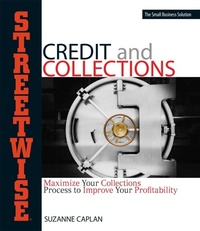
Streetwise Credit And Collections
Maximize Your Collections Process to Improve Your Profitability
Published on 11. December 2006
352 pages
978-1-4405-1724-2 (ISBN)
Description

The credit and collection function of any business is the nerve center of the company. If proper records aren't kept and receivables closely monitored, a company will have difficulty maintaining its cash flow and operations. Streetwise Credit and Collections provides you with the skills to manage your company's financial obligations, collect due payments, and avoid falling into debt.
Streetwise Credit and Collections includes complete state-by-state requirements for small claims court, and sections on the applicable laws, statute of limitations, and legal interest rates that may be charged. The appendices contain information necessary for all businesses that grant credit, including the Equal Credit Opportunity Act and the Fair Debt Collection Practices act.
Includes advice on:
Streetwise Credit and Collections includes complete state-by-state requirements for small claims court, and sections on the applicable laws, statute of limitations, and legal interest rates that may be charged. The appendices contain information necessary for all businesses that grant credit, including the Equal Credit Opportunity Act and the Fair Debt Collection Practices act.
Includes advice on:
- Securing credit and granting it
- Setting credit policies for your customers
- Hiring a collections agency as necessary
More details
Other editions
Additional editions

Suzanne Caplan
"Streetwise" Credit and Collections
Maximise Your Collections Process to Improve Your Profitability
Book
12/2006
Adams Media Corporation
€39.80
Article exhausted; check different version
Person
Suzanne Caplan (Pittsburgh, PA) is author, speaker and advisor to small businesses. She was CEO of her family's manufacturing firm for 21 years and is founder and partner in Crossroads Advisors, LLC. Works include: The Streetwise Small Business Success Kit, Streetwise Credit and Collections and Teaching the Basics of Real Estate Investment.
Content
- Intro
- Title Page
- Copyright Page
- Contents
- Acknowledgments
- Introduction
- Part One: Why Credit Is a Business Necessity
- Chapter 1: How Credit Creates Leverage
- The Leverage to Start a Business
- Cash Is a Timing Issue
- Turning Assets into Collateral
- Your Bank as a Source of Credit
- Securing Loans for Working Capital
- Selling an Account to a Factor
- Floor Planning Inventory
- Chapter 2: Securing Credit from Vendors
- Establish Credibility
- Negotiating Terms
- Working with Consignment
- The Importance of a Track Record
- What to Do When Cash Is Tight
- Securing Discounts for Prompt Payment
- Chapter 3: Providing Credit to Business Customers
- The Difference Between Consumer Credit and Business Credit
- Using Credit as an Incentive
- Who Carries the Paper?
- A Business Credit Application
- Reading a Business Credit Report
- Types of Credit: Short-Term and Long-Term
- Asking for a Deposit
- Make Sure Your Policy Is Evenhanded
- Chapter 4: Credit Takes You Global
- Opportunities Through Foreign Trade
- Scenario 1: Buying from a Foreign Firm
- Letters of Credit: Providing Assurance
- Standby Letters of Credit
- How Banks Protect Their Interest
- What Bank Should You Use?
- Scenario 2: Providing Material to Be Fabricated in a Foreign Country and Shipped to You
- Scenario 3: Your Business Sells Your Goods or Services in Foreign Markets
- The Export-Import Bank and Your Business
- Obtaining Credit Information on Foreign Firms
- Chapter 5: Providing Credit to Consumers
- Understanding Consumer Credit Laws
- Applications for Consumer Credit
- Checking Credit Reports
- The Equal Credit Opportunity Act
- Can You Use Third-Party Financing?
- Collecting Through Professional Firms
- Part Two: An Effective Credit Policy
- Chapter 6: The Elements of Your Plan
- How Much Credit Can You Provide?
- Who Will Handle Credit Checks and Decisions?
- An Override Policy
- Personal Guarantees
- Periodic Recheck and Review
- When to Raise and When to Lower Limits
- Chapter 7: Assessing Risk
- Can You Cover Your Costs?
- The Difference Between Secured and Unsecured Credit
- The Value of a Personal Guarantee
- Securing a Confession of Judgment
- Evaluating Trade Credit References
- Checking a Bank Reference
- Out-of-State Credit
- Asking for Financials
- Chapter 8: Setting a Proactive Credit Limit
- Allowing Customers to Buy According to Their Need
- Special Deals Require Special Terms
- Secondary Protection: Using Outside Credit Resources
- Growing Customers Need Growing Credit
- Reducing a Limit or Requiring Cash
- Chapter 9: Communicating Your Policies
- Put Your Policy in Writing
- Letters Granting Credit and Stating Terms
- Print Your Terms on Invoices and Statements
- Post Credit Terms and Return Policies in Your Place of Business
- Can You Charge Interest on Past-Due Accounts?
- Chapter 10: Creating the Paper Trail
- Purchase Orders and Contracts Must Be in Writing
- A Sample Purchase Order and Confirmation
- Keep Track of Invoices, Payments, and Credits
- Change Orders Must Be in Writing
- Contact Reports on All Billing Inquiries
- Record All Statements and Letters
- Part Three: Putting Policy into Practice
- Chapter 11: The Collection Begins with the Sale
- Make Sure the Billing Is Accurate
- Learn What Constitutes an Acceptance
- Proof of Delivery
- Make Sure Your Customer Is Satisfied
- Handle Disputes in Writing and Issue Credit
- How Much of a Discount Can You Afford?
- Letters to Confirm the Outstanding Amount Due
- Chapter 12: Dealing with Third-Party Funders
- Keep Your Source Documents after the Charge
- With Contract Financing, Proper Documents Must Be Submitted
- What Happens If Your Client Does Not Pay?
- Credit Card Disputes Can Result in Charge-Backs
- Form Alliances with Funders to Access Credit
- Chapter 13: The Fine Art of Reminders
- Send Regular Statements
- The First Friendly Request
- Making a Demand for Payment
- Making Contact via Phone
- Having a Salesperson Help to Collect
- Six Sample Letters
- Chapter 14: Handling a Dispute
- Take the Time to Research
- Establish Your Side of the Story
- Compromise When It Makes Sense
- Get the Agreement of the New Terms in Writing
- Some Disputes Are Ploys to Not Pay
- Dealing with a Bounced Check
- Chapter 15: The First Steps in the Collection Procedure
- Call the Customer Yourself
- Ask for a Payment Schedule
- Send Out Demand Letters via Registered Mail
- One Final Request Before the Account Is Turned Over
- A Postdated Check Is Only a Promise to Pay
- Part Four: Aggressive Collections
- Chapter 16: Collecting from a Consumer
- Understanding FDCPA
- The Collection Call
- Do Not Violate the Applicable Law
- What to Do When You Are Told to Cease
- Staying Polite and Providing Customer Service While Collecting
- Making a Decision to Turn Over an Account
- Chapter 17: Collecting from a Business
- FDCPA Does Not Apply
- Calls Are Now Serious Business
- Document All of Your Demands
- Personal Visits Are Allowed and Might Work
- Can You Take It to Small Claims Court?
- A State-by-State Review of Small Claims Court
- Chapter 18: Collecting from a Tenant
- The Terms Are in the Lease
- Residential Leases
- Commercial Leases
- Handling a Dispute
- Giving Notice to a Past-Due Tenant
- Negotiating a Settlement
- Handling an Eviction
- Chapter 19: When to Hire an Agency
- Check Out Agencies Before You Need One
- Try One That Reports Credit as Well
- What Do Agencies Generally Charge?
- Do Not Hire an Agency That Poses as a Law Firm
- What Can an Agency Actually Do?
- When Is It Time to Turn Over the Account?
- Chapter 20: When to Hire a Lawyer
- Get Something Filed Before It's Too Late
- An Ounce of Prevention
- Judgments and Liens
- When You Have a Confession of Judgment
- Judgments Are Not Money-They Must Be Collected
- Chapter 21: Your Rights When a Debtor Fails
- Are You Secured in Any Assets?
- Three Types of Bankruptcy
- A Recent Purchase May Be Reclaimed
- Chapter 7-Get Your Portion of the Distribution
- Chapter 13-As a Creditor, Get Monthly Payments
- Chapter 11-Be a Member of the Committee When Possible
- Should You Do Business Again with the Same Customer?
- Part Five: The Art of Credit
- Chapter 22: The Psychology of Money
- Why Some Creditors Never Make Demands
- Customers Who Don't Pay Even When They Are Able
- Tips on Having Discussions about Money
- Know Whom You Are Dealing with First
- Discounting to Make a Friend
- Chapter 23: When You Are the Debtor
- Always Communicate with Your Creditors
- Do Not Promise What You Cannot Pay
- Make an Honest Offer and Stick to It
- Don't Be Frightened by Threats
- How to Deal with Taxing Authorities
- When Money Is Tight, Prioritize
- Chapter 24: Creative Credit Techniques
- Using a Factor
- Securing Deposits and Retainers Before You Work
- Floor Planning and Installment Loans
- Debit Cards, Credit Cards, and Electronic Funds Transfer
- COD: Cash on Delivery
- Progress Payments
- Credit Insurance to Rely On
- Chapter 25: Operating a Financially Sound Company
- Profit Isn't Real until the Money Is Received
- Bad Debts Can Undermine a Good Business
- Your Credit Provides You with Options
- Credit and Trust Are Twin Values-Use Both
- If You Have Done the Work, You Are Entitled to the Money
- Epilogue
- Appendixes
- Appendix One: Glossary
- Appendix Two: Applicable Laws and Statutes of Limitations by State
- Appendix Three: Consumer Credit Laws to Know
