

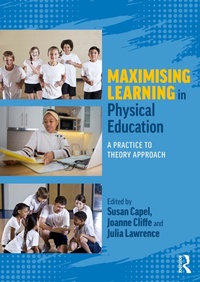
Maximising Learning in Physical Education
A Practice to Theory Approach
1st Edition
Published on 30. September 2025
220 pages
978-1-040-42721-7 (ISBN)
Description

Maximising Learning in Physical Education identifies some key challenges in physical education that impact pupils' learning, looking at how they manifest over time and suggesting possible ways teachers can address them.
Each chapter features a real-life case study or a scenario to illustrate a specific challenge and identify some possible causes. It then draws on theory, research and evidence that might explain what is happening. The book highlights how teachers use theory and research evidence to help address the challenges and maximise pupil learning. The challenges include:
reflection/reflective practice
the process of learning
progression and continuity in the curriculum
assessment
use of feedback
motivation
behaviour for learning
learning in the physical, cognitive and affective domains
inclusion, special education needs and disabilities
trauma-informed pupils
participation in physical activity outside lessons.
Many chapters are co-written by practising teachers and teacher educators and all include key takeaways and reflections, making this essential reading for all secondary physical education teachers.
Each chapter features a real-life case study or a scenario to illustrate a specific challenge and identify some possible causes. It then draws on theory, research and evidence that might explain what is happening. The book highlights how teachers use theory and research evidence to help address the challenges and maximise pupil learning. The challenges include:
reflection/reflective practice
the process of learning
progression and continuity in the curriculum
assessment
use of feedback
motivation
behaviour for learning
learning in the physical, cognitive and affective domains
inclusion, special education needs and disabilities
trauma-informed pupils
participation in physical activity outside lessons.
Many chapters are co-written by practising teachers and teacher educators and all include key takeaways and reflections, making this essential reading for all secondary physical education teachers.
More details
Edition
1. Auflage
Language
English
Place of publication
London
United Kingdom
Publishing group
Taylor & Francis Ltd
Target group
College/higher education
Professional and scholarly
Illustrations
10 Tables, black and white; 6 Line drawings, black and white; 6 Illustrations, black and white
File size
4,48 MB
ISBN-13
978-1-040-42721-7 (9781040427217)
Copyright in bibliographic data and cover images is held by Nielsen Book Services Limited or by the publishers or by their respective licensors: all rights reserved.
Schweitzer Classification
Other editions
Additional editions

Susan Capel | Joanne Cliffe | Julia Lawrence
Maximising Learning in Physical Education
A Practice to Theory Approach
Book
09/2025
1st Edition
Routledge
€207.50
Shipment within 10-20 days
Susan Capel | Joanne Cliffe | Julia Lawrence
Maximising Learning in Physical Education
A Practice to Theory Approach
Book
09/2025
1st Edition
Routledge
€39.80
Shipment within 10-20 days
Persons
Susan Capel is a Professor Emerita at Brunel University, London, where she was the Head of the School of Sport and Education.
Joanne Cliffe is a freelance researcher. Her background is in teaching secondary physical education and then higher education as an Associate Professor at the University of Birmingham.
Julia Lawrence is an Assistant Professor at Northumbria University, Secondary Lead Mentor for Scarborough Teaching Alliance and Subject Lead for Physical Education with Exchange Teacher Training.
Joanne Cliffe is a freelance researcher. Her background is in teaching secondary physical education and then higher education as an Associate Professor at the University of Birmingham.
Julia Lawrence is an Assistant Professor at Northumbria University, Secondary Lead Mentor for Scarborough Teaching Alliance and Subject Lead for Physical Education with Exchange Teacher Training.
Content
Introduction
Susan Capel, Joanne Cliffe, Julia Lawrence
Chapter 1 Challenge related to reflective practice: helping teachers to reflect
Paul McFlynn
Chapter 2 Challenge related to pupil learning: helping pupils to learn effectively
Julia Lawrence
Chapter 3 Challenge related to progression and continuity in the curriculum: curriculum development to support pupil progress
Susan Capel and Julia Lawrence
Chapter 4 Challenge related to assessment: developing effective assessment in lessons
Joanne Cliffe and Katie Potter
Chapter 5 Challenge related to use of feedback: using feedback for effective learning in lessons
Joanne Cliffe and Katie Potter
Chapter 6 Challenge related to motivation: enhancing the motivational climate for year 10 girls
Victoria Clements and Kevin Morgan
Chapter 7 Challenge related to managing behaviour: using behaviour for learning in lessons
Joanne Cliffe and Chris Ewing
Chapter 8 Challenge related to promoting learning in the physical domain: developing physical competence - curriculum, pedagogy and assessment
Richard Blair and Neve Blair
Chapter 9 Challenge related to promoting learning in the cognitive domain: developing pupils' declarative knowledge and thinking
Julia Lawrence
Chapter 10 Challenge related to promoting learning in the affective domain: meeting the emotional needs of pupils
Kate Bancroft and George Kinkead
Chapter 11 Challenge related to inclusion, special educational needs and disabilities: supporting hard-of-hearing pupils in a mainstream specifically resourced provision in their physical education lessons
Rebecca Foster and Alice Smyth
Chapter 12 Challenge related to enacting trauma-informed practice
Oliver Hooper, Vincent Coleman, Rachel Sandford, Thomas Quarmby and Shirley Gray
Chapter 13 Challenge related to pupil participation in physical activity outside lessons: what can be done in physical education that might increase young people's participation in physical activity and sport beyond school
Ken Green, Daragh O'Hare, Suzy Twist and Hannah Vecchione
Chapter 14 Challenge related to my own context: identifying and addressing challenges in my own teaching
Julia Lawrence
Susan Capel, Joanne Cliffe, Julia Lawrence
Chapter 1 Challenge related to reflective practice: helping teachers to reflect
Paul McFlynn
Chapter 2 Challenge related to pupil learning: helping pupils to learn effectively
Julia Lawrence
Chapter 3 Challenge related to progression and continuity in the curriculum: curriculum development to support pupil progress
Susan Capel and Julia Lawrence
Chapter 4 Challenge related to assessment: developing effective assessment in lessons
Joanne Cliffe and Katie Potter
Chapter 5 Challenge related to use of feedback: using feedback for effective learning in lessons
Joanne Cliffe and Katie Potter
Chapter 6 Challenge related to motivation: enhancing the motivational climate for year 10 girls
Victoria Clements and Kevin Morgan
Chapter 7 Challenge related to managing behaviour: using behaviour for learning in lessons
Joanne Cliffe and Chris Ewing
Chapter 8 Challenge related to promoting learning in the physical domain: developing physical competence - curriculum, pedagogy and assessment
Richard Blair and Neve Blair
Chapter 9 Challenge related to promoting learning in the cognitive domain: developing pupils' declarative knowledge and thinking
Julia Lawrence
Chapter 10 Challenge related to promoting learning in the affective domain: meeting the emotional needs of pupils
Kate Bancroft and George Kinkead
Chapter 11 Challenge related to inclusion, special educational needs and disabilities: supporting hard-of-hearing pupils in a mainstream specifically resourced provision in their physical education lessons
Rebecca Foster and Alice Smyth
Chapter 12 Challenge related to enacting trauma-informed practice
Oliver Hooper, Vincent Coleman, Rachel Sandford, Thomas Quarmby and Shirley Gray
Chapter 13 Challenge related to pupil participation in physical activity outside lessons: what can be done in physical education that might increase young people's participation in physical activity and sport beyond school
Ken Green, Daragh O'Hare, Suzy Twist and Hannah Vecchione
Chapter 14 Challenge related to my own context: identifying and addressing challenges in my own teaching
Julia Lawrence
