

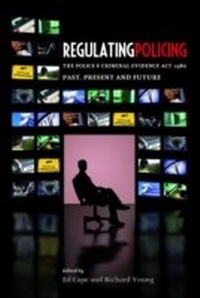
Regulating Policing
The Police and Criminal Evidence Act 1984 Past, Present and Future
1st Edition
Published on 24. September 2008
262 pages
978-1-84731-454-3 (ISBN)
Description

The Police and Criminal Evidence Act 1984 (PACE) was an innovative and controversial attempt to regulate the investigation of crime. Two decades on, it now operates in a very different context than in the mid-1980s. Whilst legal advice has become established as a basic right of those arrested and detained by the police, the police service has become increasingly professionalised but also increasingly driven by government objectives and targets. The Crown Prosecution Service, originally established to separate prosecution from investigation, is now becoming involved in the investigative process with the power to make charge decisions.
Although the basic structure of PACE has survived, almost continual revision and amendment has resulted in a markedly different creature than that which was originally enacted. In 2007 the government embarked on a further review of PACE, promising to 're-focus the investigation and evidence gathering processes [to deliver] 21st century policing powers to meet the demands of 21st century crime'.
This collection brings together some of the leading academic experts, police officers and defence lawyers who have a wealth of experience of researching and working with the PACE provisions. They examine the critical questions and issues surrounding PACE, providing unique and exciting insights into the demands and challenges of the regulation of policing.
Contributors
David Dixon, Professor of Law, University of New South Wales - 'Authorise and Regulate: A Comparative Perspective on the Rise and Fall of a Regulatory Strategy'.
Andrew Sanders, Professor of Criminal Law and Criminology, University of Manchester. 'Can Coercive Powers be Effectively Controlled or Regulated?'.
John Coppen, Police Federation spokesperson on police custody issues. 'PACE: A View From the Custody Suite'.
John Long, Assistant Chief Constable, Avon and Somerset Constabulary 'Keeping PACE? Some Front Line Policing Perspectives'.
Barbara Wilding, Chief Constable, South Wales Police. 'Tipping the Scales of Justice? A Review of the Impact of PACE on the Police, Due Process and the Search for the Truth 1984-2006'.
Richard Young, Professor of Law and Policy Research, University of Bristol. 'Street Policing After PACE: The Drift to Summary Justice'.
Ed Cape, Professor of Criminal Law and Practice, University of the West of England. 'PACE Then and Now: 21 Years of "Re-balancing"'.
Anthony Edwards, Leading criminal defence solicitor. 'The Role of Defence Lawyers in a "Re-balanced" System'.
John Jackson, Professor of Public Law, Queen's University, Belfast. 'Police and Prosecutors after PACE: The Road from Case Construction to Case Disposal'.
Although the basic structure of PACE has survived, almost continual revision and amendment has resulted in a markedly different creature than that which was originally enacted. In 2007 the government embarked on a further review of PACE, promising to 're-focus the investigation and evidence gathering processes [to deliver] 21st century policing powers to meet the demands of 21st century crime'.
This collection brings together some of the leading academic experts, police officers and defence lawyers who have a wealth of experience of researching and working with the PACE provisions. They examine the critical questions and issues surrounding PACE, providing unique and exciting insights into the demands and challenges of the regulation of policing.
Contributors
David Dixon, Professor of Law, University of New South Wales - 'Authorise and Regulate: A Comparative Perspective on the Rise and Fall of a Regulatory Strategy'.
Andrew Sanders, Professor of Criminal Law and Criminology, University of Manchester. 'Can Coercive Powers be Effectively Controlled or Regulated?'.
John Coppen, Police Federation spokesperson on police custody issues. 'PACE: A View From the Custody Suite'.
John Long, Assistant Chief Constable, Avon and Somerset Constabulary 'Keeping PACE? Some Front Line Policing Perspectives'.
Barbara Wilding, Chief Constable, South Wales Police. 'Tipping the Scales of Justice? A Review of the Impact of PACE on the Police, Due Process and the Search for the Truth 1984-2006'.
Richard Young, Professor of Law and Policy Research, University of Bristol. 'Street Policing After PACE: The Drift to Summary Justice'.
Ed Cape, Professor of Criminal Law and Practice, University of the West of England. 'PACE Then and Now: 21 Years of "Re-balancing"'.
Anthony Edwards, Leading criminal defence solicitor. 'The Role of Defence Lawyers in a "Re-balanced" System'.
John Jackson, Professor of Public Law, Queen's University, Belfast. 'Police and Prosecutors after PACE: The Road from Case Construction to Case Disposal'.
More details
Edition
1. Auflage
Language
English
Place of publication
London
United Kingdom
Publishing group
Bloomsbury Publishing PLC
Target group
Professional and scholarly
ISBN-13
978-1-84731-454-3 (9781847314543)
Copyright in bibliographic data and cover images is held by Nielsen Book Services Limited or by the publishers or by their respective licensors: all rights reserved.
Schweitzer Classification
Other editions
Additional editions
Edward Cape | Richard Young
Regulating Policing
The Police and Criminal Evidence Act 1984 Past, Present and Future
Book
09/2008
1st Edition
Hart Publishing
€85.70
Shipment within 15-20 days
Persons
Richard Young is co-author of Criminal Justice (3rd edn, OUP, 2007), and has conducted research into various aspects of the criminal process, including legal aid decision-making, restorative justice and police complaints.
Ed Cape is author of Defending Suspects at Police Stations (5th edn, LAG, 2006), and recent research includes an evaluation of the Public Defender Service in England and Wales, and effective criminal defence in Europe.
Ed Cape is author of Defending Suspects at Police Stations (5th edn, LAG, 2006), and recent research includes an evaluation of the Public Defender Service in England and Wales, and effective criminal defence in Europe.
Content
Introduction
Ed Cape and Richard Young
Authorize and Regulate: A Comparative Perspective on the Rise and Fall of a Regulatory Strategy
David Dixon
Can coercive powers be effectively controlled or regulated?
Andrew Sanders
PACE: A View From The Custody Suite
John Coppen
Keeping PACE? Some front line policing perspectives
John Long
Tipping the Scales of Justice?: A Review of the Impact of PACE on the Police, Due Process and the Search for Truth 1984-2006
Barbara Wilding
Street Policing After PACE: The Drift to Summary Justice
Richard Young
PACE then and now: 21 years of 're-balancing'
Ed Cape
The role of defence lawyers in a 're-balanced' system
Anthony Edwards
Police and Prosecutors after PACE: The Road from Case Construction to Case Disposal
John Jackson
Ed Cape and Richard Young
Authorize and Regulate: A Comparative Perspective on the Rise and Fall of a Regulatory Strategy
David Dixon
Can coercive powers be effectively controlled or regulated?
Andrew Sanders
PACE: A View From The Custody Suite
John Coppen
Keeping PACE? Some front line policing perspectives
John Long
Tipping the Scales of Justice?: A Review of the Impact of PACE on the Police, Due Process and the Search for Truth 1984-2006
Barbara Wilding
Street Policing After PACE: The Drift to Summary Justice
Richard Young
PACE then and now: 21 years of 're-balancing'
Ed Cape
The role of defence lawyers in a 're-balanced' system
Anthony Edwards
Police and Prosecutors after PACE: The Road from Case Construction to Case Disposal
John Jackson
