

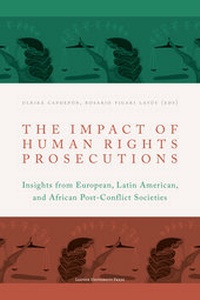
The Impact of Human Rights Prosecutions
Insights from European, Latin American, and African Post-Conflict Societies
Published on 3. November 2020
244 pages
978-94-6166-353-5 (ISBN)
Description

New perspectives on human rights prosecutions in various regional contexts
Human rights prosecutions are the most prominent mechanisms that victims demand to obtain accountability. Dealing with a legacy of gross human rights violations presents opportunities to enhance the right to justice and promote a more equal application of criminal law, a fundamental condition for a more substantive democracy in societies. This book seeks to analyse the impact, advances, and difficulties of prosecuting perpetrators of mass atrocities at national and international levels. What role does criminal justice play in redressing victims' wrongs, guaranteeing the non-repetition of mass atrocities, and attempting to overcome the damage caused by systematic human rights violations? This volume addresses critical issues in the field of human rights prosecution by drawing on the experiences of a variety of post-conflict and authoritarian countries covering three world regions. Contributing authors cover prosecutions in post-Nazi Germany, post-Communist Romania, and transnational legal complaints by victims of the Franco dictatorship, as well as domestic and third-country prosecutions for human rights violations in the pioneering South American countries of Argentina, Chile, Peru, and Uruguay, prosecutions in Darfur and Kenya, and the work of the International Criminal Court.
The Impact of Human Rights Prosecutions offers insights into the difficulties human rights trials face in different contexts and regions, and also illustrates the development of these legal procedures over time. The volume will be of interest to human rights scholars as well as legal practitioners, participants, justice system actors, and policy makers.
Contributors: Aleida Assmann (University of Konstanz), Kristine Avram (Philipps University of Marburg), Ulrike Capdepón (University of Konstanz), Rosario Figari Layús (Justus Liebig University of Giessen), Boris Hau (Diego Portales University), Iris Jave (Pontifical Catholic University), Geoffrey Lugano (Kenyatta University), Joachim J. Savelsberg (University of Minnesota), Debbie Sharnak (Rowan University), Valeria Vegh Weis (Free University of Berlin), Annette Weinke (Friedrich-Schiller University Jena)
This publication is GPRC-labeled (Guaranteed Peer-Reviewed Content).
Human rights prosecutions are the most prominent mechanisms that victims demand to obtain accountability. Dealing with a legacy of gross human rights violations presents opportunities to enhance the right to justice and promote a more equal application of criminal law, a fundamental condition for a more substantive democracy in societies. This book seeks to analyse the impact, advances, and difficulties of prosecuting perpetrators of mass atrocities at national and international levels. What role does criminal justice play in redressing victims' wrongs, guaranteeing the non-repetition of mass atrocities, and attempting to overcome the damage caused by systematic human rights violations? This volume addresses critical issues in the field of human rights prosecution by drawing on the experiences of a variety of post-conflict and authoritarian countries covering three world regions. Contributing authors cover prosecutions in post-Nazi Germany, post-Communist Romania, and transnational legal complaints by victims of the Franco dictatorship, as well as domestic and third-country prosecutions for human rights violations in the pioneering South American countries of Argentina, Chile, Peru, and Uruguay, prosecutions in Darfur and Kenya, and the work of the International Criminal Court.
The Impact of Human Rights Prosecutions offers insights into the difficulties human rights trials face in different contexts and regions, and also illustrates the development of these legal procedures over time. The volume will be of interest to human rights scholars as well as legal practitioners, participants, justice system actors, and policy makers.
Contributors: Aleida Assmann (University of Konstanz), Kristine Avram (Philipps University of Marburg), Ulrike Capdepón (University of Konstanz), Rosario Figari Layús (Justus Liebig University of Giessen), Boris Hau (Diego Portales University), Iris Jave (Pontifical Catholic University), Geoffrey Lugano (Kenyatta University), Joachim J. Savelsberg (University of Minnesota), Debbie Sharnak (Rowan University), Valeria Vegh Weis (Free University of Berlin), Annette Weinke (Friedrich-Schiller University Jena)
This publication is GPRC-labeled (Guaranteed Peer-Reviewed Content).
More details
Other editions
Additional editions
Ulrike Capdepon | Rosario Figari Layus
The Impact of Human Rights Prosecutions
Insights from European, Latin American, and African Post-Conflict Societies
Book
11/2020
Leuven University Press
€80.66
Shipment within 10-20 days
Persons
Editor
Ulrike Capdepón holds a PhD in political science and is a researcher and project coordinator at the Center for Cultural Inquiry (ZKF), University of Konstanz.
Rosario Figari Layús is postdoctoral researcher in social sciences and lecturer at the Chair for Peace Studies at the Law Faculty at the Justus Liebig University of Giessen.
Content
Prologue
Aleida Assmann
Introduction: Do Human Rights Trials Make a Difference after Conflict, Dictatorship and State-Sponsored Violence? Rosario Figari Layús and Ulrike Capdepón
Human Rights Trials without Human Rights Law: Prosecuting Nazi Crimes in Postwar Germany After Nuremberg Annette Weinke
Courts as a Site to Tell the "Truth": The Case of Former Prison Commander Alexandru Visinescu Kristine Avram
Seeking Justice for the Crimes of the Franco Dictatorship: The Politics of Victimhood in the "Argentine Legal Complaint"
Ulrike Capdepón
The Struggle of Victims for Human Rights Trials in Post-Dictatorship Chile Boris Hau
The State Against the State: The Impact of Governmental Contradictions on Human Rights Trials and Victims in Argentina
Rosario Figari Layús
Operation Condor Trials Abroad: The Innovation and Domestic Constraints of Transnational Prosecution
Debbie Sharnak
Tensions Between Criminal Trials and the Sense of Justice in Post-Conflict Peru Iris Jave
The International Criminal Court's "Africa Problem" and Suppression of the "Justice Cascade"
Geoffrey Lugano
Conditions and Cultural Consequences of International Criminal Justice Intervention: The Case of Darfur Joachim J. Savelsberg
The Effects of Seeking Justice on Behalf of the Victim: A Critical Analysis of Criminal Trials in the Kenyan Post-Election Violence Transitional Justice Process Valeria Vegh Weis
Concluding Reflections: Towards the End of Impunity? The Scope and Impact of Human Rights Trials
Rosario Figari Layús and Ulrike Capdepón
Aleida Assmann
Introduction: Do Human Rights Trials Make a Difference after Conflict, Dictatorship and State-Sponsored Violence? Rosario Figari Layús and Ulrike Capdepón
Human Rights Trials without Human Rights Law: Prosecuting Nazi Crimes in Postwar Germany After Nuremberg Annette Weinke
Courts as a Site to Tell the "Truth": The Case of Former Prison Commander Alexandru Visinescu Kristine Avram
Seeking Justice for the Crimes of the Franco Dictatorship: The Politics of Victimhood in the "Argentine Legal Complaint"
Ulrike Capdepón
The Struggle of Victims for Human Rights Trials in Post-Dictatorship Chile Boris Hau
The State Against the State: The Impact of Governmental Contradictions on Human Rights Trials and Victims in Argentina
Rosario Figari Layús
Operation Condor Trials Abroad: The Innovation and Domestic Constraints of Transnational Prosecution
Debbie Sharnak
Tensions Between Criminal Trials and the Sense of Justice in Post-Conflict Peru Iris Jave
The International Criminal Court's "Africa Problem" and Suppression of the "Justice Cascade"
Geoffrey Lugano
Conditions and Cultural Consequences of International Criminal Justice Intervention: The Case of Darfur Joachim J. Savelsberg
The Effects of Seeking Justice on Behalf of the Victim: A Critical Analysis of Criminal Trials in the Kenyan Post-Election Violence Transitional Justice Process Valeria Vegh Weis
Concluding Reflections: Towards the End of Impunity? The Scope and Impact of Human Rights Trials
Rosario Figari Layús and Ulrike Capdepón
