

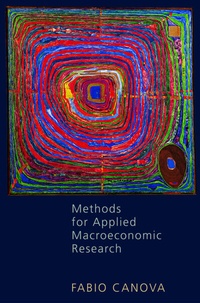
Methods for Applied Macroeconomic Research
1st Edition
Published on 18. November 2019
512 pages
978-1-4008-4102-8 (ISBN)
Description

The last twenty years have witnessed tremendous advances in the mathematical, statistical, and computational tools available to applied macroeconomists. This rapidly evolving field has redefined how researchers test models and validate theories. Yet until now there has been no textbook that unites the latest methods and bridges the divide between theoretical and applied work.
Fabio Canova brings together dynamic equilibrium theory, data analysis, and advanced econometric and computational methods to provide the first comprehensive set of techniques for use by academic economists as well as professional macroeconomists in banking and finance, industry, and government. This graduate-level textbook is for readers knowledgeable in modern macroeconomic theory, econometrics, and computational programming using RATS, MATLAB, or Gauss. Inevitably a modern treatment of such a complex topic requires a quantitative perspective, a solid dynamic theory background, and the development of empirical and numerical methods--which is where Canova's book differs from typical graduate textbooks in macroeconomics and econometrics. Rather than list a series of estimators and their properties, Canova starts from a class of DSGE models, finds an approximate linear representation for the decision rules, and describes methods needed to estimate their parameters, examining their fit to the data. The book is complete with numerous examples and exercises.
Today's economic analysts need a strong foundation in both theory and application. Methods for Applied Macroeconomic Research offers the essential tools for the next generation of macroeconomists.
Fabio Canova brings together dynamic equilibrium theory, data analysis, and advanced econometric and computational methods to provide the first comprehensive set of techniques for use by academic economists as well as professional macroeconomists in banking and finance, industry, and government. This graduate-level textbook is for readers knowledgeable in modern macroeconomic theory, econometrics, and computational programming using RATS, MATLAB, or Gauss. Inevitably a modern treatment of such a complex topic requires a quantitative perspective, a solid dynamic theory background, and the development of empirical and numerical methods--which is where Canova's book differs from typical graduate textbooks in macroeconomics and econometrics. Rather than list a series of estimators and their properties, Canova starts from a class of DSGE models, finds an approximate linear representation for the decision rules, and describes methods needed to estimate their parameters, examining their fit to the data. The book is complete with numerous examples and exercises.
Today's economic analysts need a strong foundation in both theory and application. Methods for Applied Macroeconomic Research offers the essential tools for the next generation of macroeconomists.
More details
Other editions
Additional editions
Fabio Canova
Methods for Applied Macroeconomic Research
Book
02/2007
Princeton University Press
€116.50
Shipment within 10-20 days
Person
Fabio Canova is ICREA Research Professor at the University of Pompeu Fabra in Barcelona and Fellow of the Centre for Economic Policy Research in London.
Content
Preface xi
Chapter 1: Preliminaries 1
1.1 Stochastic Processes 2
1.2 Convergence Concepts 3
1.3 Time Series Concepts 8
1.4 Laws of Large Numbers 14
1.5 Central Limit Theorems 16
1.6 Elements of Spectral Analysis 18
Chapter 2: DSGE Models, Solutions, and Approximations 26
2.1 A Few Useful Models 27
2.2 Approximation Methods 45
Chapter 3: Extracting and Measuring Cyclical Information 70
3.1 Statistical Decompositions 72
3.2 Hybrid Decompositions 83
3.3 Economic Decompositions 100
3.4 Time Aggregation and Cycles 104
3.5 Collecting Cyclical Information 105
Chapter 4: VAR Models 111
4.1 TheWold Theorem 112
4.2 Specification 118
4.3 Moments and Parameter Estimation of a VAR.q/ 126
4.4 Reporting VAR Results 130
4.5 Identification 141
4.6 Problems 151
4.7 Validating DSGE Models with VARs 159
Chapter 5: GMM and Simulation Estimators 165
5.1 Generalized Method of Moments and Other Standard Estimators 166
5.2 IV Estimation in a Linear Model 169
5.3 GMM Estimation: An Overview 176
5.4 GMM Estimation of DSGE Models 191
5.5 Simulation Estimators 197
Chapter 6: Likelihood Methods 212
6.1 The Kalman Filter 214
6.2 The Prediction Error Decomposition of Likelihood 221
6.3 Numerical Tips 228
6.4 ML Estimation of DSGE Models 230
6.5 Two Examples 240
Chapter 7: Calibration 248
7.1 A Definition 249
7.2 The Uncontroversial Parts 250
7.3 Choosing Parameters and Stochastic Processes 252
7.4 Model Evaluation 259
7.5 The Sensitivity of the Measurement 279
7.6 Savings, Investments, and Tax Cuts: An Example 282
Chapter 8: Dynamic Macro Panels 288
8.1 From Economic Theory to Dynamic Panels 289
8.2 Panels with Homogeneous Dynamics 291
8.3 Dynamic Heterogeneity 304
8.4 To Pool or Not to Pool? 315
8.5 Is Money Superneutral? 321
Chapter 9: Introduction to Bayesian Methods 325
9.1 Preliminaries 326
9.2 Decision Theory 335
9.3 Inference 336
9.4 Hierarchical and Empirical Bayes Models 345
9.5 Posterior Simulators 353
9.6 Robustness 370
9.7 Estimating Returns to Scale in Spain 370
Chapter 10: Bayesian VARs 373
10.1 The Likelihood Function of an m-Variable VAR(q) 374
10.2 Priors for VARs 376
10.3 Structural BVARs 390
10.4 Time-Varying-Coefficient BVARs 397
10.5 Panel VAR Models 404
Chapter 11: Bayesian Time Series and DSGE Models 418
11.1 Factor Models 419
11.2 Stochastic Volatility Models 427
11.3 Markov Switching Models 433
11.4 Bayesian DSGE Models 440
Appendix A Statistical Distributions 463
References 469
Index 487
Chapter 1: Preliminaries 1
1.1 Stochastic Processes 2
1.2 Convergence Concepts 3
1.3 Time Series Concepts 8
1.4 Laws of Large Numbers 14
1.5 Central Limit Theorems 16
1.6 Elements of Spectral Analysis 18
Chapter 2: DSGE Models, Solutions, and Approximations 26
2.1 A Few Useful Models 27
2.2 Approximation Methods 45
Chapter 3: Extracting and Measuring Cyclical Information 70
3.1 Statistical Decompositions 72
3.2 Hybrid Decompositions 83
3.3 Economic Decompositions 100
3.4 Time Aggregation and Cycles 104
3.5 Collecting Cyclical Information 105
Chapter 4: VAR Models 111
4.1 TheWold Theorem 112
4.2 Specification 118
4.3 Moments and Parameter Estimation of a VAR.q/ 126
4.4 Reporting VAR Results 130
4.5 Identification 141
4.6 Problems 151
4.7 Validating DSGE Models with VARs 159
Chapter 5: GMM and Simulation Estimators 165
5.1 Generalized Method of Moments and Other Standard Estimators 166
5.2 IV Estimation in a Linear Model 169
5.3 GMM Estimation: An Overview 176
5.4 GMM Estimation of DSGE Models 191
5.5 Simulation Estimators 197
Chapter 6: Likelihood Methods 212
6.1 The Kalman Filter 214
6.2 The Prediction Error Decomposition of Likelihood 221
6.3 Numerical Tips 228
6.4 ML Estimation of DSGE Models 230
6.5 Two Examples 240
Chapter 7: Calibration 248
7.1 A Definition 249
7.2 The Uncontroversial Parts 250
7.3 Choosing Parameters and Stochastic Processes 252
7.4 Model Evaluation 259
7.5 The Sensitivity of the Measurement 279
7.6 Savings, Investments, and Tax Cuts: An Example 282
Chapter 8: Dynamic Macro Panels 288
8.1 From Economic Theory to Dynamic Panels 289
8.2 Panels with Homogeneous Dynamics 291
8.3 Dynamic Heterogeneity 304
8.4 To Pool or Not to Pool? 315
8.5 Is Money Superneutral? 321
Chapter 9: Introduction to Bayesian Methods 325
9.1 Preliminaries 326
9.2 Decision Theory 335
9.3 Inference 336
9.4 Hierarchical and Empirical Bayes Models 345
9.5 Posterior Simulators 353
9.6 Robustness 370
9.7 Estimating Returns to Scale in Spain 370
Chapter 10: Bayesian VARs 373
10.1 The Likelihood Function of an m-Variable VAR(q) 374
10.2 Priors for VARs 376
10.3 Structural BVARs 390
10.4 Time-Varying-Coefficient BVARs 397
10.5 Panel VAR Models 404
Chapter 11: Bayesian Time Series and DSGE Models 418
11.1 Factor Models 419
11.2 Stochastic Volatility Models 427
11.3 Markov Switching Models 433
11.4 Bayesian DSGE Models 440
Appendix A Statistical Distributions 463
References 469
Index 487
