

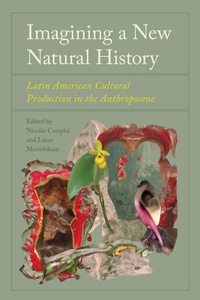
Imagining a New Natural History
Description

How writers, artists, and curators are taking creative new approaches to the discipline of natural history
Offering a fresh perspective on the Latin American climate crisis through the lens of natural history and its institutions, Imagining a New Natural History presents essays that analyze how books, artworks, and contemporary museum practices reconceive approaches to the discipline that cast humans and nature as separate entities. The creative works examined in this volume feature real and fictional archaeologists, museum curators, botanists, and taxidermists and explore subjects such as the catalog, the cabinet of curiosities, and the exhibition.
The contributors to this volume include leading scholars within Latin American studies and the environmental humanities, and the materials they study span diverse media, geographies, historical periods, and linguistic traditions, including Indigenous and Latinx cultural productions. They show how Latin American writers, artists, and critics provide a way of reckoning with the realities of climate change and the Anthropocene, as well as with the conceptual and aesthetic challenges that such realities pose to them. Through the perspectives of these artistic and literary practices, the natural history collections of anthropological museums, herbaria, and laboratories become explorations into the current climate predicament.
More details
Other editions
Additional editions
Persons
Nicolás Campisi, assistant professor in the Department of Spanish and Portuguese at Georgetown University, is the author of The Return of the Contemporary: The Latin American Novel in the End Times. Lucas Mertehikian is director of the Humanities Institute at the New York Botanical Garden.
Contributors: Gabriel Giorgi | Gisela Heffes | Nicolás Campisi | Antonio Gómez | Carlos Fonseca | Florencia Garramuño | Ignacio Veraguas Caripan | Valeria Meiller | Luciana Martins | Jerónimo Duarte-Riascos | Ignacio Pastén López | Florencia Malbrán | Joanna Page | Lucas Mertehikian | Matylda Figlerowicz | Nathaniel Wolfson | Emily Hind
Content
List of Figures
Acknowledgments
Introduction: The New Natural History
Nicolás Campisi and Lucas Mertehikian
Part I. The Institutions of Natural History
1. The Museum of Modernity: Photographic Archive, Patrimonial Collection, and Selk'nam Genocide
Ignacio Pastén López and Ignacio Veraguas Caripan
2. Árbol Ramón, the Axolotl/Ajolote, and LEGOs: Mexico City's Papalote Children's Museum
Emily Hind
3. A Contemporary Cabinet of Curiosities: Play, Improbability, and the Reinvention of the World in Liliana Porter's El hombre con el hacha y otras situaciones breves
Jerónimo Duarte-Riascos
Part II. Natural History and Ancestral Knowledge
4. Reactivating Richard Spruce's Amazonian Biocultural Archive
Luciana Martins
5. Poetics of an Expanded Humanity
Florencia Garramuño
6. Telling Natural Histories in Crispín Amador Ramírez's El infierno del paraíso and Kali Fajardo-Anstine's Woman of Light
Matylda Figlerowicz
Part III. Ecocriticism, New Materialism, Posthumanism
7. The Necrospace of the Anthropocene: An Anachronistic Archive
Gisela Heffes
8. The Ecological Novel: Unearthing a Latin American Land Archive
Carlos Fonseca
9. Disorder of Time in the Anticolonial Museum
Gabriel Giorgi
10. Emilio Renart's New Sense of Space
Florencia Malbrán
Part IV. Human and Nonhuman Histories
11. Exhibitions in the Face of the Climate Crisis: How Is the Anthropocene Shaping Hemispheric Aesthetics?
Valeria Meiller
12. The Act of Collecting in Latin American Documentary
Antonio Gómez
13. Marias and Joões: Naming in Maria Esther Maciel's Poetic Encyclopedias
Nathaniel Wolfson
Afterword
Joanna Page
List of Contributors
Index
