

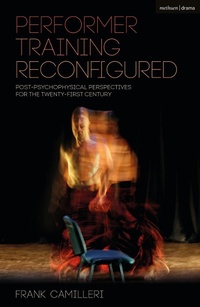
Performer Training Reconfigured
Post-Psychophysical Perspectives for the Twenty-First Century
1st Edition
Published on 24. January 2019
288 pages
978-1-350-06021-0 (ISBN)
Description

Offering a radical re-evaluation of current approaches to performer training, this is a text that equips readers with a set of new ways of thinking about and ultimately 'doing' training. Stemming from his extensive practice and incorporating a review of prevailing methods and theories, Frank Camilleri focuses on how material circumstances shape and affect processes of training, devising, rehearsing and performing.
Frank Camilleri puts forward the 'post-psychophysical' as a more extended form of psychophysical discussion and practice that emerged and dominated in the 20th century. The 'post-psychophysical' updates the concept of an integrated bodymind in various ways, such as the notion of a performer's bodyworld that incorporates technology and the material world. Offering invaluable introductions to a wide range of theories around which the book is structured - including postphenomenological, sociomaterial, affect and situated cognition - this volume provides readers with an enticing array of critical approaches to training and creative processes.
Frank Camilleri puts forward the 'post-psychophysical' as a more extended form of psychophysical discussion and practice that emerged and dominated in the 20th century. The 'post-psychophysical' updates the concept of an integrated bodymind in various ways, such as the notion of a performer's bodyworld that incorporates technology and the material world. Offering invaluable introductions to a wide range of theories around which the book is structured - including postphenomenological, sociomaterial, affect and situated cognition - this volume provides readers with an enticing array of critical approaches to training and creative processes.
More details
Series
Edition
1. Auflage
Language
English
Place of publication
London
United Kingdom
Publishing group
Bloomsbury Publishing PLC
Target group
College/higher education
ISBN-13
978-1-350-06021-0 (9781350060210)
Copyright in bibliographic data and cover images is held by Nielsen Book Services Limited or by the publishers or by their respective licensors: all rights reserved.
Schweitzer Classification
Other editions
Additional editions
Frank Camilleri
Performer Training Reconfigured
Post-Psychophysical Perspectives for the Twenty-First Century
Book
02/2020
Methuen Drama
€53.47
Shipment within 15-20 days
Frank Camilleri
Performer Training Reconfigured
Post-Psychophysical Perspectives for the Twenty-First Century
Book
01/2019
Methuen Drama
€141.36
Shipment within 15-20 days
Person
Frank Camilleri is Associate Professor in Theatre Studies at the University of Malta where he is also Director of the School of Performing Arts' research centre for 21st Century Studies in Performance. He is Artistic Director and founder of Icarus Performance Project, which serves as the main platform of his Practice as Research (www.icarusproject.info).
Content
Preface
Note on Text
Introduction
Assemblage Theory
Problematising Presence
Relations of Exteriority
'Other Way Around' Perspectives
Talking Training (or a Literature Review)
Transitioning to Posthuman Perspectives
New Fields of Study
Crossroads of Psychophysicality
Chapter 1. Towards Post-Psychophysical Perspectives
Instrumental Perceptions
Enabling Technology
Things that Matter
Man and Machine
'Available Time' Hypothesis
Project Hybrid
Chapter 2. Experiencing Bodyworld: Postphenomenological Perspectives
Conventional Psychophysicality
Introducing Ihde
Postphenomenology
Multistabilities in Performance
Interrelational Ontology
Hybrid Relations, Embodied Hermeneutic
Other Relations
Bodies (Merleau-Ponty) to Bodies (Zarrilli) to Bodies (Ihde)
Suggestions for Practice
Chapter 3. Of Materiality and Dynamic Hybrids: Sociomaterial Perspectives
Constructing Latour
Dynamic Relations of Social Networks
Dynamic Hybrids
Trinity of Actants
Hybrids in Performance
Ideological and Ethical Approaches
Material and Immaterial Labour
Future Trainings
Hyphenated Perspectives for Hyphenated Practices
Tips for Practice Analysis
Chapter 4. Unfolding Materialities of Practice: Methodological Perspectives
Working Art
Ecology of Connected Elements in Work Practices
A Methodological Framework
Case Study: Practitioner-Academic Hybrid Practice
Towards a Blended Methodology
Tips for Practice Analysis
Chapter 5. Incorporeal Materiality: Perspectives of Affect
Perspective of Affect
Intensities of Affect
Materialities of the World Unite
Ecologies of Affect for Performance
Affective Logic, Habit, and Technique
Mime and the Punctuation of Movement
Post-Psychophysical Implications of Affect
Suggestions for Practice
Chapter 6. Tuning to the Post-Psychophysical Dance: Perspectives from Situated Cognition
Fritz Writing Fritz
Re(sonant)-Cognition and On-the-line Embodiment
Sensorimotor Contingencies
Fritz Observing Ryszard
Body Image, Body Schema
Sensorimotor Subjectivity
Sensorimotor Exigencies and Affective Framing
Technology and Objects: Expansion, Extension, Incorporation
Incorporated Extension
Epistemic Action
Conclusion
Suggestions for Practice
Glossary of Terms
Notes
Bibliography
Index
Note on Text
Introduction
Assemblage Theory
Problematising Presence
Relations of Exteriority
'Other Way Around' Perspectives
Talking Training (or a Literature Review)
Transitioning to Posthuman Perspectives
New Fields of Study
Crossroads of Psychophysicality
Chapter 1. Towards Post-Psychophysical Perspectives
Instrumental Perceptions
Enabling Technology
Things that Matter
Man and Machine
'Available Time' Hypothesis
Project Hybrid
Chapter 2. Experiencing Bodyworld: Postphenomenological Perspectives
Conventional Psychophysicality
Introducing Ihde
Postphenomenology
Multistabilities in Performance
Interrelational Ontology
Hybrid Relations, Embodied Hermeneutic
Other Relations
Bodies (Merleau-Ponty) to Bodies (Zarrilli) to Bodies (Ihde)
Suggestions for Practice
Chapter 3. Of Materiality and Dynamic Hybrids: Sociomaterial Perspectives
Constructing Latour
Dynamic Relations of Social Networks
Dynamic Hybrids
Trinity of Actants
Hybrids in Performance
Ideological and Ethical Approaches
Material and Immaterial Labour
Future Trainings
Hyphenated Perspectives for Hyphenated Practices
Tips for Practice Analysis
Chapter 4. Unfolding Materialities of Practice: Methodological Perspectives
Working Art
Ecology of Connected Elements in Work Practices
A Methodological Framework
Case Study: Practitioner-Academic Hybrid Practice
Towards a Blended Methodology
Tips for Practice Analysis
Chapter 5. Incorporeal Materiality: Perspectives of Affect
Perspective of Affect
Intensities of Affect
Materialities of the World Unite
Ecologies of Affect for Performance
Affective Logic, Habit, and Technique
Mime and the Punctuation of Movement
Post-Psychophysical Implications of Affect
Suggestions for Practice
Chapter 6. Tuning to the Post-Psychophysical Dance: Perspectives from Situated Cognition
Fritz Writing Fritz
Re(sonant)-Cognition and On-the-line Embodiment
Sensorimotor Contingencies
Fritz Observing Ryszard
Body Image, Body Schema
Sensorimotor Subjectivity
Sensorimotor Exigencies and Affective Framing
Technology and Objects: Expansion, Extension, Incorporation
Incorporated Extension
Epistemic Action
Conclusion
Suggestions for Practice
Glossary of Terms
Notes
Bibliography
Index
