

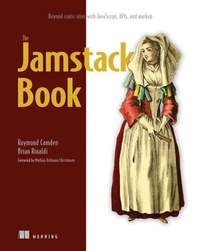
The Jamstack Book
Beyond static sites with JavaScript, APIs, and markup
1st Edition
Published on 21. June 2022
280 pages
978-1-63835-693-6 (ISBN)
Description

Jamstack = JavaScript, APIs, and Markup. Use established standard technologies to build super-fast static websites without sacrificing rich, dynamic features.
In The Jamstack Book, you will learn how to:
Use different static site generators to build websites
Deploy Jamstack sites with 11ty, Next.js, Hugo, and Jekyll
Add dynamic capabilities like form processing and eCommerce
Enhance your Jamstack site with serverless capabilities
Integrate a CMS with a Jamstack site
Jamstack sites use JavaScript, APIs, and Markup to create fast, dynamic pages without the overhead of heavyweight frameworks. The Jamstack Book is your essential guide to this exciting new web architecture. Written by renowned Jamstack experts Raymond Camden and Brian Rinaldi, it's filled with real-world projects to develop and hone your skills.
You'll learn how to lay out and generate a site, set up your own CMS, and add dynamic features like user logins and search functionality. Confusing jargon is demystified. Plus, you'll get the chance to try out different static site generators and find the one that works best for you. Pick up this book today, and you'll discover how the Jamstack answers your need for speed and simplicity.
About the technology
JavaScript, APIs, and pre-rendered Markup put the JAM in Jamstack. This modern web architecture delivers the quick load times of static sites along with the dynamic functionality you need for user-friendly interactive features. Built with lightweight standards and tools, Jamstack sites are fast, secure, easy to maintain, and naturally optimized for mobile and SEO.
About the book
The Jamstack Book teaches effectively by creating a portfolio of sites, ranging from a simple blog to an eCommerce store. Each new project introduces important skills, including cloud deployment, user logins, and search. You'll get hands-on experience with tools like 11ty, Next.js, and Netlify. As your skills grow, the examples become more sophisticated, including serverless technology, dynamic forms, and an integrated CMS.
What's inside
Use different static site generators to build websites
Add dynamic capabilities like form processing and eCommerce
Enhance your Jamstack site with serverless capabilities
Integrate a CMS with a Jamstack site
About the reader
For web developers and CMS site developers.
About the author
Raymond Camden is the author of multiple books on web development and has been blogging and presenting for almost twenty years. Brian Rinaldi has been involved in static site and Jamstack development since the early days.
Table of Contents
1 Why Jamstack?
2 Building a basic Jamstack site
3 Building a blog
4 Building a documentation site
5 Building an e-commerce site
6 Deployment
7 Adding dynamic elements
8 Working with serverless computing
9 Adding a content management system
10 Migrating to the Jamstack
In The Jamstack Book, you will learn how to:
Use different static site generators to build websites
Deploy Jamstack sites with 11ty, Next.js, Hugo, and Jekyll
Add dynamic capabilities like form processing and eCommerce
Enhance your Jamstack site with serverless capabilities
Integrate a CMS with a Jamstack site
Jamstack sites use JavaScript, APIs, and Markup to create fast, dynamic pages without the overhead of heavyweight frameworks. The Jamstack Book is your essential guide to this exciting new web architecture. Written by renowned Jamstack experts Raymond Camden and Brian Rinaldi, it's filled with real-world projects to develop and hone your skills.
You'll learn how to lay out and generate a site, set up your own CMS, and add dynamic features like user logins and search functionality. Confusing jargon is demystified. Plus, you'll get the chance to try out different static site generators and find the one that works best for you. Pick up this book today, and you'll discover how the Jamstack answers your need for speed and simplicity.
About the technology
JavaScript, APIs, and pre-rendered Markup put the JAM in Jamstack. This modern web architecture delivers the quick load times of static sites along with the dynamic functionality you need for user-friendly interactive features. Built with lightweight standards and tools, Jamstack sites are fast, secure, easy to maintain, and naturally optimized for mobile and SEO.
About the book
The Jamstack Book teaches effectively by creating a portfolio of sites, ranging from a simple blog to an eCommerce store. Each new project introduces important skills, including cloud deployment, user logins, and search. You'll get hands-on experience with tools like 11ty, Next.js, and Netlify. As your skills grow, the examples become more sophisticated, including serverless technology, dynamic forms, and an integrated CMS.
What's inside
Use different static site generators to build websites
Add dynamic capabilities like form processing and eCommerce
Enhance your Jamstack site with serverless capabilities
Integrate a CMS with a Jamstack site
About the reader
For web developers and CMS site developers.
About the author
Raymond Camden is the author of multiple books on web development and has been blogging and presenting for almost twenty years. Brian Rinaldi has been involved in static site and Jamstack development since the early days.
Table of Contents
1 Why Jamstack?
2 Building a basic Jamstack site
3 Building a blog
4 Building a documentation site
5 Building an e-commerce site
6 Deployment
7 Adding dynamic elements
8 Working with serverless computing
9 Adding a content management system
10 Migrating to the Jamstack
More details
Other editions
Additional editions
Raymond Camden | Brian Rinaldi
Jamstack Book, The: Beyond static sites with JavaScript, APIs, and Markup
Beyond Static Sites with Javascript, Apis, and Markup
Book
07/2022
Manning Publications
€47.00
Article not available at the moment
