


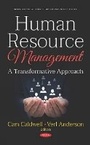
Human Resource Management: A Transformative Approach
Published on 2. January 2019
335 pages
978-1-5361-4719-3 (ISBN)
Description

Dr. Cam Caldwell and Dr. Verl Anderson have written extensively about successful organizations and the obligation of leaders and human resource professionals in today's challenging world. This new book focuses on the need for a new transformative approach to human resource management to redefine individuals' lives and organizational cultures. Dr. Cam Caldwell and Dr. Verl Anderson combine outstanding scholarly experience with more than twenty-five years of practitioner insights into explaining how and why human resource professionals must recalibrate their sites in contributing to their organizations' success.
More details
Other editions
Additional editions
Book
01/2019
Nova Science Publishers Inc
€303.05
Shipment within 15-20 days
Content
- Intro
- Contents
- Preface
- Chapter 1
- Introduction and Overview: A Transformative Approach
- Problems of the Modern Corporation
- Redefining the Employment Relationship
- Focus on "Upper End" Profits
- Hiring of Contingent Employees
- Short-Term Economic Focus
- Robbing "Skunk Works"
- Mishandling Expansion
- Compromised Ethics
- Tolerating Mediocrity
- Overlooking the Importance of Service
- Reluctance to Risk
- A Transformative Approach and HRM
- Summary of the Chapters
- Chapter Two Transforming a Discipline - The Evolution of Human Resource Management
- Chapter Three: A Transformative Philosophy - Insights to Excellence
- Chapter Four: Transformative Ethics and Human Resource Management
- Chapter Five: Developing Competencies in Human Resources - The Personal Transformation
- Chapter Six: Transformative Leadership and the Role of Human Resources
- Chapter Seven: Transforming People - Creating a Culture of Change
- Chapter Eight: Transforming Change - Internal Integration and the HRM Role
- Chapter Nine: Human Resource Management and the External Role
- Chapter Ten: International Human Resources - Changing the Paradigm
- Chapter Eleven: Tomorrow's Human Resources - Transforming the Future
- Chapter Twelve: Transforming Your Life - Your Moral Duty
- Conclusion
- References
- Chapter 2
- Transforming a Discipline: The Evolution of Human Resource Management
- The Evolving of HRM
- Era of Formalized Management
- Underlying HRM Value
- A Scientific Management Approach
- Underlying HRM Value
- The Enlightened Perspective
- Underlying HRM Value
- The Hawthorne Era
- Underlying HRM Value
- The Human Relations Era
- Underlying HRM Value
- The Psychological Assessment Era
- Underlying HRM Value
- The Human Motivation Era
- Underlying HRM Value
- The Performance Measurement Era
- Underlying HRM Value
- The Downsizing Era
- Underlying HRM Value
- The Strategic Management Era
- Underlying HRM Value
- The Transformative Era
- Underlying HRM Value
- Six Realities for HRPs
- 1. HRPs Will Be Asked to Contribute - But Will Have Little Formal Power
- 2. HRPs Are Expected to Be Experts - Virtually About Everything
- 3. In a Constantly Changing World, The Learning Requirement Will Never Stop
- 4. Many of the Issues to Face Will Demand a Subjective Response
- 5. Many Variables Will be Beyond Your Control - So Accept That Context Now
- 6. For Many Issues There Will be No "Right Answers" -- Sorry about That!
- Nine Critical Skills
- 1. The Skill to Listen
- 2. The Empathy to Care
- 3. The Ability to Say, "No."
- 4. The Curiosity to Question
- 5. The Charity to Forgive
- 6. The Humility to Appreciate
- 7. The Vision to Foresee
- 8. The Capacity to Research
- 9. The Sense of Humor to Laugh
- Conclusion
- References
- Chapter 3
- A Transformative Philosophy: Insights to Excellence
- The Transformative Approach
- Transformative Philosophy
- Transformative Philosophy and the Theory of Reasoned Action
- Six Components of a Transformative Philosophy
- 1. Purpose
- 2. Principles
- 3. Practices
- 4. People
- 5. Perspective
- 6. Priorities
- Adopting a Transformative Philosophy
- 1. Formally Examine Your Own Underlying Beliefs
- 2. Research Evolving Literature about Successful Organizations
- 3. Evaluate Your Values and Assumptions
- 4. Define How You Want to be Treated
- 5. Formalize Your Mission Statement
- 6. Examine the Consequences of Your Behaviors
- 7. Assess the Commitment and Trust of Others
- 8. Consider the Covenantal Duties Leaders Owe
- 9. Update Your Own Philosophy
- 10. Recommit Yourself to a Higher Standard
- Conclusion
- References
- Chapter 4
- Transformative Ethics and Human Resource Management
- Ethics, Morality, and Human Resources
- Transformative Ethics and Human Resource Management
- 1. Ethic of Care
- Honoring this Ethic
- Failing to Honor
- 2. Ethic of Self-Actualization
- Honoring the Ethic
- Failing to Honor
- 3. Ethic of Contributing Liberty
- Honoring this Ethic
- Failing to Honor
- 4. Ethic of Distributive Justice
- Honoring the Ethic
- Failing to Honor
- 5. Ethic of Economic Efficiency
- Honoring this Ethic
- Failing to Honor
- 6. Ethic of Universal Rights
- Honoring the Ethic
- Failing to Honor
- 7. Ethic of Universal Rules
- Honoring the Ethic
- Failing to Honor
- 8. Utilitarian Ethics
- Honoring this Ethic
- Failing to Honor
- 9. Ethic of Government Regulations
- Honoring this Ethic
- Failing to Honor
- 10. Ethics of Religious Injunction
- Honoring this Ethic
- Failing to Honor
- 11. Virtue Ethics
- Honoring this Ethic
- Failing to Honor
- 12. Ethic of Self-Interest
- Honoring this Ethic
- Failing to Honor
- Applying Transformative Ethics
- 1. Examine Your Own Ethical Assumptions
- 2. Acknowledge the Reality of Conflicting Expectations
- 3. Identify Possible Ethical Breaches
- 4. Incorporate the TE Framework
- 5. Commit to a Revised Ethical Standard
- 6. Constantly Reassess Systems and Behaviors
- The Challenge
- References
- Chapter 5
- Developing Competencies in Human Resources: The Personal Transformation
- Management Functions and Competencies
- Ability to Plan
- Skill in Organizing
- Directing Effectively
- Subtle Control
- Constant Monitoring
- Operative Functions and Competencies
- Recruitment
- Selection
- Performance Assessment
- Training
- Employee Relations
- Internal Consulting
- Safety Administration
- Reporting
- Acquiring These Competencies
- The Challenge
- References
- Chapter 6
- Transformative Leadership and the Role of Human Resources
- Six Strategic Roles of Human Resources
- 1. Create and Sustain an Organizational Culture
- 2. Demonstrate Excellence Performing Technical Tasks
- 3. Function as Consulting Business Partners
- 4. Empower Employees and Represent their Interests
- 5. Support Constant Learning and Continuous Improvement
- 6. Monitor the Climate and Support Continuous Change
- The Nature of Transformative Leadership
- Level 5 Leadership's Humility and Fierce Resolve
- Covenantal Leaders' Commitment to the Truth
- Servant Leaders' Caring for Others
- Principle-Centered Leadership's Emphasis on Virtues
- Charismatic Leadership's Personal Connection
- Transformational Leadership's Commitment to Change
- Transformative Leadership's Integration of Obligations
- Ten HRM Contributions of Transformative Leadership
- 1. Emphasizes the Importance of Ethics and Trust
- 2. Confirms the Importance of Leader Humility
- 3. Affirms the Significance of Win-Win
- 4. Values Service Over Self-Interest
- 5. Rewards Constant Learning
- 6. Sustains a Noble Purpose
- 7. Founded on Universal Principles
- 8. Seeks Facts and Truth
- 9. Empowers and Engages
- 10. Embraces Ethical Stewardship
- The Transformative Leadership Challenge
- References
- Chapter 7
- Transforming People: Creating a Culture of Change
- Organizational Culture and the HRP
- Culture, Human Resources, and Transforming People
- Eight Significant HRP Responsibilities
- 1. Identifying Changes in Strategic Direction
- 2. Researching Critical Factors to Support Change
- 3. Responding to Structural/Recruiting Priorities
- 4. Consulting with Departments and Teams
- 5. Conducting Essential Organization Training and Development
- 6. Advising and Monitoring the Change Process
- 7. Tracking and Reporting Key Indicators
- 8. Creating Systems that Reinforce the Transition
- Obstacles to Transforming People
- 1. Defining the Wrong Purpose
- 2. Identifying the Wrong Job Requirements
- 3. Hiring the Wrong People
- 4. Ignoring True Principles
- 5. Failing to Explain Decisions
- 6. Undercommunicating Key Information
- 7. Overlooking Critical Employees
- 8. Thinking Short-term
- 9. Underinvesting in Employee Training
- 10. Treating Everyone the Same
- 11. Forgetting to Thank
- 12. Breaking Important Promises
- The Challenge
- References
- Chapter 8
- Transforming Change: Internal Integration and the HRM Role
- Human Resources and its Evolving Role
- HRPs as Advocates of Change
- HRPs as Champions of Change
- HRPs as Facilitators of Change
- Supporting Organization Transformation
- 1. Clarifying the Problems
- 2. Reporting Unexpected Surprises
- 3. Involving Employees Throughout
- 4. Delivering Training about Change
- 5. Researching Alternatives
- 6. Identifying Root Causes
- 7. Aligning HRM Practices
- 8. Celebrating Small Wins
- 9. Reinforcing Culture Changes
- 10. Follow Up with Managers
- Reframing the HRM Role
- 1. Reexamine the Role of Strategic HRM
- 2. Update Your Assumptions about the Value of Trust
- 3. Rethink the Values that Matter to You
- 4. Acknowledge the Need for a Change-Oriented Culture
- 5. Align Your HRM Policies with Your Strategy
- 6. Examine Your Fundamental Ethical Assumptions
- 7. Invest in Constant Learning and Continuous Improvement
- 8. Be World Class or Prepare to Exit
- No Guarantees
- References
- Chapter 9
- Human Resource Management and the External Role
- Kotter's Change Model and External Adaptation
- 1. Establishing a Sense of Urgency
- 2. Creating the Guiding Coalition
- 3. Developing a Vision and Strategy
- 4. Communicating the Change Vision
- 5. Empowering Employees for Broad-Based Action
- 6. Generating Short-Term Wins
- 7. Consolidating Gains and Producing More Change
- 8. Anchoring New Approaches in the Culture
- Seven Qualities of HRPs
- 1. Knowledge of Economic Factors
- 2. Awareness of Political Instability
- 3. Expertise about Disruptive Innovation
- 4. Competence in Force Field Analysis
- 5. Skill in Culture Realignment
- 6. Knowing What to Measure
- 7. Contextual Assessment Insight
- Effectively Utilizing HRPs
- 1. Carefully Assess the Qualifications of All HRPs
- 2. Demand HRM & TMT Accountability
- 3. Insist Upon Integrity, Beneficence, and Competence
- 4. Prepare for Constant Change
- 5. Adopt a Learning Culture
- Conclusion
- References
- Chapter 10
- International Human Resources: Changing the Paradigm
- Eight Common Problems
- 1. The Ineffectiveness of Ex Patriate Management
- 2. Insensitivity to Cultural Differences
- 3. Capabilities of Host Country HRM Personnel
- 4. Incompatibility in Partnering with Local Personnel
- 5. Compensating for Differences in Standard of Living
- 6. Understanding and Responding to Local Laws
- 7. Adjusting to Differences in Ethical Assumptions
- 8. Difficulty in Creating a Valid Interpersonal Connection
- Twelve Ways to Improve IHRM
- 1. Exponentially Increase Expat Training
- 2. Increase Tenure Requirement for Expat Assignments
- 3. Expand Expat Training for Spouses and Children
- 4. Discontinue Creation of Company Compounds
- 5. Reward Employees and Families for Language Competency
- 6. Increase the Length of Time of Expat Preparation
- 7. Build in a Career Path for Expat Repatriation
- 8. Place More HRP Expats in Host Countries
- 9. Recruit Host Country Employees to Attend Home Country Universities
- 10. Invest in High Potential Host Country "Stars"
- 11. Emphasize Social Interaction between Expats and Host Country Nationals
- 12. Adjusting Host Country Compensation for Key Positions
- Insights about IHRM
- 1. The Nature of the Gig Economy
- 2. The Myth of the "Good Manager"
- 3. TMT Failure to Understand Cultural Differences
- 4. The Myth that "HRM is Easy and Anyone can do It"
- 5. Missing the HRM Issue
- 6. Insufficient Host Country IHRM Support
- Conclusion
- References
- Chapter 11
- Tomorrow's Human Resources: Transforming the Future
- Nine Changes in HRM
- 1. Creation of the Core Corporation
- 2. Restructuring Employee Selection
- 3. Scrapping of Traditional Performance Appraisal
- 4. Increasing Importance of Employee Partnering
- 5. Expanding the Tracking of Value Added
- 6. Increasing Importance of Accountability
- 7. Partnering with Academia and Government
- 8. Expanding Social Responsibility
- 9. Discontinuing HRM Outsourcing
- Barriers to Change
- The Change Challenge
- References
- Chapter 12
- Transforming Your Life: Your Moral Duty
- The Personal Contribution of HRPs
- 1. Personal Example of Organizational Values
- 2. Subject Matter Experts of Their Profession
- 3. Champions of the Organizational Mission
- 4. Advocates of Employees' Best Interests
- 5. Personal Role Models
- The Nature of Individual Identity
- Eight Principles to a Healthier Identity
- Expanding Your Capacity
- The Challenge
- References
- About the Editors and Authors
- Index
- Blank Page
- Blank Page
