

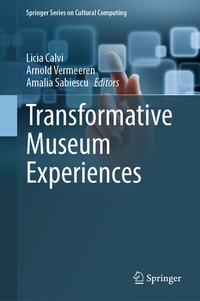
Transformative Museum Experiences
Description

Following on the volume Museum Experience Design (2018), this book acknowledges the changing role of museums in society with a focus on designing experiences as vehicles for transformation. We look at transformation through a systemic perspective, anchored in the experience that museums offer to visitors. One facet of our exploration regards the museum experience itself as an instrument for change. At this level we conceptualise what we mean by a transformative experience and look at design approaches specifically geared towards inducing transformation. We then turn attention towards the way recent changes in the socio-political and cultural context reverberated in structural and functional changes inside the museum and connected institutions and communities, with shifting museum identities and new forms of cooperation emerging. Finally, we zoom in on the role of technology in the making of transformative museum experiences, looking at opportunities and affordances but also calling for an ethical approach to integration of technology in museum practice.
More details
Other editions
Additional editions
Persons
Licia Calvi is a Senior Lecturer at the Breda University of Applied Sciences, the Netherlands, specialising in the digital transformation of museums, and a visiting professor in Museum Communication Studies at the University of Bergamo, in Italy. A Digital Humanist, she investigates how digital technology is used in museums beyond enhancing the visitor experience, to shape (new) museum practices and the role storytelling plays in them.
Arnold P. O. S. Vermeeren is Associate Professor at TU Delft, Faculty of Industrial Design Engineering and Director of the Faculty's MuseumFutures Lab. He was educated as an industrial designer and has been involved in various EU-funded projects on User Experience (UX) as well as a large variety of museum experience-related projects. His current research focuses on designing transformative museum experiences related to societal changes.
Amalia Sabiescu is a Senior Lecturer in Media and Creative Industries at Loughborough University London. A media and communications scholar with an interdisciplinary research agenda, Dr Sabiescu employs ecological frameworks to study the nexus between social, cultural and digital change. Her research investigates this dynamic in museums and the heritage sector, examining processes of digital transformation and the evolving social and educational roles of museums. And in community-based research, with a special interest in the connection between aspirations and social change for young people in transition.
Content
Introduction. Transformative museum experiences at a time of transformation.- Part 1: Juxtaposition and the liminal exhibit - Inevitable and surprising, at the same time.- Attachments in museum experience design. Displaying relationships and networks of public urban heritage.- Designing "One-minute" experiences.- Part 2: The changing museum: Structure, social role and relationships.- Transformative experience design in science and technology centres and museums; assumption shifts, co-curation, polyvocality and controversies.- Discovering volunteers as an essential community of practice in small museums in the Netherlands.- Third space literacies and museum learning.- Exhibiting conflict as a transformative strategy: Writing contemporary history with the local community.- Ochre painting workshops as a tool for interactive and sensory museum learning.- Part 3: Supporting technologies.- Preserving immersive experiences as transformative museum experiences.- The Phygital museum ecosystem: Pushing comfort zone boundaries in the visitor museum experience.- Seeing art through the eye of the algorithm: Artificial intelligence in the museum.- Artificial exchange: Chatbots and the ethics of museum experience design.
