

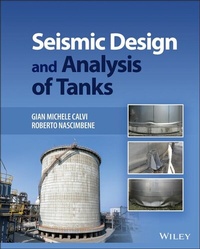
Seismic Design and Analysis of Tanks
Description

A detailed view on the effects of seismic activity on tank structures
As the use of above-ground and underground storage tanks (ASTs and USTs) continues to grow--with approximately 545,000 in the USA alone--the greatest threat to ASTs and USTs is earthquakes, causing the contamination of groundwater, a vital source of drinking water throughout the world. These tanks suffer a great deal of strain during an earthquake, as a complicated pattern of stress affects them, such that poorly designed tanks have leaked, buckled, or even collapsed during seismic events. Furthermore, in oil and gas industrial plants, the risk of damage is even more critical due to the effects of explosion, collapse, and air or soil contamination by chemical fluid spillages.
Seismic Design and Analysis of Tanks provides the first in-depth discussion of the principles and applications of shell structure design and earthquake engineering analyses focused on tank structures, and it explains how these methodologies can help prevent the destruction of ASTs and USTs during earthquakes. Providing a thorough examination of the design, analysis, and performance of steel, reinforced concrete, and precast tanks, this book takes a look at tanks that are above-ground, underground, or elevated, anchored and unanchored, and rigid or flexible, and evaluates the efficacy of each method during times of seismic shaking--and it does so without getting bogged down in impenetrable mathematics and theory.
Seismic Design and Analysis of Tanks readers will also find:
* A global approach to the best analytical and practical solutions available in each region:
* discussion of the latest US codes and standards from the American Society of Civil Engineers (ACSE 7), the American Concrete Institute (ACI 350,3, 371.R), the American Water Works Association (AWWA D100, D110, D115), and the American Petroleum Institute (API 650)
* an overview of the European codes and standards, including Eurocode 8-4 and CEN-EN 14015
* Hundreds of step-by-step equations, accompanied by illustrations
* Photographs illustrating real-world damage to tanks caused by seismic events
Perfect for practising structural engineers, geotechnical engineers, civil engineers, and engineers of all kinds who are responsible for the design, analysis, and performance of tanks and their foundations--as well as students studying engineering--Seismic Design and Analysis of Tanks is a landmark text, the first work of its kind to deal with the seismic engineering performance of all types of storage tanks.
More details
Other editions
Additional editions
Persons
Gian Michele Calvi, PhD, is a Full Professor of Structural Engineering at the IUSS Pavia, Italy, and Adjunct Professor at North Carolina State University, USA, in the Department of Civil, Construction, and Environmental Engineering. He is also the founder of the EUCENTRE Foundation for Training and Research in Earthquake Engineering and is currently the Director of the International Association of Earthquake Engineering.
Roberto Nascimbene, PhD, is an Associate Professor of Structural Engineering at the IUSS Pavia, Italy, and Adjunct Professor at the University of Pavia, Italy, in the Department of Civil Engineering and Architecture. He is also a National Committee Member of the European UNI/CT 021/SC 03 "Steel Structures" and a member of the Project Team SC8.T5 - Evolution of EN 1998-4 and EN 1998-6 "M/515 Phase 3 or 4."
Content
Preface xi
Acknowledgments xiii
Introduction xv
1 Appealing shell structures 1
1.1 Beams and arches . . . . . . . . . . . . . . . . . . . . . . . . . . . 1
1.2 Plates and vaults . . . . . . . . . . . . . . . . . . . . . . . . . . . 6
1.3 Rectangular and cylindrical tanks . . . . . . . . . . . . . . . . . . 12
1.4 Seismic behaviour of tanks . . . . . . . . . . . . . . . . . . . . . 23
1.5 Field observation of damage to tanks induced by seismic events 38
1.6 Design consideration . . . . . . . . . . . . . . . . . . . . . . . . . 48
1.7 A simplified description of seismic response of tanks . . . . . . . 57
1.8 Discussion on existing codes . . . . . . . . . . . . . . . . . . . . . 60
1.9 Content of the book . . . . . . . . . . . . . . . . . . . . . . . . . 66
2 Above ground anchored rigid tanks 67
2.1 Introduction . . . . . . . . . . . . . . . . . . . . . . . . . . . . . . 67
2.2 Circular vertical anchored tanks . . . . . . . . . . . . . . . . . . . 68
2.2.1 Impulsive pressure component . . . . . . . . . . . . . 71
2.2.2 Convective pressure component . . . . . . . . . . . . 81
2.2.3 Effects of vertical component of the seismic action . 89
vii
2.2.4 Effects of tank inertia . . . . . . . . . . . . . . . . . . 92
2.2.5 Periods of vibration . . . . . . . . . . . . . . . . . . . 93
2.2.6 Effects of liquid viscosity . . . . . . . . . . . . . . . . 99
2.2.7 Effects of inhomogeneous liquids . . . . . . . . . . . 102
2.2.8 Convective wave displacement and pressure . . . . . 111
2.2.9 Combination of pressures and behavior factor . . . . 118
2.2.10 Tank forces and stresses . . . . . . . . . . . . . . . . 124
2.2.11 Effects of rocking motion . . . . . . . . . . . . . . . . 131
2.3 Rectangular anchored tanks . . . . . . . . . . . . . . . . . . . . . 136
2.3.1 Impulsive and convective pressure components . . . 136
2.3.2 Periods of vibration . . . . . . . . . . . . . . . . . . . 141
2.3.3 Convective wave displacement . . . . . . . . . . . . . 143
2.3.4 Tank forces and stresses . . . . . . . . . . . . . . . . 143
3 Above ground unanchored rigid tanks 149
3.1 Introduction . . . . . . . . . . . . . . . . . . . . . . . . . . . . . . 149
3.2 Vertical cylindrical tanks . . . . . . . . . . . . . . . . . . . . . . . 153
3.2.1 Axial membrane stress in shell wall . . . . . . . . . . 161
3.2.2 Shell uplift . . . . . . . . . . . . . . . . . . . . . . . . 165
3.2.3 Radial membrane stress at base . . . . . . . . . . . . 167
3.2.4 Plastic rotation at base . . . . . . . . . . . . . . . . . 168
3.3 Rectangular tanks . . . . . . . . . . . . . . . . . . . . . . . . . . . 170
4 Elevated tanks 175
viii
4.1 Introduction . . . . . . . . . . . . . . . . . . . . . . . . . . . . . . 175
4.2 Single lumped-mass model . . . . . . . . . . . . . . . . . . . . . . 182
4.3 Two uncoupled mass model . . . . . . . . . . . . . . . . . . . . . 186
4.4 Two coupled masses model . . . . . . . . . . . . . . . . . . . . . 190
5 Flexible tanks 201
5.1 Introduction . . . . . . . . . . . . . . . . . . . . . . . . . . . . . . 201
5.2 Impulsive pressure component . . . . . . . . . . . . . . . . . . . . 205
5.2.1 Vertical cylindrical tanks . . . . . . . . . . . . . . . . 205
5.2.2 Rectangular tanks . . . . . . . . . . . . . . . . . . . . 219
5.3 Effects of vertical component of the seismic action . . . . . . . 226
5.4 Periods of vibration . . . . . . . . . . . . . . . . . . . . . . . . . . 231
5.5 Combination of pressures . . . . . . . . . . . . . . . . . . . . . . 246
5.6 Tank forces and stresses . . . . . . . . . . . . . . . . . . . . . . . 255
5.6.1 Vertical cylindrical tanks . . . . . . . . . . . . . . . . 257
5.6.2 Rectangular tanks . . . . . . . . . . . . . . . . . . . . 270
5.7 Effects of rocking motion . . . . . . . . . . . . . . . . . . . . . . 272
6 Other peculiar principles 277
6.1 Introduction . . . . . . . . . . . . . . . . . . . . . . . . . . . . . . 277
6.2 Effects of soil-structure interaction . . . . . . . . . . . . . . . . . 278
6.3 Flow-dampening devices . . . . . . . . . . . . . . . . . . . . . . . 288
6.4 Base-isolation devices . . . . . . . . . . . . . . . . . . . . . . . . 302
6.5 Underground rigid tanks . . . . . . . . . . . . . . . . . . . . . . . 313
ix
6.6 Horizontal tanks . . . . . . . . . . . . . . . . . . . . . . . . . . . . 317
6.7 Conical tanks . . . . . . . . . . . . . . . . . . . . . . . . . . . . . 324
7 General design principles 333
7.1 Introduction . . . . . . . . . . . . . . . . . . . . . . . . . . . . . . 333
7.2 Requirements for steel tanks . . . . . . . . . . . . . . . . . . . . 334
7.2.1 Base plate . . . . . . . . . . . . . . . . . . . . . . . . 335
7.2.2 Sidewall . . . . . . . . . . . . . . . . . . . . . . . . . . 339
7.2.3 Openings . . . . . . . . . . . . . . . . . . . . . . . . . 348
7.2.4 Roof . . . . . . . . . . . . . . . . . . . . . . . . . . . . 353
7.2.5 Foundation . . . . . . . . . . . . . . . . . . . . . . . . 362
7.2.6 Stiffeners . . . . . . . . . . . . . . . . . . . . . . . . . 373
7.2.7 Buckling limit state . . . . . . . . . . . . . . . . . . . 406
7.3 Requirements for concrete tanks . . . . . . . . . . . . . . . . . . 423
7.3.1 Serviceability limit state . . . . . . . . . . . . . . . . 425
7.3.2 Ultimate limit state . . . . . . . . . . . . . . . . . . . 435
7.3.3 Detailing and particular rules . . . . . . . . . . . . . . 436
A Dimensionless design charts 463
A.1 Introduction . . . . . . . . . . . . . . . . . . . . . . . . . . . . . . 463
B Codes, Manuals, Recommendations, Guidelines, Reports 471
B.1 Introduction . . . . . . . . . . . . . . . . . . . . . . . . . . . . . . 471
Bibliography . . . . . . . . . . . . . . . . . . . . . . . . . . . . . . . . . 486
