Alles über E-Books | Antworten auf Fragen rund um E-Books, Kopierschutz und Dateiformate finden Sie in unserem Info- & Hilfebereich.
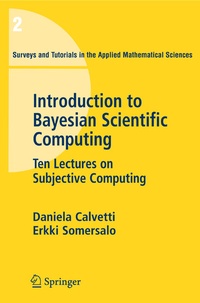
The book of nature, according to Galilei, is written in the language of mat- matics. The nature of mathematics is being exact, and its exactness is und- lined by the formalism used by mathematicians to write it. This formalism, characterized by theorems and proofs, and syncopated with occasional l- mas, remarks and corollaries, is so deeply ingrained that mathematicians feel uncomfortable when the pattern is broken, to the point of giving the - pression that the attitude of mathematicians towards the way mathematics should be written is almost moralistic. There is a de?nition often quoted, "A mathematician is a person who proves theorems", and a similar, more alchemistic one, credited to Paul Erd? os, but more likely going back to Alfr´ ed R´ enyi,statingthat"Amathematicianisamachinethattransformsco?eeinto 1 theorems ". Therefore it seems to be the form, not the content, that char- terizes mathematics, similarly to what happens in any formal moralistic code wherein form takes precedence over content. This book is deliberately written in a very di?erent manner, without a single theorem or proof. Since morality has its subjective component, to pa- phrase Manuel Vasquez Montalban, we could call it Ten Immoral Mathemat- 2 ical Recipes . Does the lack of theorems and proofs mean that the book is more inaccurate than traditional books of mathematics? Or is it possibly just a sign of lack of co?ee? This is our ?rst open question. Exactness is an interesting concept.
Reviews / Votes
From the reviews:
"This witty, erudite, and surprisingly practical book is made up of ten chapters. . A central topic of the book is the relationship between statistical inference and the inverse problems that define Bayesian (subjective) statistics. . This excellent book will be valuable to scientists of various stripes, statisticians, numerical analysts, those who work in image processing, and those who implement Bayesian belief nets." (George Hacken, ACM Computing Reviews, Vol. 49 (11), November, 2008)
"Introduction to Bayesian Scientific Computing is a 200-page, easily accessible, pleasant introduction fusing Bayesian approaches with numerical linear algebra methods for inverse problems . . What I like most about this book is the apparent enthusiasm of the authors and their genuine interest in explaining rather than showing off. This enthusiasm is contagious, and the result is very readable." (Uri Ascher, The Mathematical Intelligencer, Vol. 31 (1), 2009)
Series
Language
Place of publication
Publishing group
Target group
Professional and scholarly
Illustrations
File size
ISBN-13
978-0-387-73394-4 (9780387733944)
DOI
10.1007/978-0-387-73394-4
Schweitzer Classification
Inverse problems and subjective computing.- Basic problem of statistical inference.- The praise of ignorance: randomness as lack of information.- Basic problem in numerical linear algebra.- Sampling: first encounter.- Statistically inspired preconditioners.- Conditional Gaussian densities and predictive envelopes.- More applications of the Gaussian conditioning.- Sampling: the real thing.- Wrapping up: hypermodels, dynamic priorconditioners and Bayesian learning.