

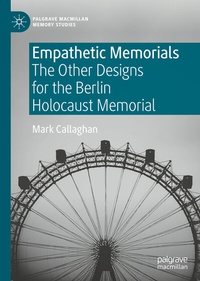
Empathetic Memorials
Description

This book is a study of the Berlin Holocaust Memorial Competitions of the 1990s, with a focus on designs that kindle empathetic responses. Through analysis of provocative designs, the book engages with issues of empathy, secondary witnessing, and depictions of concentration camp iconography. It explores the relationship between empathy and cultural memory when representations of suffering are notably absent. The book submits that one design represents the idea of an uncanny memorial, and also pays attention to viewer co-authorship in counter-monuments. Analysis of counter-monuments also include their creative engagement with German history and their determination to defy fascist aesthetics. As the winning design for The Memorial to the Murdered Jews of Europe is abstract with an information centre, there is an exploration of the memorial museum. Callaghan asks whether this configuration is intended to compensate for the abstract memorial's ambiguity or to complement the design's visceral potential. Other debates explored concern political memory, national memory, and the controversy of dedicating the memorial exclusively to murdered Jews.
More details
Other editions
Additional editions
Person
Mark Callaghan is an art historian who has taught at several leading institutions, including Birkbeck College, University of London, UK. He specializes in contemporary memory culture and twentieth century art history.
