

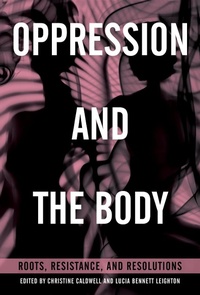
Oppression and the Body
Roots, Resistance, and Resolutions
Published on 20. March 2018
272 pages
978-1-62317-202-2 (ISBN)
Description

A timely anthology that explores power, privilege, and oppression and their relationship to marginalized bodies
Asserting that the body is the main site of oppression in Western society, the contributors to this pioneering volume explore the complex issue of embodiment and how it relates to social inclusion and marginalization. In a culture where bodies of people who are brown, black, female, transgender, disabled, fat, or queer are often shamed, sexualized, ignored, and oppressed, what does it mean to live in a marginalized body? Through theory, personal narrative, and artistic expression, this anthology explores how power, privilege, oppression, and attempted disembodiment play out on the bodies of disparaged individuals and what happens when the body's expression is stereotyped and stunted. Bringing together a range of voices, this book offers strategies and practices for embodiment and activism and considers what it means to be an embodied ally to anyone experiencing bodily oppression.
Asserting that the body is the main site of oppression in Western society, the contributors to this pioneering volume explore the complex issue of embodiment and how it relates to social inclusion and marginalization. In a culture where bodies of people who are brown, black, female, transgender, disabled, fat, or queer are often shamed, sexualized, ignored, and oppressed, what does it mean to live in a marginalized body? Through theory, personal narrative, and artistic expression, this anthology explores how power, privilege, oppression, and attempted disembodiment play out on the bodies of disparaged individuals and what happens when the body's expression is stereotyped and stunted. Bringing together a range of voices, this book offers strategies and practices for embodiment and activism and considers what it means to be an embodied ally to anyone experiencing bodily oppression.
More details
Other editions
Additional editions
Christine Caldwell | Lucia Bennett Leighton
Oppression and the Body
Roots, Resistance, and Resolutions
Book
03/2018
North Atlantic Books,U.S.
€22.50
Shipment within 3-4 weeks
Persons
LUCIA BENNETT LEIGHTON, MA, LPCC, R-DMT, has a master's degree from Naropa University's Somatic Counseling Psychology program. She has been writing and researching in the field of somatic psychology for several years and considers her exploration of oppression and embodiment the cornerstone of her career as a professional counselor; she thus plans to continue writing and researching on the topic for many years to come. Currently, she is a school-based therapist as well as an eating disorder therapist and uses a body-centered, social justice-based approach to counseling. Bennett Leighton's research and writing has been published in JAMA Psychiatry, Journal of Behavior Therapy and Experimental Psychiatry, Journal of Multicultural Counseling and Development, and American Journal of Dance Therapy. She lives in Denver, Colorado, with her wife Erin.
CHRISTINE CALDWELL, PhD, BC-DMT, LPC, NCC, ACS, is the founder and professor emeritus of the Somatic Counseling Program at Naropa University, where she taught somatic counseling, clinical neuroscience, research, and diversity issues. Her work, called the Moving Cycle, spotlights natural play, early physical imprinting, fully sequenced movement processes, the opportunities in addiction, and a trust in the authoritative knowledge of the body. She has taught at the University of Maryland, George Washington University, Concordia University, Seoul Women's University, Southwestern College, and Santa Barbara Graduate Institute, and trains, teaches, and lectures internationally. She has published over thirty articles and chapters; her books include Getting Our Bodies Back, Getting In Touch, and Bodyfulness.
CHRISTINE CALDWELL, PhD, BC-DMT, LPC, NCC, ACS, is the founder and professor emeritus of the Somatic Counseling Program at Naropa University, where she taught somatic counseling, clinical neuroscience, research, and diversity issues. Her work, called the Moving Cycle, spotlights natural play, early physical imprinting, fully sequenced movement processes, the opportunities in addiction, and a trust in the authoritative knowledge of the body. She has taught at the University of Maryland, George Washington University, Concordia University, Seoul Women's University, Southwestern College, and Santa Barbara Graduate Institute, and trains, teaches, and lectures internationally. She has published over thirty articles and chapters; her books include Getting Our Bodies Back, Getting In Touch, and Bodyfulness.
Content
- Intro
- Titlepage
- Copyright
- Dedication
- Contents
- Contents
- Preface
- Lucia
- Christine
- Why This Book
- Acknowledgments
- Introduction
- Part 1 The Oppression of the Body in Societies
- Las Tristes, Muertas y Dormidas
- Endnotes
- Bibliography
- Chapter 1: The Trauma of Oppression: A Somatic Perspective
- Defining Oppression
- Oppression as Trauma
- Trauma in the Body
- Body as the Site of Oppression
- Conclusion
- Endnotes
- Bibliography
- Chapter 2: Body Identity Development: Who We Are and Who We Become
- Body Identity Development
- Disruptions of Body Identity
- Resolutions of Body Identity
- The Body Moving Forward and In All Directions
- Endnotes
- Bibliography
- Chapter 3: I Am a Body on the Body of the Earth
- Oppression of the Body and the Earth
- Reclaiming Our Sacred Bodies
- Endnotes
- Bibliography
- Chapter 4: Fat Embodiment: The Case for Ethical Reading
- Bodies as Public Rhetoric
- Embodied Orientations and Ethical Reading
- Practicing Ethical Reading: Dress Profesh
- Endnotes
- Bibliography
- Part 2Marginalized Bodies in Society
- Chapter 5: Stolen Bodies, Reclaimed Bodies: Disability and Queerness
- Chapter 6: Queering/Querying the Body: Sensation and Curiosity in Disrupting Body Norms
- Body Norms, Body Shame, and Social Power
- Queering the Body
- Querying the Body
- Querying the Bodies of Others
- Endnotes
- Bibliography
- Chapter 7: The Transcarceral Body: Beyond the Enemy Behind Me-From Incarceration to Emancipation
- Method
- Labels
- Race as Commodity or Liability
- The Body as Property, Product, and Object
- The Body as Subject
- Release and the Body of Reconfinement
- The Transcarceral Body: Beyond the Enemy Behind Me
- Conclusion
- Endnotes
- Bibliography
- Chapter 8: The Oppression of Black Bodies: The Demand to Simulate White Bodies and White Embodiment
- Writing: Racism and White Supremacy on and in My Black Body
- The Demand to Simulate White Bodies
- The Demand to Simulate White Embodiment in Somatic Counseling and Psychotherapy
- Resistance and Embodied Filtering
- A Letter to My Grandmother
- Endnotes
- Bibliography
- Chapter 9: The Violence of Medicalization
- A Primer on Unnecessary Gendering
- Mindful Embodiment: A Tango with the Gendered Body to Clear the Shadows
- A Bit of Wallpaper
- Transforming the Violence
- An Invitation
- Endnotes
- Bibliography
- Part 3EmbodiedAction
- Chapter 10: Queer Resistance: Reclamation and Resilience
- Violence and Danger
- Choosing Resistance/Choosing Survival
- Endnotes
- Bibliography
- Chapter 11: Moving Between Identities: Embodied Code-Switching
- Being Multicultural
- Code-Switching
- Code-Switching in the Brain
- Code-Switching through Embodied Culture
- Embodied Code-Switching
- Conclusion
- Endnotes
- Bibliography
- Chapter 12: Trauma and the Body: Somatic Practices for Everyday Resiliency
- Trauma-Informed Somatic Practices
- The Moving Cycle
- The Awareness Phase
- The Owning Phase
- The Appreciation Phase
- The Action Phase
- Therapist/Activist/Ally Skills
- Transforming and Resisting Oppression
- Conclusion
- Endnotes
- Bibliography
- Chapter 13: Transforming Distress: Grieving Dysphoric Bodies in Community
- A Model of Body Psychotherapeutic Group Intervention to Support Management of Body Dysphoria as Experienced by Preoperative Transsexuals
- Why So Urgent?
- Setting the Stage
- Theoretical Wallpaper
- Transforming Distress in Six Modules
- Getting Specific
- To Conclude
- Endnotes
- Bibliography
- Index
- Author and Artist Biographies (in order of appearance)
- About North Atlantic Books
