

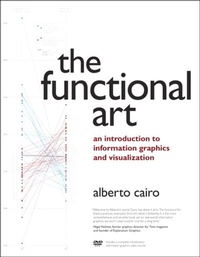
Functional Art, The
An introduction to information graphics and visualization
1st Edition
Published on 22. August 2012
384 pages
978-0-13-304136-1 (ISBN)
Description

Unlike any time before in our lives, we have access to vast amounts of free information. With the right tools, we can start to make sense of all this data to see patterns and trends that would otherwise be invisible to us. By transforming numbers into graphical shapes, we allow readers to understand the stories those numbers hide. In this practical introduction to understanding and using information graphics, you'll learn how to use data visualizations as tools to see beyond lists of numbers and variables and achieve new insights into the complex world around us. Regardless of the kind of data you're working with-business, science, politics, sports, or even your own personal finances-this book will show you how to use statistical charts, maps, and explanation diagrams to spot the stories in the data and learn new things from it.
You'll also get to peek into the creative process of some of the world's most talented designers and visual journalists, including Conde Nast Traveler's John Grimwade , National Geographic Magazine's Fernando Baptista, The New York Times' Steve Duenes, The Washington Post's Hannah Fairfield, Hans Rosling of the Gapminder Foundation, Stanford's Geoff McGhee, and European superstars Moritz Stefaner, Jan Willem Tulp, Stefanie Posavec, and Gregor Aisch. The book also includes a DVD-ROM containing over 90 minutes of video lessons that expand on core concepts explained within the book and includes even more inspirational information graphics from the world's leading designers.
The first book to offer a broad, hands-on introduction to information graphics and visualization, The Functional Art reveals:
* Why data visualization should be thought of as "functional art" rather than fine art
* How to use color, type, and other graphic tools to make your information graphics more effective, not just better looking
* The science of how our brains perceive and remember information ?
* Best practices for creating interactive information graphics
* A comprehensive look at the creative process behind successful information graphics ?
* An extensive gallery of inspirational work from the world's top designers and visual artists
On the DVD-ROM:
In this introductory video course on information graphics, Alberto Cairo goes into greater detail with even more visual examples of how to create effective information graphics that function as practical tools for aiding perception. You'll learn how to: incorporate basic design principles in your visualizations, create simple interfaces for interactive graphics, and choose the appropriate type of graphic forms for your data. Cairo also deconstructs successful information graphics from The New York Times and National Geographic magazine with sketches and images not shown in the book. All of Peachpit's eBooks contain the same content as the print edition. You will find a link in the last few pages of your eBook that directs you to the media files.
Helpful tips:
If you are able to search the book, search for "Where are the lesson files?"
Go to the very last page of the book and scroll backwards.
You will need a web-enabled device or computer in order to access the media files that accompany this ebook. Entering the URL supplied into a computer with web access will allow you to get to the files.
Depending on your device, it is possible that your display settings will cut off part of the URL. To make sure this is not the case, try reducing your font size and turning your device to a landscape view. This should cause the full URL to appear.
You'll also get to peek into the creative process of some of the world's most talented designers and visual journalists, including Conde Nast Traveler's John Grimwade , National Geographic Magazine's Fernando Baptista, The New York Times' Steve Duenes, The Washington Post's Hannah Fairfield, Hans Rosling of the Gapminder Foundation, Stanford's Geoff McGhee, and European superstars Moritz Stefaner, Jan Willem Tulp, Stefanie Posavec, and Gregor Aisch. The book also includes a DVD-ROM containing over 90 minutes of video lessons that expand on core concepts explained within the book and includes even more inspirational information graphics from the world's leading designers.
The first book to offer a broad, hands-on introduction to information graphics and visualization, The Functional Art reveals:
* Why data visualization should be thought of as "functional art" rather than fine art
* How to use color, type, and other graphic tools to make your information graphics more effective, not just better looking
* The science of how our brains perceive and remember information ?
* Best practices for creating interactive information graphics
* A comprehensive look at the creative process behind successful information graphics ?
* An extensive gallery of inspirational work from the world's top designers and visual artists
On the DVD-ROM:
In this introductory video course on information graphics, Alberto Cairo goes into greater detail with even more visual examples of how to create effective information graphics that function as practical tools for aiding perception. You'll learn how to: incorporate basic design principles in your visualizations, create simple interfaces for interactive graphics, and choose the appropriate type of graphic forms for your data. Cairo also deconstructs successful information graphics from The New York Times and National Geographic magazine with sketches and images not shown in the book. All of Peachpit's eBooks contain the same content as the print edition. You will find a link in the last few pages of your eBook that directs you to the media files.
Helpful tips:
If you are able to search the book, search for "Where are the lesson files?"
Go to the very last page of the book and scroll backwards.
You will need a web-enabled device or computer in order to access the media files that accompany this ebook. Entering the URL supplied into a computer with web access will allow you to get to the files.
Depending on your device, it is possible that your display settings will cut off part of the URL. To make sure this is not the case, try reducing your font size and turning your device to a landscape view. This should cause the full URL to appear.
All prices
More details
Series
Edition
1. Auflage
Language
English
Place of publication
Hoboken
United States
Publishing group
Pearson Education (US)
Target group
College/higher education
File size
79,68 MB
ISBN-13
978-0-13-304136-1 (9780133041361)
Copyright in bibliographic data and cover images is held by Nielsen Book Services Limited or by the publishers or by their respective licensors: all rights reserved.
Schweitzer Classification
Other editions
Additional editions
Alberto Cairo
Functional Art, The: An introduction to information graphics and visualization
An introduction to information graphics and visualization
Book
09/2012
1st Edition
New Riders
€56.00
Shipment within 10-20 days
Content
Introduction - What Infographics and Visualizations Are
PART 1 - Foundations
Chapter 1 - Why Visualization - From Data to Wisdom
Chapter 2 - Form and Function - Visualization as a Technology
Chapter 3 - The Beauty Paradox - Art and Communication Efficacy
Chapter 4 - Exposition, Exploration, And the Complexity Challenge
PART 2 - History
Chapter 5 - Here Be Dragons - On the Origins of Maps
Chapter 6 - Lights of Reason - the Dawn of Scientific Illustration
Chapter 7 - A Scottish Engineer And a Century of Revolutions - the History of Charts
PART 3 - Cognition
Chapter 8 - The Eye and the Visual Brain
Chapter 9 - Non-sensed Perception
Chapter 10 - Images in the Brain
PART 4 - Practice
Chapter 11 - The Creation Process in Infographics and Visualization
Chapter 12 - Interactive Graphics and Visualization
APPENDIX - Projects from leading practitioners in the field, explained in detail
PART 1 - Foundations
Chapter 1 - Why Visualization - From Data to Wisdom
Chapter 2 - Form and Function - Visualization as a Technology
Chapter 3 - The Beauty Paradox - Art and Communication Efficacy
Chapter 4 - Exposition, Exploration, And the Complexity Challenge
PART 2 - History
Chapter 5 - Here Be Dragons - On the Origins of Maps
Chapter 6 - Lights of Reason - the Dawn of Scientific Illustration
Chapter 7 - A Scottish Engineer And a Century of Revolutions - the History of Charts
PART 3 - Cognition
Chapter 8 - The Eye and the Visual Brain
Chapter 9 - Non-sensed Perception
Chapter 10 - Images in the Brain
PART 4 - Practice
Chapter 11 - The Creation Process in Infographics and Visualization
Chapter 12 - Interactive Graphics and Visualization
APPENDIX - Projects from leading practitioners in the field, explained in detail
