

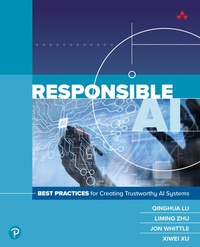
Responsible AI
Best Practices for Creating Trustworthy AI Systems
1st Edition
Published on 1. February 2024
320 pages
978-0-13-807387-9 (ISBN)
Description

THE FIRST PRACTICAL GUIDE FOR OPERATIONALIZING RESPONSIBLE AI?FROM MUL TI degreesLEVEL GOVERNANCE MECHANISMS TO CONCRETE DESIGN PATTERNS AND SOFTWARE ENGINEERING TECHNIQUES.
AI is solving real-world challenges and transforming industries. Yet, there are serious concerns about its ability to behave and make decisions in a responsible way. Operationalizing responsible AI is about providing concrete guidelines to a wide range of decisionmakers and technologists on how to govern, design, and build responsible AI systems. These include governance mechanisms at the industry, organizational, and team level; software engineering best practices; architecture styles and design patterns; system-level techniques connecting code with data and models; and trade-offs in design decisions. Responsible AI includes a set of practices that technologists (for example, technology-conversant decision-makers, software developers, and AI practitioners) can undertake to ensure the AI systems they develop or adopt are trustworthy throughout the entire lifecycle and can be trusted by those who use them. The book offers guidelines and best practices not just for the AI part of a system, but also for the much larger software infrastructure that typically wraps around the AI.
First book of its kind to cover the topic of operationalizing responsible AI from the perspective of the entire software development life cycle.
Concrete and actionable guidelines throughout the lifecycle of AI systems, including governance mechanisms, process best practices, design patterns, and system engineering techniques.
Authors are leading experts in the areas of responsible technology, AI engineering, and software engineering.
Reduce the risks of AI adoption, accelerate AI adoption in responsible ways, and translate ethical principles into products, consultancy, and policy impact to support the AI industry.
Online repository of patterns, techniques, examples, and playbooks kept up-to-date by the authors.
Real world case studies to demonstrate responsible AI in practice.
Chart the course to responsible AI excellence, from governance to design, with actionable insights and engineering prowess found in this defi nitive guide.
AI is solving real-world challenges and transforming industries. Yet, there are serious concerns about its ability to behave and make decisions in a responsible way. Operationalizing responsible AI is about providing concrete guidelines to a wide range of decisionmakers and technologists on how to govern, design, and build responsible AI systems. These include governance mechanisms at the industry, organizational, and team level; software engineering best practices; architecture styles and design patterns; system-level techniques connecting code with data and models; and trade-offs in design decisions. Responsible AI includes a set of practices that technologists (for example, technology-conversant decision-makers, software developers, and AI practitioners) can undertake to ensure the AI systems they develop or adopt are trustworthy throughout the entire lifecycle and can be trusted by those who use them. The book offers guidelines and best practices not just for the AI part of a system, but also for the much larger software infrastructure that typically wraps around the AI.
First book of its kind to cover the topic of operationalizing responsible AI from the perspective of the entire software development life cycle.
Concrete and actionable guidelines throughout the lifecycle of AI systems, including governance mechanisms, process best practices, design patterns, and system engineering techniques.
Authors are leading experts in the areas of responsible technology, AI engineering, and software engineering.
Reduce the risks of AI adoption, accelerate AI adoption in responsible ways, and translate ethical principles into products, consultancy, and policy impact to support the AI industry.
Online repository of patterns, techniques, examples, and playbooks kept up-to-date by the authors.
Real world case studies to demonstrate responsible AI in practice.
Chart the course to responsible AI excellence, from governance to design, with actionable insights and engineering prowess found in this defi nitive guide.
More details
Edition
1. Auflage
Language
English
Place of publication
Boston
United States
Publishing group
Pearson Education (US)
Target group
Professional and scholarly
File size
2,56 MB
ISBN-13
978-0-13-807387-9 (9780138073879)
Copyright in bibliographic data and cover images is held by Nielsen Book Services Limited or by the publishers or by their respective licensors: all rights reserved.
Schweitzer Classification
Other editions
Additional editions

Book
01/2024
Addison Wesley
€33.00
Available immediately
Persons
Dr. Qinghua Lu is a principal research scientist and leads the Responsible AI science team at CSIRO's Data61. She received her PhD from University of New South Wales in 2013. Her current research interests include responsible AI, software engineering for AI/GAI, and software architecture. She has published 150+ papers in premier international journals and conferences. Her recent paper titled "Towards a Roadmap on Software Engineering for Responsible AI" received the ACM Distinguished Paper Award. Dr. Lu is part of the OECD.AI's trustworthy AI metrics project team. She also serves a member of Australia's National AI Centre Responsible AI at Scale think tank. She is the winner of the 2023 APAC Women in AI Trailblazer Award.
Dr./Prof. Liming Zhu is a Research Director at CSIRO's Data61 and a conjoint full professor at the University of New South Wales (UNSW). He is the chairperson of Standards Australia's blockchain committee and contributes to the AI trustworthiness committee. He is a member of the OECD.AI expert group on AI Risks and Accountability, as well as a member of the Responsible AI at Scale think tank at Australia's National AI Centre. His research program innovates in the areas of AI/ML systems, responsible/ethical AI, software engineering, blockchain, regulation technology, quantum software, privacy, and cybersecurity. He has published more than 300 papers on software architecture, blockchain, governance and responsible AI. He delivered the keynote "Software Engineering as the Linchpin of Responsible AI" at the International Conference on Software Engineering (ICSE) 2023.
Prof. Jon Whittle is Director at CSIRO's Data61, Australia's national centre for R&D in data science and digital technologies. With around 850 staff and affiliates, Data61 is one of the largest collections of R&D expertise in Artificial Intelligence and Data Science in the world. Data61 partners with more than 200 industry and government organisations, more than 30 universities, and works across vertical sectors in manufacturing, health, agriculture, and the environment. Prior to joining Data61, Jon was Dean of the Faculty of Information Technology at Monash University.
Dr. Xiwei Xu is a principal research scientist and the group leader of the software systems research group at Data61, CSIRO. With a specialization in software architecture and system design, she is at the forefront of research in these fields. Xiwei is identified by the Bibliometric Assessment of Software Engineering Scholars and Institutions as a top scholar and ranked 4th in the world (2013-2020) as the most impactful SE researchers by JSS (Journal of Systems and Software), a well-recognized academic journal in software engineering research.
Dr./Prof. Liming Zhu is a Research Director at CSIRO's Data61 and a conjoint full professor at the University of New South Wales (UNSW). He is the chairperson of Standards Australia's blockchain committee and contributes to the AI trustworthiness committee. He is a member of the OECD.AI expert group on AI Risks and Accountability, as well as a member of the Responsible AI at Scale think tank at Australia's National AI Centre. His research program innovates in the areas of AI/ML systems, responsible/ethical AI, software engineering, blockchain, regulation technology, quantum software, privacy, and cybersecurity. He has published more than 300 papers on software architecture, blockchain, governance and responsible AI. He delivered the keynote "Software Engineering as the Linchpin of Responsible AI" at the International Conference on Software Engineering (ICSE) 2023.
Prof. Jon Whittle is Director at CSIRO's Data61, Australia's national centre for R&D in data science and digital technologies. With around 850 staff and affiliates, Data61 is one of the largest collections of R&D expertise in Artificial Intelligence and Data Science in the world. Data61 partners with more than 200 industry and government organisations, more than 30 universities, and works across vertical sectors in manufacturing, health, agriculture, and the environment. Prior to joining Data61, Jon was Dean of the Faculty of Information Technology at Monash University.
Dr. Xiwei Xu is a principal research scientist and the group leader of the software systems research group at Data61, CSIRO. With a specialization in software architecture and system design, she is at the forefront of research in these fields. Xiwei is identified by the Bibliometric Assessment of Software Engineering Scholars and Institutions as a top scholar and ranked 4th in the world (2013-2020) as the most impactful SE researchers by JSS (Journal of Systems and Software), a well-recognized academic journal in software engineering research.
Content
Preface.. . . . . . . . . . . . . . . . . xv
About the Author.. . . . . . . . . . . . . . xix
Part I Background and Introduction. . . . . . . . . . . . .1
1 Introduction to Responsible AI. . . . . . . . . 3
What Is Responsible AI?. . . . . . . . . . . . 4
What Is AI?. . . . . . . . . . . . . . 6
Developing AI Responsibly: Who Is Responsible for Putting the
"Responsible" into AI?.. . . . . . . . . . . . 8
About This Book.. . . . . . . . . . . . . 9
How to Read This Book.. . . . . . . . . . . . 11
2 Operationalizing Responsible AI: A Thought Experiment-Robbie the Robot.. . . . . . . . 13
A Thought Experiment-Robbie the Robot.. . . . . . . . 13
Summary. . . . . . . . . . . . . . 22
Part II Responsible AI Pattern Catalogue. . . . . . . . . . . ?23
3 Overview of the Responsible AI Pattern Catalogue. . . . . 25
The Key Concepts.. . . . . . . . . . . . . 25
Why Is Responsible AI Different?. . . . . . . . . . 30
A Pattern-Oriented Approach for Responsible AI.. . . . . . . 32
4 Multi-Level Governance Patterns for Responsible AI.. . . . 39
Industry-Level Governance Patterns. . . . . . . . . 42
Organization-Level Governance Patterns.. . . . . . . . 56
Team-Level Governance Patterns.. . . . . . . . . . 72
Summary. . . . . . . . . . . . . . 85
5 Process Patterns for Trustworthy Development Processes. . . 87
Requirements.. . . . . . . . . . . . . 88
Design. . . . . . . . . . . . . . . 96
Implementation.. . . . . . . . . . . . . 105
Testing. . . . . . . . . . . . . . . 110
Operations. . . . . . . . . . . . . . 114
Summary. . . . . . . . . . . . . . 120
6 Product Patterns for Responsible-AI-by-Design.. . . . . 121
Product Pattern Collection Overview.. . . . . . . . . 122
Supply Chain Patterns. . . . . . . . . . . . 123
System Patterns. . . . . . . . . . . . . 134
Operation Infrastructure Patterns. . . . . . . . . 141
Summary. . . . . . . . . . . . . . 158
7 Pattern-Oriented Reference Architecture for Responsible-AI-by-Design. . . . . . . . . 159
Architectural Principles for Designing AI Systems. . . . . . 160
Pattern-Oriented Reference Architecture.. . . . . . . . 161
Summary. . . . . . . . . . . . . . 165
8 Principle-Specific Techniques for Responsible AI.. . . . . 167
Fairness.. . . . . . . . . . . . . . 167
Privacy. . . . . . . . . . . . . . . 172
Explainability. . . . . . . . . . . . . 178
Summary. . . . . . . . . . . . . . 182
Part III Case Studies. . . . . . . . . . . . . . . 183
9 Risk-Based AI Governance in Telstra. . . . . . . 185
Policy and Awareness.. . . . . . . . . . . . 186
Assessing Risk.. . . . . . . . . . . . . 188
Learnings from Practice. . . . . . . . . . . 192
Future Work. . . . . . . . . . . . . . 195
10 Reejig: The World's First Independently Audited Ethical Talent AI.. . . . . . . . . . . 197
How Is AI Being Used in Talent?.. . . . . . . . . . 198
What Does Bias in Talent AI Look Like?.. . . . . . . . 200
Regulating Talent AI Is a Global Issue.. . . . . . . . . 201
Reejig's Approach to Ethical Talent AI. . . . . . . . . 202
How Ethical AI Evaluation Is Done: A Case Study in Reejig's World-First Independently Audited Ethical Talent AI. . . . . . . . 204
Overview.. . . . . . . . . . . . . 204
Project Overview. . . . . . . . . . . . . 206
The Ethical AI Framework Used for the Audit.. . . . . . . 207
The Benefits of Ethical Talent AI.. . . . . . . . . . 210
Reejig's Outlook on the Future of Ethical Talent AI.. . . . . . 211
11 Diversity and Inclusion in Artificial Intelligence.. . . . . 213
Importance of Diversity and Inclusion in AI.. . . . . . . 215
Definition of Diversity and Inclusion in Artificial Intelligence. . . . 216
Guidelines for Diversity and Inclusion in Artificial Intelligence. . . . 219
Conclusion.. . . . . . . . . . . . . . 234
Part IV Looking to the Future. . . . . . . . . . . . . 237
12 The Future of Responsible AI.. . . . . . . . . 239
Regulation. . . . . . . . . . . . . . 241
Education.. . . . . . . . . . . . . . 242
Standards.. . . . . . . . . . . . . . 244
Tools.. . . . . . . . . . . . . . . 245
Public Awareness.. . . . . . . . . . . . 246
Final Remarks.. . . . . . . . . . . . . 246
Part V Appendix. . . . . . . . . . . . . . . . 249
9780138073923, TOC, 11/7/2023
About the Author.. . . . . . . . . . . . . . xix
Part I Background and Introduction. . . . . . . . . . . . .1
1 Introduction to Responsible AI. . . . . . . . . 3
What Is Responsible AI?. . . . . . . . . . . . 4
What Is AI?. . . . . . . . . . . . . . 6
Developing AI Responsibly: Who Is Responsible for Putting the
"Responsible" into AI?.. . . . . . . . . . . . 8
About This Book.. . . . . . . . . . . . . 9
How to Read This Book.. . . . . . . . . . . . 11
2 Operationalizing Responsible AI: A Thought Experiment-Robbie the Robot.. . . . . . . . 13
A Thought Experiment-Robbie the Robot.. . . . . . . . 13
Summary. . . . . . . . . . . . . . 22
Part II Responsible AI Pattern Catalogue. . . . . . . . . . . ?23
3 Overview of the Responsible AI Pattern Catalogue. . . . . 25
The Key Concepts.. . . . . . . . . . . . . 25
Why Is Responsible AI Different?. . . . . . . . . . 30
A Pattern-Oriented Approach for Responsible AI.. . . . . . . 32
4 Multi-Level Governance Patterns for Responsible AI.. . . . 39
Industry-Level Governance Patterns. . . . . . . . . 42
Organization-Level Governance Patterns.. . . . . . . . 56
Team-Level Governance Patterns.. . . . . . . . . . 72
Summary. . . . . . . . . . . . . . 85
5 Process Patterns for Trustworthy Development Processes. . . 87
Requirements.. . . . . . . . . . . . . 88
Design. . . . . . . . . . . . . . . 96
Implementation.. . . . . . . . . . . . . 105
Testing. . . . . . . . . . . . . . . 110
Operations. . . . . . . . . . . . . . 114
Summary. . . . . . . . . . . . . . 120
6 Product Patterns for Responsible-AI-by-Design.. . . . . 121
Product Pattern Collection Overview.. . . . . . . . . 122
Supply Chain Patterns. . . . . . . . . . . . 123
System Patterns. . . . . . . . . . . . . 134
Operation Infrastructure Patterns. . . . . . . . . 141
Summary. . . . . . . . . . . . . . 158
7 Pattern-Oriented Reference Architecture for Responsible-AI-by-Design. . . . . . . . . 159
Architectural Principles for Designing AI Systems. . . . . . 160
Pattern-Oriented Reference Architecture.. . . . . . . . 161
Summary. . . . . . . . . . . . . . 165
8 Principle-Specific Techniques for Responsible AI.. . . . . 167
Fairness.. . . . . . . . . . . . . . 167
Privacy. . . . . . . . . . . . . . . 172
Explainability. . . . . . . . . . . . . 178
Summary. . . . . . . . . . . . . . 182
Part III Case Studies. . . . . . . . . . . . . . . 183
9 Risk-Based AI Governance in Telstra. . . . . . . 185
Policy and Awareness.. . . . . . . . . . . . 186
Assessing Risk.. . . . . . . . . . . . . 188
Learnings from Practice. . . . . . . . . . . 192
Future Work. . . . . . . . . . . . . . 195
10 Reejig: The World's First Independently Audited Ethical Talent AI.. . . . . . . . . . . 197
How Is AI Being Used in Talent?.. . . . . . . . . . 198
What Does Bias in Talent AI Look Like?.. . . . . . . . 200
Regulating Talent AI Is a Global Issue.. . . . . . . . . 201
Reejig's Approach to Ethical Talent AI. . . . . . . . . 202
How Ethical AI Evaluation Is Done: A Case Study in Reejig's World-First Independently Audited Ethical Talent AI. . . . . . . . 204
Overview.. . . . . . . . . . . . . 204
Project Overview. . . . . . . . . . . . . 206
The Ethical AI Framework Used for the Audit.. . . . . . . 207
The Benefits of Ethical Talent AI.. . . . . . . . . . 210
Reejig's Outlook on the Future of Ethical Talent AI.. . . . . . 211
11 Diversity and Inclusion in Artificial Intelligence.. . . . . 213
Importance of Diversity and Inclusion in AI.. . . . . . . 215
Definition of Diversity and Inclusion in Artificial Intelligence. . . . 216
Guidelines for Diversity and Inclusion in Artificial Intelligence. . . . 219
Conclusion.. . . . . . . . . . . . . . 234
Part IV Looking to the Future. . . . . . . . . . . . . 237
12 The Future of Responsible AI.. . . . . . . . . 239
Regulation. . . . . . . . . . . . . . 241
Education.. . . . . . . . . . . . . . 242
Standards.. . . . . . . . . . . . . . 244
Tools.. . . . . . . . . . . . . . . 245
Public Awareness.. . . . . . . . . . . . 246
Final Remarks.. . . . . . . . . . . . . 246
Part V Appendix. . . . . . . . . . . . . . . . 249
9780138073923, TOC, 11/7/2023
