

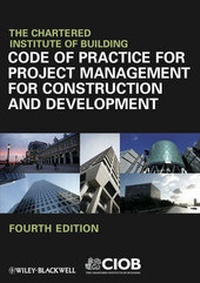
Code of Practice for Project Management for Construction and Development
Description

Reviews / Votes
"More valuable than ever ... .There is no other reference thatis so comprehensive and more relevant to clients, contractors andprofessionals, irrespective of the size of project beingundertaken." (Construction Magazine, January 2010) "The book is a key reference source providing the latestthinking and guidance for many housebuilders, and developersirrespective of the size or nature of project." ((ProfessionalHousebuilder & Property Developer, 1 October 2010)More details
Other editions
Additional editions
Person
Content
Acknowledgements.
List of tables and figures.
Introduction.
Part 1 Project management.
1. Inception stage.
Introduction.
Client's objectives.
Project manager.
Managing people.
Thinking sustainably.
2. Feasibility stage.
Client's objectives.
Outline project brief.
Feasibility studies.
Sustainability in the built environment.
Towards sustainable development.
Site selection and acquisition.
Project brief.
Design brief.
Funding and investment appraisal.
Market suitability.
Decision to go ahead.
Project execution plan.
3. Strategy stage.
Client's objectives.
Interlinking with feasibility.
Project team structure.
Selecting the project team.
Strategy outline and development.
Project organisation and control.
Procurement.
Appointment of project team.
4. Pre-construction stage.
Client's objectives.
Interlinking with previous stages.
Managing the design delivery.
Suggested task list for design team leader.
Duties of project manager at this stage.
Project co-ordination and progress meetings.
Design team meetings.
Managing design team activities.
Statutory consents.
Technical design and production information.
Pre-start meeting.
Quality management.
Dispute resolution.
Avoiding common project management pitfalls.
Contractual arrangements.
Value engineering (related to construction methods).
Management of supply chain.
Risk register.
Benchmarking.
Change and variation control.
5. Construction stage.
Interlinking with previous stages.
Responsibilities of the project manager at this stage.
Roles of project team members.
Environmental management systems.
Commissioning and operating and maintenance manuals.
6. Engineering services commissioning stage.
Client's objectives.
Interlinking with construction.
Commissioning generally.
Procurement of commissioning services.
Role of the commissioning contractor.
The testing and commissioning process and its programming.
Differences between testing and commissioning.
Main tasks to be undertaken.
7. Completion, handover and occupation stage.
Client's objectives.
Completion.
Project management actions.
Actions by design team.
Planning and scheduling handover.
Procedures.
Client commissioning and occupation.
Operational commissioning.
Client occupation.
8. Post-completion review/project close-out report stage.
Client's objectives.
Introduction.
Project audit.
Cost and time study.
Human resources aspects.
Performance study.
Project feedback.
Close-out report.
Benefits realisation.
Appendices.
1. Typical terms of engagement.
2. Health and safety in construction including CDM guidance.
3. Project planning.
4. Site investigation.
5. Guidance on EU procurement rules.
6. Performance management plan.
7. Implications of the Housing Grants, Construction and Regeneration Act 1996, Amended 2009.
8. Guidance on partnering.
9. Project risk assessment.
10. Guidance on value management.
11. Guidance on environmental impact assessment.
12. Application of project scheduling software.
13. Change management.
14. Procedure for the selection and appointment of consultants.
15. Characteristics of different procurement options.
16. Dispute resolution methods.
17. Regular reports to the client.
18. Practical completion checklist.
19. Facilities management.
20. Value for money project framework.
21. Leadership in project management.
22. Framework agreements.
23. Guidance on e-procurement.
24. Guidance on good practice contract management.
25. Communication plan.
26. Good practice project management.
27. Compliance with the Site Waste Management Plans Regulations 2008.
28. Alternative procurement option.
29. Building information modelling.
30. Business case development.
31. Key sustainability issues.
32. Environmental sustainability assessment methods.
Part 2 Project handbook.
Introduction.
Aims of the handbook.
Parties to the project.
Third parties.
Roles and duties of the project team.
Project site.
General administration including communication and document control.
Contract administration.
Design co-ordination.
Change management design.
Site instructions.
Cost control and reporting.
Planning schedules and progress reporting.
Meetings.
Selection and appointment of contractors.
Safety, health and environmental protection.
Quality assurance: outline.
Disputes.
Signing off.
Reporting.
Construction stage.
Operating and maintenance.
Engineering services commissioning.
Completion and handover.
Client commissioning and occupation.
Appendices.
A Typical meetings and their objectives.
B Selection and appointment of contractors.
B1 Pre-tender process.
B2 Initial questionnaire.
B3 Selection questionnaire.
B4 Pre-qualification interview agenda.
B5 Tendering process checklist.
B6 Tender document checklist.
B7 Mid-tender interview agenda.
B8 Returned tender review process.
B9 Returned tender bids record sheet.
B10 Post-tender interview agenda.
B11 Final tender evaluation report.
B12 Approval to place contract order.
B13 Final general checklist.
C Engineering services commissioning checklist.
D Engineering services commissioning documents.
E Handover checklists.
F Client commissioning checklist.
Glossary.
Bibliography.
Past Working Groups of Code of Practice For Project Management.
Index.
