

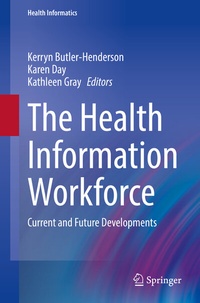
The Health Information Workforce
Description

This book provides a detailed guide to the highly specialised but little known health information workforce - people who are health informaticians, digital health experts, and managers of health data, health information and health knowledge. It explains the basis of their unique functions within healthcare - their educational pathways and standards, professional qualifications and industry certifications, scholarly foundations and principles of good practice. It explores their challenges, including the rise of the health consumer movement, the drive to improve equity and quality in healthcare, new technologies such as artificial intelligence, and the COVID-19 infodemic. Case studies describe how practitioners in real-world roles around the world are addressing the digital transformation of health.
The Health Information Workforce: Current and Future Developments
offers insights into a skilled group of people who are essential for healthcare services to function, for care providers to practice at the top of their scope, for researchers to generate significant insights, and for care consumers to be empowered participants in health systems. This book offers new perspectives for anyone working or intending to work in the health sector. It is a critical resource for health workforce planners, employers and educators seeking guidance on the specialised capabilities needed for high performance in an increasingly information-intensive sector.
More details
Other editions
Additional editions
Persons
Kerryn Butler-Henderson, PhD, is Professor of Digital Health, and Director of the Digital Health Hub at RMIT University. She is known for her dedication to the promotion and advocacy of the specialist digital health workforce. Kerryn's internationally recognised leadership has shaped digital health capabilities, pedagogy, and innovation across the health and care economy.
Karen Day, PhD, is a Senior Lecturer in health informatics at the University of Auckland, New Zealand. She is passionate about research on, and delivery of, health informatics education to develop the health information workforce that healthcare services need. She is also interested in patient-facing health technologies for people using digital media for self-care of long-term health issues, e.g. patient portals, social media, and apps.
Kathleen Gray, PhD is Professor of Health Informatics at the University of Melbourne. Through her research, teaching andcommunity engagement she works to broaden and deepen critical understanding of the ways that digital health is changing the roles and responsibilities of patients, clinicians, health service managers and health information specialists.
