

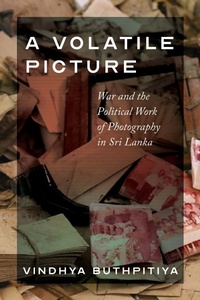
A Volatile Picture
Description

Photography as witness and weapon amid civil war
This groundbreaking ethnography explores how, in the context of Sri Lanka's protracted civil war and its turbulent aftermath, photography has become bound to the Tamil political imagination. From state-commissioned images meant to surveil and rebel documentation of armed resistance, to the fragile memorials created from identity photographs of the disappeared, A Volatile Picture traces the making and moving of images across borders, communities, and generations. Studio portraits, passport pictures, family albums, atrocity photography, social media posts, and more act not only as records of loss and horror but also as vital tools for protest, solidarity, and the realization of alternate political futures. Drawing on transnational archival and ethnographic encounters and long-term fieldwork in northern Sri Lanka, Vindhya Buthpitiya situates photography as both a volatile medium and a political practice. Photographs emerge here as incendiary agents?simultaneously evidencing and triggering violence, sustaining memory, and inciting new visions of liberation.
This is the first in-depth study of Tamil photographic practices in Sri Lanka, offering a major contribution to the anthropology of war, visual culture, and South Asian studies. Richly researched and deeply humane, A Volatile Picture demonstrates how, amid devastation and displacement, photographs continue to generate truths, solidarities, and hopes that resist erasure.
More details
Other editions
Additional editions
Person
Vindhya Buthpitiya is lecturer of social anthropology at University of St Andrews, Scotland, and coeditor of Citizens of Photography: The Camera and the Political Imagination.
