

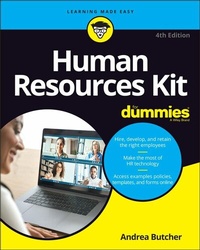
Human Resources Kit For Dummies
4th Edition
Published on 14. February 2023
416 pages
978-1-119-98991-2 (ISBN)
Description

The talent professional's one-stop reference for best practices and tips
Human Resources Kit For Dummies is the guide talent pros turn to for improving their leadership across the businesses they serve. The world of HR is full of unforeseen challenges, and this For Dummies reference will help you to handle them with grace and professionalism. This book provides tips and tricks for creating an engaging employee experience from the get-go, prioritizing employee well-being and health, navigating the recent wave of resignations, and implementing better hiring practices. In this new era of virtual offices, you'll also learn to implement remote and hybrid onboarding and work models. Plus, you'll explore HR technologies, learning and development strategies that get results, hiring ethics, diversity and inclusion best practices, social media uses and policies, and beyond.
* Learn all the functions of the human resources role
* Discover new software, HR best practices, and employment trends
* Make your organization more ethical with diversity, equity, and inclusion initiatives
* Get insights on how to navigate remote workers and other common HR challenges
New and working HR professionals will love this friendly, easy-to-read resource for developing HR skills. If you're a business owner, this book can also help you recruit, hire, and retain the right people, or build an HR function that gets results!
Human Resources Kit For Dummies is the guide talent pros turn to for improving their leadership across the businesses they serve. The world of HR is full of unforeseen challenges, and this For Dummies reference will help you to handle them with grace and professionalism. This book provides tips and tricks for creating an engaging employee experience from the get-go, prioritizing employee well-being and health, navigating the recent wave of resignations, and implementing better hiring practices. In this new era of virtual offices, you'll also learn to implement remote and hybrid onboarding and work models. Plus, you'll explore HR technologies, learning and development strategies that get results, hiring ethics, diversity and inclusion best practices, social media uses and policies, and beyond.
* Learn all the functions of the human resources role
* Discover new software, HR best practices, and employment trends
* Make your organization more ethical with diversity, equity, and inclusion initiatives
* Get insights on how to navigate remote workers and other common HR challenges
New and working HR professionals will love this friendly, easy-to-read resource for developing HR skills. If you're a business owner, this book can also help you recruit, hire, and retain the right people, or build an HR function that gets results!
More details
Other editions
Additional editions
Content
- Intro
- Title Page
- Copyright Page
- Table of Contents
- Introduction
- About This Book
- Foolish Assumptions
- Icons Used in This Book
- Beyond This Book
- Where to Go from Here
- Part 1 Embracing the Evolving Role of HR
- Chapter 1 Peeking into the World of HR
- Recognizing Key HR Responsibilities
- Building Your Team: Attracting Talent
- Retaining and Engaging Talent: Creating a Positive Employee Experience
- Developing Talent: Providing Opportunities for Growth
- Minimizing Organizational Risk
- Chapter 2 Setting the Stage: Trends in the HR and Talent Space
- Working from Anywhere: The Hybrid Work Model
- Recognizing different types of hybrid work
- Making the hybrid model work for all employees
- Workplace Skills: Upskilling
- Leveraging People Analytics and Data-Driven HR
- Shifting HR leadership from administrative to strategic
- Recognizing what you can do
- Leading Diversity, Equity, and Inclusion (DEI) in the Workplace
- Considering the pros to a DEI workplace
- Creating a DEI workplace
- Prioritizing Employee Well-Being and Workforce Health
- Chapter 3 Leveraging HR Technology
- Looking at the Growth of HR Technology
- Identifying the Categories of HR Tech
- Human resources information systems
- Applicant tracking systems
- Employee experience systems
- Performance management systems
- Employee engagement software
- Learning management systems
- Employee recognition software
- Succession management systems
- Choosing the Systems That Are Right for You
- Sourcing and Purchasing HR Technology: The How-To
- Communicating the Value of HR Tech
- Identifying Technology Skills You Need
- Part 2 Putting the Right People in the Right Roles
- Chapter 4 Creating a Talent Strategy Aligned with Business Strategy
- Getting Clear on Your Employer Brand
- Recognizing what core values are
- Figuring out your organization's values
- Workforce Planning: Aligning Talent Needs with Business Strategy
- Being strategic with workforce planning
- Developing potential within the current team
- Finding Inner Peace: Filling Jobs from within the Organization
- Recognizing the pros (and cons)
- Creating a successful internal hiring process
- Developing an employee skills inventory
- Knowing where to look for internal talent
- New Horizons: Attracting Talent from Outside Your Organization
- A Wide World of Talent: Understanding Worker Classification
- Employees
- Contingent workers
- Independent contractors
- Benefitting from Contingent Workers
- Noting the pros to contingent workers
- Determining whether they're the right fit
- Asking the right questions
- Engaging a contingent workforce
- Documenting performance and offering feedback to the staffing firm
- Looking at your legal responsibility
- Equal coverage
- Workplace injuries
- Chapter 5 Kicking Off the Hiring Process
- Engaging the Hiring Manager
- Creating the Position Success Profile
- Laying the foundation: Why you need to create a position success profile
- Knowing what to include
- Looking ahead, not behind
- Considering educational requirements and qualifications
- Making sure that outcomes are doable
- Accurately describing success outcomes
- Being specific
- Setting a salary range
- Being Clear When Writing Job Titles
- Defining Core Competencies for Success
- Chapter 6 Attracting Great Talent
- Being Intentional throughout the Process
- Kicking Off the Process
- Identifying Key Considerations for the Job Posting
- Implementing Sourcing Strategies
- Current team members/employee referrals
- Online job boards
- Your company website
- Social media and online networking
- Making info available to candidates in the early stages
- Making your presence known on social media
- Candidates who previously applied
- Recruiters
- Understanding who does what
- Using recruiters - yes or no?
- Finding the right recruiter
- Campus recruiting
- Job fairs - in person and virtual
- Open houses
- Direct applications (walk-ins)
- Government employment services
- Diversity Recruiting: Benefiting from a Diverse Workforce
- Handling Helicopter Parents
- Keeping Tabs on Your Progress
- Chapter 7 Narrowing the Pool: Evaluating and Assessing Candidates
- Reviewing the Résumé
- Mastering the basics
- Reading between the lines
- Watching out for red flags
- Considering a candidate's online persona
- Simplifying the Online Job Application Process
- Setting Up a System for Evaluating
- Using some criteria to make decisions
- Evaluating résumés, step-by-step
- Weighing the evaluation criteria
- Assessment: Knowing What Works and Mitigating the Challenges
- Finding the right test for your situation
- Skills assessment tests
- Cognitive ability tests
- Physical ability tests
- Personality/Style assessment
- Integrity tests
- Avoiding the common challenges with pre-employment assessment
- Pre-Screening: Narrowing Your List
- Recognizing where to pre-screen
- Interviewing over the phone
- Pre-screening with video
- Figuring out which method is better
- Chapter 8 Maximizing the Interviewing Process
- Grasping the Basics of Interviewing
- Recognizing What Gets in the Way When Interviewing
- Failing to be prepared and to allot the required time
- Mismanaging your time
- Lacking consistency in the process
- Talking more than listening
- Focusing on one positive attribute of a candidate and ignoring everything else
- Speaking negatively about the business or the role
- Setting the Stage for the Interview
- The Introduction: Warming Up
- Leading a Successful Panel Interview
- Mastering the Art of Q&A
- Have a focus
- Make every question count
- Pay attention
- Don't hesitate to probe
- Give candidates ample time to respond
- Suspend judgments
- Take notes
- Vary the style of questions
- Closed-ended
- Open-ended
- Hypothetical
- Leading
- Off-the-wall
- Recognizing What to Ask (and Not to Ask)
- National origin
- Citizenship status
- Address
- Age
- Family status
- Religion
- Health and physical condition
- Name
- Language
- Asking Solid Questions and Knowing How to Interpret the Answers
- End Game: Closing on the Right Note
- Chapter 9 Making the Hiring Decision
- Coming to Grips with the Decision-Making Process
- Utilizing the Tools of the Trade
- Past experience
- Interview impressions
- Test/assessment results
- Firsthand observation
- Selecting Your Candidate: You Need a System
- Knowing what to rely on
- Setting up your own protocol - creating a scorecard
- Factoring in the intangibles
- Creative problem-solving and innovation
- Time management
- Growth mindset
- Collaboration
- Emotional intelligence
- Dealing with Common Challenges in the Hiring Decision
- Anchor yourself to the hiring criteria
- Take your time
- Cross-verify whenever possible
- Get help, but avoid the "too many cooks" syndrome
- Don't force the issue
- Avoid the "top of mind" syndrome
- Getting a Broader View: Employment Reference Checks
- Checking hard-to-check references
- Using your own network for checking
- Online reference checking: Proceed with caution
- Discovering the Truth about Background Checks
- Understanding the basics: Background checks 101
- Recognizing the different types of checks
- Wading through the murkiness of background checks
- Conducting background checks: Yes or no?
- Using outside expertise for background checks
- Making Offers They Can't Refuse
- Don't delay
- Make an offer over the phone
- Prepare and send an official offer letter
- Set a deadline
- Stay connected
- Know how to negotiate salary
- Decide how far you're willing to go in negotiating salary
- Know when to draw the line
- Clarify acceptance details
- Stay in touch
- Part 3 Retaining and Engaging Talent
- Chapter 10 Onboarding: Setting Up New Team Members for Success
- Explaining What Onboarding Is
- Integrating New Team Members into the Organization
- Recognizing Three Unproductive Approaches That Don't Work
- Osmosis
- "Just follow Joe around"
- Watch the video
- Doing It Right: A Little Empathy Goes a Long Way
- The First Day: Easing Anxieties
- The First Week: Revealing More about the Company and the Job
- Providing the rules of the road
- Keeping onboarding practical
- Involving senior leaders from across the business
- Holding large-group sessions in a suitable location
- Making group presentations user-friendly and engaging
- Providing an onboarding session agenda
- Offering information in digestible chunks
- Giving a clear sense of tasks and setting concrete goals
- Onboarding: A Process, Not an Event
- Developing a checklist
- Keeping the message alive
- Using mentoring to build a solid foundation
- Getting feedback: How good is your onboarding program?
- Strategizing for a remote workforce
- Employee Handbook and Separate Procedures Manual: Yes, You Need Both
- Knowing what to include
- Playing it safe
- Chapter 11 Ensuring a Competitive Total Rewards System
- Understanding What a Total Rewards System Is
- Compensation: Setting the Foundation
- Determining Your Compensation Philosophy
- Keeping your eye on the prize
- Squaring away your philosophy and passing the test
- Identifying the Key Components of Employee Compensation
- Setting pay levels in your organization
- Job ranking and leveling
- Market data and pay trends: "The going rate"
- Collective bargaining
- Adopting a pay structure
- Variable pay system
- Broadbanding
- Taking individuals into account
- The payroll/revenue ratio: What's an optimal balance?
- Considering state wage and hour laws
- Differentiating between Exempt and Nonexempt
- Classifying workers: Who's exempt and nonexempt
- Contemplating other legal issues
- Focusing on Pay Raises and Base Salary Increases
- Bonuses
- Other incentives
- Profit-sharing plans
- Stock
- What's fair versus what works?
- Communicating Your Compensation Philosophy and Total Rewards
- Chapter 12 Putting Together the Right Benefits Package
- Addressing Key Trends in Benefits Management
- Considering the continued increase in healthcare costs
- Focusing more on mental health
- Lifestyle Spending Accounts
- Examining the Basics of Benefits Coverage
- Social Security and Medicare
- Unemployment insurance
- Workers' compensation
- Family and Medical Leave Act (FMLA) Protection
- Taking a Healthy Approach to Insurance
- Looking at the flavors of health insurance
- Fee-for-service plans
- Health maintenance organizations
- Preferred provider organizations
- Weighing the options
- Rising costs: Staying ahead of the game
- Retirement plans
- Defined benefit plans
- Defined contribution plans
- Employer contributions to retirement plans
- ERISA and other legal issues
- Sampling the Rest of the Benefits Smorgasbord
- Dental insurance
- Vision care
- Family assistance
- Time off
- Leaves of absence
- Sick days
- Looking Closer at Employee Assistance Programs
- Making Administration Easier: Five Ways to Help
- Chapter 13 Creating a Meaningful Employee Experience
- Understanding Your Team's Emotional Needs: Providing Purpose and Meaning
- Goodbye, 9 to 5: Creating a Flexible Environment
- Considering the different ways that work-life flexibility can be implemented
- Paying attention to legal implications
- Making alternate arrangements work
- Be willing to rethink processes
- Establish clear guidelines
- Considering phased retirement options
- Ensuring leaders are leading flexible scheduling policies well
- Addressing Corporate Social Responsibility
- Building Teams to Connect People and Drive Collaboration
- Ensuring a shared vision
- Prioritizing the key drivers of effective teamwork
- Employee Surveys: Keeping Tabs on Company Morale
- Taking the pulse of your workforce more regularly
- Exit interviews
- Stay interviews
- Creating a Meaningful Work Experience - More Ways to Do So
- Providing access to exercise facilities
- Having access to mental health services and preventive care
- Providing tuition assistance or reimbursement
- Designating relaxation spaces
- Offering employee sabbaticals
- Saying Thank-You: Focusing on Team Member Recognition
- Defining employee recognition programs
- Your employees benefit from recognition programs - and so do you!
- Getting the fundamentals in place
- Administration and communication
- Handing out awards: The importance of publicity
- Evaluating results
- Part 4 Developing Talent
- Chapter 14 Providing the Right Growth Experiences for Team Members
- Understanding What Talent Development Is
- Recognizing the goals of talent development
- Ensuring talent development initiatives are connected to other HR activities
- Creating a Learning Culture
- Assessing Your Needs
- Determining the right growth activities
- Incorporating the four ingredients for growth
- Comparing Online and In-Person Learning
- Identifying the Right Talent Development Activity Given Your Needs
- Implementing formal learning and development programs
- Encouraging participation in conferences and public seminars/learning events
- Offering executive education seminars
- Mentoring
- Professional coaching
- Additional talent development tools
- Microlearning
- Holding lunch-and-learn sessions
- Implementing individual development plans (IDPs)
- Knowing What Makes for an Effective Talent Development Program
- Team member readiness and preparation
- The applicability and relevance of the subject matter
- The overall learning experience
- Reinforcement of concepts
- But Is It Working? Measuring Results
- Chapter 15 Pathing Careers and Developing Leaders
- Understanding Why Career Development Matters
- Recognizing the Value in Career Pathing
- Leveraging Mentoring as a Tool for Growth
- Why and how mentoring works
- Setting clear expectations
- Choosing the right partners - how to match mentors and mentees
- Implementing mentoring (formal or informal)
- Creating a Coaching Culture to Support Ongoing Career Development
- Using the GROW Model to Support Employee Coaching
- Building Leadership Capability Across the Business
- Defining leadership qualities that will move your business forward
- Determining your leadership development strategy: Factors to consider
- Leadership development program options
- Measuring progress and success
- The Future Is Now: Succession Planning
- Don't put it off!
- Putting together the succession plan
- Pinpointing succession candidates
- Selecting candidates outside the company
- Creating a flexible understanding with succession candidates
- Developing succession candidates
- Assessing succession outcomes
- Chapter 16 Managing Ongoing Performance
- Reaping the Benefits
- Leveraging a Process that Works for Your Organization
- Anchoring to the Position Success Profile
- Determining outcomes for the position
- Determining competencies for success
- Aligning to Organizational and Department Goals
- Checking In and Holding Regular One-on-Ones
- Just-in-Time Coaching and Correcting Course
- Celebrating Team Member Successes
- Launching a Performance Management Program in Your Company
- Enlist the support of senior management
- Develop a fair and practical tracking mechanism
- Developing a communication game plan
- Preparing for a negative reaction
- Identifying areas for further development
- Identifying Keys to a Successful Review
- Preparing for the meeting
- Conducting the conversation
- Following Up on Performance Review Meetings
- Part 5 Minimizing Organizational Risk
- Chapter 17 Navigating Risks When Hiring and Leading Team Members
- Legal Matters: Understanding The Big Picture
- Keeping the Peace
- Being Aware of Discrimination
- Knowing What Disparate Impact Means
- Examining the Equal Employment Opportunity Commission
- Making sure you do certain things
- Understanding what happens after the EEOC receives a claim
- Looking Closer at the Family of EEO and Other Employment Laws
- ADEA: The Age Discrimination in Employment Act of 1967
- OWBA: Older Workers Benefit Protection Act (1990)
- ADA: Americans with Disabilities Act of 1990, amended in 2008
- COBRA: Consolidated Omnibus Budget Reconciliation Act (1986)
- The Equal Pay Act of 1963
- FMLA: Family and Medical Leave Act (1993)
- FLSA: Fair Labor Standards Act (1938)
- FUTA: Federal Unemployment Tax Act (1939)
- HIPAA: Health Insurance Portability and Accountability Act (1996)
- IRCA: Immigration Reform and Control Act of 1986
- NLRA: National Labor Relations Act of 1935
- Pregnancy Discrimination Act of 1978
- The Rehabilitation Act of 1973
- Sarbanes-Oxley Act (2002)
- Title VII of the Civil Rights Act (1964)
- The WARN Act: Worker Adjustment and Retraining Notification Act (1988)
- Chapter 18 Handling Difficult Situations
- Establishing an Ethical Culture
- Fleshing Out the Meaning of At-Will Employment
- Staying Out of Court
- Developing Progressive Disciplinary Procedures
- Defusing Grievances
- Settling Disputes: Alternative Dispute Resolution Programs
- Terminating Employees: It's Never Easy
- Avoiding common firing mistakes
- Delivering the news
- Putting in place a post-termination protocol
- Asking the employee to sign a waiver of rights
- Easing the Trauma of Layoffs
- Analyzing whether layoffs are the right strategy
- Knowing the federal and state law
- Easing the burden
- Hiring outplacement specialists
- Addressing those who remain
- Protecting the Safety and Health of Your Team Members
- Unlawful Harassment: Keeping Your Workplace Free of It
- Understanding unlawful harassment
- Addressing sexual harassment
- Spreading the word
- Creating a reporting process
- Investigating complaints
- Taking decisive action
- Addressing Workplace Violence
- Part 6 The Part of Tens
- Chapter 19 Ten (or So) Best Practices for HR and Talent Leaders
- Know Your Business
- Develop a Marketing Mindset
- Know Yourself
- Adopt a Growth Mindset
- Nurture Your Tribe/Network
- Build Your Team
- Provide Coaching and Focused Feedback to Peers and Leaders
- Be Nimble and Willing to Flex
- Continue to Hone Your Craft
- Chapter 20 Ten (or So) Strategies for Building Relationships with Key Stakeholders
- Recognize the Importance of Relationships
- Know with Whom to Build Key Relationships
- Seek to Understand Others' Perspectives
- Align on Shared Values
- Communicate Proactively
- Recognize Conflict and Tension as a Natural Part of Any Relationship
- Own Your Actions
- Respond Rather Than React
- Build Trust Continually
- Chapter 21 Ten Skills You Need for Navigating Paradox
- Understand the Impact
- Identify Paradoxes That Need Navigating
- Emphasize "and/also" Thinking
- Make More Inclusive Solutions
- Stick to Your Guns
- Demonstrate Empathy
- Surround Yourself with Diverse Perspectives
- Anchor to a Bigger Picture Set of Values or Vision
- Get Comfortable Being Uncomfortable
- Continue to Explore the Competency
- Appendix: What's Online
- What You'll Find Online
- Chapter 4
- Chapter 5
- Chapter 6
- Chapter 7
- Chapter 8
- Chapter 9
- Chapter 10
- Chapter 11
- Chapter 12
- Chapter 13
- Chapter 14
- Chapter 17
- Chapter 18
- Customer Care
- Index
- EULA
