

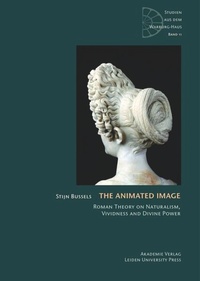
The Animated Image
Roman Theory on Naturalism, Vividness and Divine Power
1st Edition
Published on 9. January 2013
224 pages
978-3-05-006261-7 (ISBN)
Description

Viele römische Autoren schrieben über den Gedanken, dass ein Abbild - gleich ob eine Skulptur oder ein Gemälde, eine verbale Beschreibung oder die Darstellung auf einer Bühne - nicht die Repräsentation eines Originals, sondern ein Prototyp sei, und fragten, ob einem Bild Aspekte des Lebens zu eigen seien. Eine erste Gruppe hielt diese Überzeugungen für das Resultat falscher Beobachtungen und Assoziationen des Betrachters. Andere Autoren betonten die handwerkliche Fertigkeit der Künstler. Eine dritte Gruppe interessierte sich für die Verbindung des Dargestellten, häufig eines Gottes, mit dem Übernatürlichen. Die drei Diskurse über die Animation von Bildern bieten einen Überblick darüber, was Intellektuelle im Römischen Reich als bedeutsam oder verwerflich beim Betrachten von Kunstwerken oder Kultobjekten ansahen. Dabei werden auch ontologische und epistemologische Fragestellungen berührt und die Grenze zwischen Leben und Tod erkundet.
Reviews / Votes
Many Romans wrote about the belief that an image - a sculpture or painting, as well as a verbal description or a personage on stage - is not a representation, but the image's prototype or that an image had particular aspects of life. A first group of authors explained these believes as incorrect observation or wrong mental processing by the beholder. Other authors pointed at the excellent craftsmanship of the maker of the image. A third group looked at the supernatural involvement of its prototype, often a god. Together these discourses on the animation of images bring us to what intellectuals from all over the Roman empire saw as reprehensible or acceptable in beholding images as works of art or as cult images. Moreover, these discourses touch upon ontological and epistemological problems. The barrier between life and death was explored and also the conditions to obtain knowledge from observation.More details
Series
Language
English
Place of publication
Berlin/Boston
Germany
Publishing group
De Gruyter
Target group
Professional and scholarly
US School Grade: College Graduate Student
Illustrations
13 s/w Abbildungen, 3 farbige Abbildungen
13 b/w and 3 col. ill.
File size
11,98 MB
ISBN-13
978-3-05-006261-7 (9783050062617)
Schweitzer Classification
Other editions
Additional editions
Book
12/2012
1st Edition
De Gruyter
€79.95
Article exhausted; check different version
