

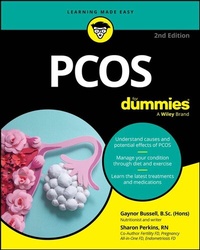
PCOS For Dummies
Description

Answers to your questions about polycystic ovarian syndrome
PCOS For Dummies, 2nd Edition is a trustworthy resource for information on polycystic ovarian syndrome, a condition caused by hormone imbalance. Many cases of PCOS go undiagnosed-learn to spot the symptoms and get tested. If you've been diagnosed, this book helps you consider available treatment options, including both traditional medical treatments and alternative therapies. It also debunks common myths and misinformation. This reliable guide helps you manage symptoms, reduce your risk of complications, and find a path forward.
Inside:
- Learn about PCOS, including symptoms, causes, treatments, and long-term effects
- Find doctors and organizations that can support you on your health journey
- Find out what diet and lifestyle changes you can make to reduce symptoms and feel your best
- Discover new medications, fertility treatments, and more for PCOS
Anyone living with PCOS-or supporting a loved one who has it-can benefit from PCOS For Dummies, 2nd Editon.
More details
Other editions
Additional editions
Persons
Gaynor Bussell is a specialist nutritionist with over 30 years' experience in women's health and the author of the first edition of PCOS For Dummies.
Sharon Perkins is a registered nurse with nearly 40 years of maternal-child health experience and author of numerous For Dummies titles covering women's health topics.
Content
Introduction 1
Part 1: Getting Started with PCOS 5
CHAPTER 1: Sensible Solutions for a Difficult Condition 7
CHAPTER 2: Identifying Potential Signs of PCOS 21
Part 2: Taking Control of Your Symptoms 45
CHAPTER 3: Coping with Insulin Resistance and Its Effects 47
CHAPTER 4: Eating Healthfully 63
CHAPTER 5: Waving Goodbye to Extra Weight 85
CHAPTER 6: Getting Physical 115
CHAPTER 7: Taking Medications 139
CHAPTER 8: Giving Alternative Treatments a Shot 161
CHAPTER 9: Balancing Body, Mind, and Spirit 179
Part 3: PCOS's Effects on Menstrual Cycles, Fertility, and Pregnancy 197
CHAPTER 10: Tracking Your Periods: How PCOS Affects the Menstrual Cycle 199
CHAPTER 11: Getting Pregnant: Infertility Treatments for PCOS 213
CHAPTER 12: Pregnancy Complications and PCOS 237
Part 4: The Part of Tens 255
CHAPTER 13: Ten Signs to Avoid a Diet 257
CHAPTER 14: Ten PCOS "Superfoods" 267
CHAPTER 15: Ten Ways to Eat Mindfully 277
CHAPTER 16 Ten (Plus 2!) Sources of Information and Support 287
Index 293
Chapter 1
Sensible Solutions for a Difficult Condition
IN THIS CHAPTER
Understanding PCOS and its symptoms
Taking the initial steps when you think you may have PCOS
Tackling PCOS through diet, exercise, and emotional well-being
Looking at treatment options
Making changes to help yourself for the long haul
This chapter can help you get on the right course if you suffer - or suspect that you suffer - from polycystic ovary syndrome (PCOS); or if you have a friend, relative, or partner who has the condition and you want a quick overview of the most important things that you need to know about PCOS.
This chapter gives an overview of the entire book, so you get a feel for what PCOS really is, as well as treatments and lifestyle changes aimed at reducing the symptoms.
Note: PCOS may be renamed in the future to metabolic reproductive syndrome, or something similar, so as to better reflect its true nature as a complex, multi-system endocrine disorder, rather than primarily a gynecological condition focused solely on ovarian cysts. Experts believe there is a need to more accurately represent the underlying pathophysiology and systemic implications of the condition, encouraging a more comprehensive approach to management and research. The new name is expected to be finalized and adopted by the end of 2026, following a global consensus process. The official name change within the International Classification of Diseases (ICD) could take a few more years after that.
Understanding PCOS
Polycystic ovary syndrome (PCOS) is the most common ovarian-function disorder in premenopausal women. Yet, until recently, it was one of the least-understood conditions. Research into the causes and symptoms of PCOS has shown it to have consequences more far-reaching than the obvious physical symptoms; the long-term effects extend into menopause and beyond.
Defining the condition
According to the American Society for Reproductive Medicine, PCOS is defined as having any two of the following signs and symptoms:
- Oligo-ovulation (irregular ovulation) or anovulation (a complete lack of ovulation)
- Clinical or biochemical signs of high androgen (male hormone) levels
- Polycystic ovaries, which means ovaries that have many small cysts (normal ovaries have five or six follicles, small, fluid-filled sacs that contain immature eggs), whereas polycystic ovaries have ten or more
The hormones involved in controlling periods and, ultimately, reproduction, are produced in the pituitary gland, located in the brain. In women who have PCOS, two of these hormones - luteinizing hormone (LH) and follicle-stimulating hormone (FSH) - are produced in abnormal proportions. The imbalance of these two hormones prevents the follicles in the ovary from developing properly: The follicles tend to remain small and don't mature enough to release an egg. As a result, a string of small follicles, or cysts, form on the ovary, giving rise to the characteristic polycystic ovary that gives the disorder its name.
Polycystic ovaries alone can't lead to a diagnosis of PCOS. If the symptoms of PCOS do develop, that marks the change from simply having symptom-free polycystic ovaries to having PCOS. Around 20 percent of women have polycystic ovaries but no symptoms of PCOS.
PCOS STATISTICS
The rates of PCOS appear to be increasing, which is most likely related to the rise in obesity rates in the United States. Around 68 percent of all adults in the United States are now overweight or obese, and, even more alarming, 20 percent of children ages 6 to 11 and 18 percent of teens are overweight. The potential increase in being overweight, even in children, could herald the development of even more women developing PCOS in the future.
These PCOS statistics offer more on how this disorder affects women of nearly all ages:
- Around 5 to 6 million American women and 110 million women worldwide have PCOS.
- PCOS can start in girls as young as age 11.
- About 8 to 13 percent of American women of childbearing age have PCOS.
- Around 50 percent of women who have PCOS don't know that they have this condition.
IT'S IN THE GENES
Researchers in the United States studied 215 mothers of women who have PCOS and compared them with mothers of women who didn't have PCOS. Results showed that mothers of women who have PCOS themselves had some of the symptoms of PCOS, including high cholesterol levels, insulin resistance, and other metabolic abnormalities associated with PCOS.
In addition, a high proportion of these mothers who had daughters who have PCOS reported that they had had menstrual irregularities. Those mothers who reported menstrual problems had higher male hormone levels than those who didn't report irregularities.
All this data points to the fact that the mothers of daughters who have PCOS have a much higher incidence of PCOS symptoms than mothers of non-PCOS daughters. Whether the mothers were diagnosed with PCOS or not, the data suggests that PCOS has a genetic tendency.
Knowing you're at risk
Researchers haven't yet identified the exact cause of PCOS, but certain conditions do predispose women to developing it:
- Being obese, especially if obesity began before puberty: Being overweight before puberty appears to increase male androgen levels.
- Elevated insulin levels: High insulin levels stimulate increased male hormone production.
- Genetics: You're at increased risk if your mother or sister has the condition or if your father has female family members who have PCOS.
Here are the stats showing the genetic tendency toward PCOS (you can read more about this link in the sidebar "It's in the genes," in this chapter):
- Twenty to forty percent of PCOS sufferers have mothers who also have PCOS.
- Women may also inherit the tendency to develop PCOS from their father.
- One study showed that 20 percent of women who had PCOS had relatives on both sides of their family who had PCOS.
- In another study, 77 percent of women who had PCOS had a close relative who also had PCOS; 50 percent had a mother or sister who had the disorder, and 25 percent had a maternal or paternal aunt who had PCOS.
- As many as 20 to 30 percent of women who have PCOS are at normal weight, a condition called lean PCOS.
Additionally, studies have shown that women with PCOS have multiple genes associated with insulin resistance, abnormal ovarian and adrenal production, and other enzyme abnormalities.
Research hasn't identified a single gene responsible for PCOS. Developing PCOS may be a complex issue that involves genetic, environmental, and lifestyle components, such as early diet.
The most common PCOS symptoms include the following:
- Weight gain, especially around the belly: Turn to Chapter 2 for more on the causes and effects of weight gain in women who have PCOS, and check out Chapter 5 for help with losing weight.
- Increased hairiness on the face and other regions (called hirsutism): Excess androgens (male hormones) cause these symptoms. We talk more about the effects and treatments of excess hair where you don't want it in Chapter 2.
- Male pattern baldness or thinning hair: Chapter 2 also talks about this symptom, another side effect of increased male hormones.
- Oily skin with acne: Another side effect of androgen production that we cover it in greater detail in Chapter 2.
- Absent or irregular menstrual cycles: This condition can lead to infertility. You can find out more about the issues of the menstrual cycle in Chapter 10 and ways to improve fertility in Chapter 11.
- Insulin resistance: Being insulin resistant means that your body can't use insulin efficiently. This condition leads to high circulating blood levels of insulin (called hyperinsulinemia). High levels of insulin in the blood may cause PCOS symptoms to worsen gradually. If you have insulin resistance, you have a greater chance of being diagnosed with PCOS and also developing type 2 diabetes. See Chapter 3 for an in-depth discussion of insulin resistance and its role in PCOS.
Taking Your First Steps toward Living with PCOS
If you suspect that you have PCOS, your first reaction may be panic, followed by anger or depression. Without proper care, PCOS can impact nearly every aspect of your life, so fear, anxiety, and worry are normal reactions - but don't hold onto them for too long! Be proactive in your care by taking positive steps toward improving your health and finding a medical care partner who can guide you on the way.
But also remember, first and foremost, that this is your medical condition and your life. No one has more motivation or more to gain from getting PCOS under control than you do. Take these first steps:
- Find a knowledgeable medical practitioner. This may or may not be your current family doctor or gynecologist. Finding someone who has a real interest in PCOS may take some sleuthing and involvement in support groups (group members normally have...
