

Chromatin
1st Edition
Published on 17. September 2013
451 pages
978-1-4832-7312-9 (ISBN)
Description

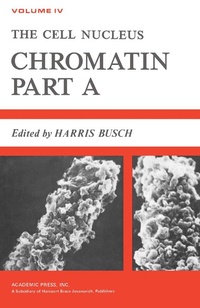
The Cell Nucleus: Chromatin, Part A is a collection of papers that deals with the fundamental research involving cellular responses to environmental stimuli and stress. One paper describes the ultra-structural organization of chromosomes and certain eukaryotic chromatin fractions as seen by a scanning electron microscope. The researcher investigating chromatin three-dimension ultra-structure is presented with two choices to address the technical limitations of SEM at different levels, namely, (1) electron microscope modality and (2) specimen preparation procedures. Another paper explains the extensive postmortem changes in properties occurring in nuclear preparations during purification and handling. The analysis of the digestion products when mammalian nuclei are digested with endogenous and exogenous nucleases can show the organization structure of the cell nucleus. When treated with Ca-Mg or micrococcal endo-nuclease, the different nuclear or chromatic preparations present near identical digestion patterns. Another paper reviews the occurrence of phase-specific nuclear proteins in the Physarum mitotic cycle, as well as their possible role in the control of DNA replication order in Physarum. The collection can prove valuable to bio-chemists, cellular biologists, micro-biologists, developmental biologists, and scientists involved in cellular investigations.
More details
Other editions
New editions
E-Book
12/2012
3rd Edition
Academic Press
€64.95
Available for download
E-Book
07/1998
3rd Edition
Academic Press
€84.95
Available for download
Additional editions

Harris Busch
Cell Nucleus: v. 4
Book
01/1978
Academic Press
€82.33
Article exhausted; check different version
Content
List of ContributorsContents of Other VolumesIntroductionPart I Chromosomes and Chromatin Structure Chapter 1 Ultrastructure of Chromatin and Chromosomes As Visualized by Scanning Electron Microscopy I. Introduction II. Methods for the Study of Chromatin Structure III. Ultrastructure of Metaphase Chromatin IV. SEM of Interphase Chromatin V. Reconstitution of Extranucleolar Chromatin References Chapter 2 The Regular Substructure of Mammalian Nuclei and Nuclear Ca-Mg Endonuclease I. Introduction II. Nuclear Preparations III. Calcium Activation of Nuclei due to the Presence of a Ca-Requiring Endonuclease IV. Digestion of Nuclear Chromatin by the Ca-Mg Endonuclease-Analysis of the Digestion Products V. Higher-Order Packing of Nucleosomes-Evidence Relating to Its Properties VI. A Brief Summary of Structural Information Obtained with Other Nucleases VII. Summary and Conclusions References Chapter 3 Chromatin Structure I. Introduction II. Properties of Core Particles III. Arrangement of Core Particles on the Chromatin Strand IV. Models for Chromatin Structure References Chapter 4 The Substructure of Nucleosomes I. The Present Concept of Chromatin Structure II. Core Nucleosome and Spacer III. Binary Substructure of the Core Nucleosome IV. Biological Implications of the Nucleosomal Substructure V. Conclusions References Chapter 5 Protein-Protein Interactions of Histones I. Introduction II. Primary Structure of the Histones III. Evolutionary Conservation of the Inner Histones IV. The Preparation of Pure Histones and Histone Complexes V. Older Reports of Histone Complexing VI. Histone Folding VII. Histone-Histone Interactions VIII. The Plant Inner Histones IX. Complexing of Plant Inner Histones X. Conservation of the Binding Surfaces XI. H1 is Also an Evolutionary Hybrid XII. Why are the Interacting Surfaces Conserved? XIII. Do Acids Denature Histones Irreversibly? XIV. A Cautionary Note: Acids May Alter Histones in Certain Ways XV. The Folding of Histone H1 XVI. Interactions of Histone H1 References Chapter 6 Chromatin Replication I. Introduction II. Segregation of Nucleosomes III. Chromatin Assembly IV. Relationship between DNA Synthesis Mechanisms and Chromosomal Structure V. Replication of Viral Chromatin VI. Epilogue References Chapter 7 Characterization of Human Chromatin I. Introduction II. Isolation of Chromatin III. Isolation of Nucleosomes IV. Properties of Human Nucleosomes V. Salt-Induced Structural Changes in Nucleosomes VI. Transcription of Nucleosomes VII. Concluding Remarks References Chapter 8 Histone Antibodies-Structural Probes for Chromatin and Chromosomes I. Immunological Approach to Chromatin Structure II. Methodology III. Immunological Specificity of Histones IV. Histone Antigenic Determinants V. Organization of Histones in Chromatin and Nucleosomes VI. Organization of Histones in Chromosomes VII. Summary and Future Studies ReferencesPart II Chromosome Components Chapter 9 Chromatin Isolation I. Introduction II. Chromatin of Higher Eukaryotes III. Chromatin of Primitive Eukaryotes References Chapter 10 Mode of Chromatin Reconstitution I. Introduction II. Chromatin-Bound Protease III. Procedures of Chromatin Reconstitution IV. Mode of Binding of Chromosomal Proteins during Chromatin Reconstitution V.
