

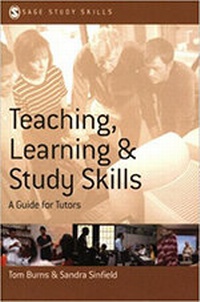
Teaching, Learning and Study Skills
A Guide for Tutors
1st Edition
Published on 19. August 2004
288 pages
978-1-84860-067-6 (ISBN)
Description

'This is an essential guide for anyone aspiring to teach in Higher Education in the UK. Not just because it is packed with practical tips and even lecture notes but crucially because it explains the nature of university teaching in the wake of the 'widening participation' agenda... In summary this book is well worth reading' - Educate Journal This is a book for tutors, lecturers and teachers in further and higher education, who need to teach their students how to study, learn and communicate effectively. Based around the same techniques and contents as Tom and Sandra's book Essential Study Skills, which is itself based on many years experience of teaching and mentoring students in higher education, this book is intended to work with traditional and non-traditional students.
The material will be suitable for institutions concerned with widening participation; with student retention; with quality enhancement; with equal opportunities and with professional and staff development.
SAGE Study Skills are essential study guides for students of all levels. From how to write great essays and succeeding at university, to writing your undergraduate dissertation and doing postgraduate research, SAGE Study Skills help you get the best from your time at university. Visit the SAGE Study Skills hub for tips, resources and videos on study success!
The material will be suitable for institutions concerned with widening participation; with student retention; with quality enhancement; with equal opportunities and with professional and staff development.
SAGE Study Skills are essential study guides for students of all levels. From how to write great essays and succeeding at university, to writing your undergraduate dissertation and doing postgraduate research, SAGE Study Skills help you get the best from your time at university. Visit the SAGE Study Skills hub for tips, resources and videos on study success!
All prices
More details
Series
Edition
First Edition
Language
English
Place of publication
London
United Kingdom
Target group
Professional and scholarly
ISBN-13
978-1-84860-067-6 (9781848600676)
Copyright in bibliographic data and cover images is held by Nielsen Book Services Limited or by the publishers or by their respective licensors: all rights reserved.
Schweitzer Classification
Other editions
Additional editions
Book
08/2004
1st Edition
SAGE Publications Inc
€85.60
Shipment within 10-20 days
Book
08/2004
1st Edition
SAGE Publications Inc
€199.07
Shipment within 10-20 days
Persons
Tom Burns, always interested in theatre and the arts and their role in teaching and learning, led the Hainault Action Group setting up adventure playgrounds and devising Community Events and Festivals for the local community. Whilst still a student Tom set up and ran the first International Dario Fo Festival - with symposium, theatre workshops for students and local people and full dramatic performances by the Fo-Rame theatre troupe of The Tiger's Tale and The Boss's Funeral.
Tom Burns is a Senior Lecturer in Education and Learning Development actively involved in the Association for Learning Development in Higher Education (www.aldinhe.ac.uk). Some time ago he, along with Sandra Sinfield, developed the student-facing Study Hub (www.londonmet.ac.uk/studyhub) and the staff-facing Take5 website and blog (http://learning.londonmet.ac.uk/epacks/take5/), the latter offering engaging and innovative learning, teaching and assessment practices to support staff with learning development work.
Working in the Centre for Professional and Educational Development at London Metropolitan University, she continues to develop learning, teaching and assessment innovations with a special focus on engaging praxes that ignite student curiosity and develop power and voice.
Sandra Sinfield has worked as a laboratory technician, a freelance copywriter, an Executive Editor (Medicine Digest, circulation 80,000 doctors) and in the voluntary sector with the Tower Hamlets Research and Resource Centre and with the Islington Green School Community Play written by Alan, Whose Life is it Anyway?, Clarke and produced at Sadler's Wells.
Sandra is a Senior Lecturer in Education and Learning Development actively involved in the Association for Learning Development in Higher Education (www.aldinhe.ac.uk). Some time ago she, along with Tom Burns, developed the student-facing Study Hub (www.londonmet.ac.uk/studyhub) and the staff-facing Take5 website and blog (http://learning.londonmet.ac.uk/epacks/take5/), the latter offering engaging and innovative learning, teaching and assessment practices to support staff with learning development work.
Working in the Centre for Professional and Educational Development at London Metropolitan University, she continues to develop learning, teaching and assessment innovations with a special focus on engaging praxes that ignite student curiosity and develop power and voice.
Tom Burns is a Senior Lecturer in Education and Learning Development actively involved in the Association for Learning Development in Higher Education (www.aldinhe.ac.uk). Some time ago he, along with Sandra Sinfield, developed the student-facing Study Hub (www.londonmet.ac.uk/studyhub) and the staff-facing Take5 website and blog (http://learning.londonmet.ac.uk/epacks/take5/), the latter offering engaging and innovative learning, teaching and assessment practices to support staff with learning development work.
Working in the Centre for Professional and Educational Development at London Metropolitan University, she continues to develop learning, teaching and assessment innovations with a special focus on engaging praxes that ignite student curiosity and develop power and voice.
Sandra Sinfield has worked as a laboratory technician, a freelance copywriter, an Executive Editor (Medicine Digest, circulation 80,000 doctors) and in the voluntary sector with the Tower Hamlets Research and Resource Centre and with the Islington Green School Community Play written by Alan, Whose Life is it Anyway?, Clarke and produced at Sadler's Wells.
Sandra is a Senior Lecturer in Education and Learning Development actively involved in the Association for Learning Development in Higher Education (www.aldinhe.ac.uk). Some time ago she, along with Tom Burns, developed the student-facing Study Hub (www.londonmet.ac.uk/studyhub) and the staff-facing Take5 website and blog (http://learning.londonmet.ac.uk/epacks/take5/), the latter offering engaging and innovative learning, teaching and assessment practices to support staff with learning development work.
Working in the Centre for Professional and Educational Development at London Metropolitan University, she continues to develop learning, teaching and assessment innovations with a special focus on engaging praxes that ignite student curiosity and develop power and voice.
Content
Introduction - and How to Use This Book
University Teaching, Widening Participation and Study Skills
How to Assess - A Short Preface on Assessment
How to Understand Our Students
How to Promote an Effective Transition to University - and Raise Student Awareness of What Is Expected of Them
How to Promote Student Self-Confidence
How to Promote Effective Organization and Time Management
How to Promote Effective Research and Reading Strategies
How to Promote Effective Note-Making
How to Promote Effective Presentations and Seminars
How to Promote Effective Writing
How to Support Effective Revision and Exam Techniques
How to Support Effective Group Work
How to Promote Reflective Practice
How to Promote Overall Success
University Teaching, Widening Participation and Study Skills
How to Assess - A Short Preface on Assessment
How to Understand Our Students
How to Promote an Effective Transition to University - and Raise Student Awareness of What Is Expected of Them
How to Promote Student Self-Confidence
How to Promote Effective Organization and Time Management
How to Promote Effective Research and Reading Strategies
How to Promote Effective Note-Making
How to Promote Effective Presentations and Seminars
How to Promote Effective Writing
How to Support Effective Revision and Exam Techniques
How to Support Effective Group Work
How to Promote Reflective Practice
How to Promote Overall Success
