

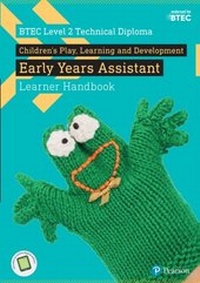
BTEC Level 2 Technical Diploma Children's Play, Learning and Development Early Years Assistant Learner Handbook with ActiveBook
1st Edition
Published on 13. June 2018
307 pages
978-1-292-19697-8 (ISBN)
Description

Packed with practical activities and planning support to help you deliver these exciting new qualifications.A complete unit-by-unit course companion for learners.Helps prepare learners for specific job roles.Includes Hands on and Ready for Work? features to develop practical skills.Assessment practice activities and dedicated Getting Ready for Assessment sections support preparation for assignments, tasks and external tests.Your Learner Handbook also includes an ActiveBook (a digital version of the Learner Handbook) - ideal for revision and reforcement of key skills.The ActiveBook is available to buy separately and a range of institutional site licences are also available.
More details
Other editions
Additional editions
Louise Burnham | Sharina Forbes | Katherine Stapleton
BTEC Level 2 Technical Diploma Children's Play, Learning and Development Early Years Assistant Learner Handbook with ActiveBook
Book
07/2018
Pearson Education Limited
€45.72
Shipment within 10-20 days
Content
- Front Cover
- Contents
- How to use this book
- Chapter 1: Policy and Practice for Working in Early Years Settings
- A: Safeguarding children in early years settings
- A1: Child protection legislation in early years settings
- A2: Policies and procedures in early years settings
- A3: Types of abuse
- A4: Confidentiality and record keeping in the early years setting
- B: Promoting safe environments in early years settings
- B1: Health and safety legislation
- B2: Policies and procedures
- B3: Safety in early years settings
- B4: Incidents in early years settings
- C: Child health
- C1: Childhood illnesses, infections and conditions
- C2: Treatment and support for the ill child
- C3: Infection control
- D: Anti-discriminatory practice in the early years setting
- D1: Equality, diversity and inclusion
- D2: Developing inclusive practice in early years
- D3: Equality legislation and policies
- Work Focus
- Chapter 2: Child Development from Birth up to 5 Years
- A: Investigate children's growth and development from birth upto 5 years
- A1: Basic knowledge of the definitions of growth and development
- A2: Areas of development
- A3: Atypical development
- B: Factors that may impact on children's growth and development
- B1: Individual factors
- B2: Environmental factors
- B3: Life events
- C: Review best practice in supporting children's growth and development
- C1: Supporting development of children
- C2: Planning activities
- C3: Different types of activities
- C4: Resources that support development
- Work Focus
- Chapter 3: Developing Professional Practice Skills for Work in Early Years Settings
- A: Demonstrate the professional behaviours required in an early years setting
- A1: Developing professional standards of conduct
- A2: Developing positive organisation and timekeeping skills in early years settings
- B: Communicate effectively with colleagues and visitors in early years settings
- B1: Communicating with colleagues working in early years settings
- B2: Communicating with visitors in early years settings
- C: Support daily practice in an early years setting
- C1: Supporting colleagues in meeting children's needs in early years settings
- C2: Contributing to record keeping in early years Link it up settings
- Work Focus
- Chapter 4: Supporting Children's Physical Care Needs in Early Years Settings
- A: Contribute to physical care routines that promote the quality of care for children
- A1: Care routines - changing, cleaning and dressing, preparing for sleep
- A2: Procedures and guidance in early years settings
- A3: Promoting dignity and respect and encouraging independence
- B: Maintain safe environments for carrying out physical care routines in early years settings
- B1: Contributing to general safety checks in the early years setting
- B2: Maintaining cleanliness and hygiene in the setting
- B3: Participating in setting up and tidying away activities throughout the day
- C: Support and encourage children at meal and snack times in early years settings
- C1: Preparing snacks for children
- C2: Helping to feed children
- C3: Promoting choice and independence
- Work Focus
- Chapter 5: Supporting Children's Learning through Play
- A: Explore play and learning provision for children up to five years old in an early years setting
- A1: Identifying types of play
- A2: Recognising stages of play
- A3: Benefits of play
- B: Assist early years practitioners in preparing an enabling environment to stimulate learning through play
- B1: Enabling and stimulating environments
- B2: Play and learning curriculum plans
- B3: Resources and equipment for play and learning activities
- C: Support children up to five years old in planned play and learning activities in an early years setting
- C1: Ways to support children in their play
- C2: The individual play and learning needs of a child
- Work Focus
- Chapter 6: Supporting Children's Communication, Literacy and Language Development
- A: Explore the links between communication, language and literacy development
- A1: How children's communication and language skills develop
- A2: The role of the early years assistant in supporting children's communication, literacy and language development
- A3: Approaches to communication for different ages/abilities
- B: Support children with different communication needs and abilities
- B1: Communicating with children of different ages
- B2: Suitable resources to support literacy
- B3: Communication strategies for special educational needs (SEN), English as a second language (ESL), English as an additional language (EAL)
- B4: Verbal/non-verbal communication strategies
- B5: Methods of providing guidance/clear instruction
- B6: Ways of adapting your behaviour in response to the needs of the child/group
- Work Focus
- Chapter 7: Developing Professional Practice in Early Years Settings
- A: Explore how reflective practice of own work supports self development
- A1: How early years practitioners use reflective practice
- A2: Application of reflective practice
- B: Carry out reflection on professional practice skills and in supporting children's communication, literacy and language development
- B1: Reflecting on knowledge and skills when demonstrating professional practice
- B2: Reflecting on knowledge, skills and practice when supporting children's development
- C: Reflect on skills, knowledge and practice of supporting children's physical care needs and children's learning through play
- C1: Reflecting on knowledge, skills and practice when supporting children's physical care needs
- C2: Reflecting on knowledge, skills and practice when supporting children's learning through play
- D: Review knowledge, skills and practice gathered to support own professional development as an early years assistant
- D1: Review own knowledge skills and practice
- D2: Identify development needs with reference to the early years assistant role
- Work Focus
- Answers to assessment practice questions
- Glossary
- Index
- Back Cover
