

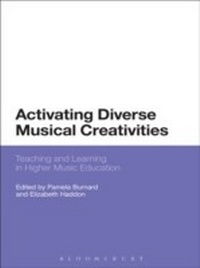
Activating Diverse Musical Creativities
Teaching and Learning in Higher Music Education
1st Edition
Published on 29. January 2015
272 pages
978-1-4725-8913-2 (ISBN)
Description

Activating Diverse Musical Creativities analyses the ways in which music programmes in higher education can activate and foster diverse musical creativities. It also demonstrates the relationship between musical creativities and entrepreneurship in higher education teaching and learning. These issues are of vital significance to contemporary educational practice and training in both university and conservatoire contexts, particularly when considered alongside the growing importance of entrepreneurship, defined here as a type of creativity, for successful musicians working in the 21st century creative and cultural industries.
International contributors address a broad spectrum of musical creativities in higher education, such as improvisational creativity, empathic creativity and leadership creativity, demonstrating the transformative possibilities of embedding these within higher music education teaching and learning. The chapters explore the active practice of musical creativities in teaching and learning and recognize their mutual dependency. The contributors consider philosophical and practical concerns in their work on teaching for creativity in higher music education and focus on practices using imaginative approaches in order to make learning more interesting, effective and relevant.
International contributors address a broad spectrum of musical creativities in higher education, such as improvisational creativity, empathic creativity and leadership creativity, demonstrating the transformative possibilities of embedding these within higher music education teaching and learning. The chapters explore the active practice of musical creativities in teaching and learning and recognize their mutual dependency. The contributors consider philosophical and practical concerns in their work on teaching for creativity in higher music education and focus on practices using imaginative approaches in order to make learning more interesting, effective and relevant.
More details
Edition
1. Auflage
Language
English
Place of publication
London
United Kingdom
Publishing group
Bloomsbury Publishing PLC
Target group
College/higher education
Illustrations
30 bw Illus
ISBN-13
978-1-4725-8913-2 (9781472589132)
Copyright in bibliographic data and cover images is held by Nielsen Book Services Limited or by the publishers or by their respective licensors: all rights reserved.
Schweitzer Classification
Other editions
Additional editions
Pamela Burnard | Elizabeth Haddon
Activating Diverse Musical Creativities
Teaching and Learning in Higher Music Education
Book
07/2016
Bloomsbury Academic
€56.60
Shipment within 15-20 days
Pamela Burnard | Elizabeth Haddon
Activating Diverse Musical Creativities
Teaching and Learning in Higher Music Education
Book
01/2015
Bloomsbury Academic
€179.70
Shipment within 15-20 days
Persons
Pamela Burnard is Professor of Arts, Creativities and Education at the University of Cambridge, UK. Recent publications include Musical Creativities in Practice (2012), Teaching Music Creatively (with Regina Murphy, 2013) and Developing Creativities in Higher Music Education (2013).
Elizabeth Haddon is Research Fellow at the University of York, UK. She is the author of Making Music in Britain: Interviews with Those Behind the Notes (2006).
Elizabeth Haddon is Research Fellow at the University of York, UK. She is the author of Making Music in Britain: Interviews with Those Behind the Notes (2006).
Content
List of Figures
List of Tables
Acknowledgements
Preface, Pamela Burnard (University of Cambridge, UK) and Elizabeth Haddon (University of York, UK)
Part 1
1. Introduction: The Imperative of Diverse Musical Creativities in Academia and Industry, Pamela Burnard (University of Cambridge, UK) and Elizabeth Haddon (University of York, UK)
Part 2: Experiments in Learning
2. On the Other Side of the Divide: Making Sense of Student Stories of Creativities in Music, Dawn Bennett (University of Curtin, Australia), Anna Reid (Sydney Conservatorium of Music, Australia) and Peter Petocz (Macquarie University, Australia)
3. Creativities in Popular Songwriting Curricula: Teaching or Learning? Joe Bennett (Bath Spa University, UK)
4. Killing the Muse: Listening Creativities and the Journey to Creative Mastery, Donna Weston (Queensland Conservatorium, Griffith University, Australia) and Tim Bryon (Queensland Conservatorium, Griffith University, Australia)
5. Permission to Play: Fostering Enterprise Creativities in Music Technology through Extracurricular Interdisciplinary Collaboration, Elizabeth Dobson (University of Huddersfield, UK)
Part 3: Experiments in Teaching
6. Activating Improvisational Creativity in the Performance of 'World' and 'Popular' Music, Sue Miller (Anglia Ruskin University, UK/Cuba)
7. The Inner Voice: Activating Intuitive and Improvisational Creativities, Esmée Olthuis (Conservatory of Utrecht, The Netherlands)
8. Activating Empathic Creativity in Musicking through University-Community Partnerships, Susan Helfter (University of Southern California, US) and Beatriz Ilari (University of Southern California, US)
9. Activating Communal Creativities for Redesigning Higher Education Curriculum, Pedagogy and Assessment: Drawing on Intercultural Experience, Lindy Joubert (University of Melbourne, Australia) and Violeta Schubert (University of Melbourne, Australia)
10. Being a Composer in an Age of Uncertainties, Risks and Diffuse Creativity: Learning, Career and Creativities, António Ângelo Vasconcelos (Institute of Setúbal, Portugal)
Part 4: Engaging Technologies
11. Technology as a Vehicle (Tool and Practice) for Developing Diverse Creativities, Andrew King (University of Hull, UK)
12. Activating Digital Creativities in Higher Music Education, Leah Kardos (Kingston University, UK)
13. Creative Teaching with Performing Arts Students: Developing Career Creativities through the Use of ePortfolios for Career Awareness and Resilience, Jennifer Rowley (University of Sydney, Australia), Dawn Bennett (University of Curtin, Australia), Peter Dunbar-Hall (University of Sydney, Australia)
14. Conclusion: Musical Creativities and Entrepreneurship in Higher Music Education: Activating New Possibilities, Elizabeth Haddon (University of York, UK) and Pam Burnard (University of Cambridge, UK)
Index
List of Tables
Acknowledgements
Preface, Pamela Burnard (University of Cambridge, UK) and Elizabeth Haddon (University of York, UK)
Part 1
1. Introduction: The Imperative of Diverse Musical Creativities in Academia and Industry, Pamela Burnard (University of Cambridge, UK) and Elizabeth Haddon (University of York, UK)
Part 2: Experiments in Learning
2. On the Other Side of the Divide: Making Sense of Student Stories of Creativities in Music, Dawn Bennett (University of Curtin, Australia), Anna Reid (Sydney Conservatorium of Music, Australia) and Peter Petocz (Macquarie University, Australia)
3. Creativities in Popular Songwriting Curricula: Teaching or Learning? Joe Bennett (Bath Spa University, UK)
4. Killing the Muse: Listening Creativities and the Journey to Creative Mastery, Donna Weston (Queensland Conservatorium, Griffith University, Australia) and Tim Bryon (Queensland Conservatorium, Griffith University, Australia)
5. Permission to Play: Fostering Enterprise Creativities in Music Technology through Extracurricular Interdisciplinary Collaboration, Elizabeth Dobson (University of Huddersfield, UK)
Part 3: Experiments in Teaching
6. Activating Improvisational Creativity in the Performance of 'World' and 'Popular' Music, Sue Miller (Anglia Ruskin University, UK/Cuba)
7. The Inner Voice: Activating Intuitive and Improvisational Creativities, Esmée Olthuis (Conservatory of Utrecht, The Netherlands)
8. Activating Empathic Creativity in Musicking through University-Community Partnerships, Susan Helfter (University of Southern California, US) and Beatriz Ilari (University of Southern California, US)
9. Activating Communal Creativities for Redesigning Higher Education Curriculum, Pedagogy and Assessment: Drawing on Intercultural Experience, Lindy Joubert (University of Melbourne, Australia) and Violeta Schubert (University of Melbourne, Australia)
10. Being a Composer in an Age of Uncertainties, Risks and Diffuse Creativity: Learning, Career and Creativities, António Ângelo Vasconcelos (Institute of Setúbal, Portugal)
Part 4: Engaging Technologies
11. Technology as a Vehicle (Tool and Practice) for Developing Diverse Creativities, Andrew King (University of Hull, UK)
12. Activating Digital Creativities in Higher Music Education, Leah Kardos (Kingston University, UK)
13. Creative Teaching with Performing Arts Students: Developing Career Creativities through the Use of ePortfolios for Career Awareness and Resilience, Jennifer Rowley (University of Sydney, Australia), Dawn Bennett (University of Curtin, Australia), Peter Dunbar-Hall (University of Sydney, Australia)
14. Conclusion: Musical Creativities and Entrepreneurship in Higher Music Education: Activating New Possibilities, Elizabeth Haddon (University of York, UK) and Pam Burnard (University of Cambridge, UK)
Index
