

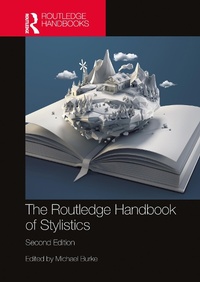
The Routledge Handbook of Stylistics
2nd Edition
Published on 29. May 2023
636 pages
978-1-000-82900-6 (ISBN)
Description

This second edition of The Routledge Handbook of Stylistics provides a comprehensive introduction and reference point to key areas in the field of stylistics. The four sections of the volume encompass a wide range of approaches from classical rhetoric to cognitive neuroscience. Issues that are covered include:
historical perspectives, centring on rhetoric, formalism and functionalism.
the elements of stylistic analysis, including foregrounding, relevance theory, conversation analysis, narrative, metaphor, speech and thought presentation and point of view.
current areas of influential research such as cognitive poetics, corpus stylistics, critical stylistics, multimodality, creative writing and reader response.
four newly commissioned chapters in the emerging fields of cognitive grammar, forensic linguistics, the stylistics of children's literature and a corpus stylistic study of mental health issues. All of these new chapters are written by leading researchers in their respective fields.
Each of the 33 chapters in this volume is written by a specialist. Each chapter provides an introduction to the subject, an overview of its history, an instructive example of how to conduct a stylistic analysis, a section with recommendations for practice and a discussion of possible future developments in the area for readers to follow up on.
The Routledge Handbook of Stylistics, second edition is essential reading for researchers, postgraduates and undergraduate students working in this area.
historical perspectives, centring on rhetoric, formalism and functionalism.
the elements of stylistic analysis, including foregrounding, relevance theory, conversation analysis, narrative, metaphor, speech and thought presentation and point of view.
current areas of influential research such as cognitive poetics, corpus stylistics, critical stylistics, multimodality, creative writing and reader response.
four newly commissioned chapters in the emerging fields of cognitive grammar, forensic linguistics, the stylistics of children's literature and a corpus stylistic study of mental health issues. All of these new chapters are written by leading researchers in their respective fields.
Each of the 33 chapters in this volume is written by a specialist. Each chapter provides an introduction to the subject, an overview of its history, an instructive example of how to conduct a stylistic analysis, a section with recommendations for practice and a discussion of possible future developments in the area for readers to follow up on.
The Routledge Handbook of Stylistics, second edition is essential reading for researchers, postgraduates and undergraduate students working in this area.
Reviews / Votes
"The Routledge Handbook of Stylistics offers a wide-ranging and practical resource for students and researchers of the subject. Each chapter is engagingly written and covers a key topic in contemporary stylistics. A must-have guide to the study of language and style."Professor Joanna Gavins, Chair in English Language and Literature, School of English, University of Sheffield, UK
Praise for the first edition
"This is an indispensable beginner's guide to stylistics, packed full of practical advice and demonstrating the breadth of the discipline in its coverage of everything from the origin of stylistics in classical rhetoric to current advances in cognitive neuroscience."
Professor Dan McIntyre, Professor of English Language and Linguistics, Department of English, Uppsala University, Sweden
More details
Series
Edition
2nd edition
Language
English
Place of publication
London
United Kingdom
Publishing group
Taylor & Francis Ltd
Target group
College/higher education
Product notice
Reflowable
Illustrations
18 Tables, black and white; 15 Line drawings, black and white; 15 Illustrations, black and white
ISBN-13
978-1-000-82900-6 (9781000829006)
Copyright in bibliographic data and cover images is held by Nielsen Book Services Limited or by the publishers or by their respective licensors: all rights reserved.
Schweitzer Classification
Other editions
Additional editions
Michael Burke
The Routledge Handbook of Stylistics
Book
05/2025
2nd Edition
Routledge
€76.20
Shipment within 10-20 days
Michael Burke
The Routledge Handbook of Stylistics
Book
05/2023
2nd Edition
Routledge
€315.50
Shipment within 15-20 days
Person
Michael Burke is Professor of Rhetoric at University College Roosevelt, Utrecht University. He is the author of Literary Reading, Cognition and Emotion: An Exploration of the Oceanic Mind (Routledge, 2011), and a co-author of Picturing Fiction through Embodied Cognition: Drawn Representations and Viewpoint in Literary Texts (Routledge, 2022).
Content
Introduction
Stylistics: From classical rhetoric to cognitive neuroscience
PART 1
Historical perspectives in stylistics
1. Rhetoric and poetics: The classical heritage of stylistics
2. Formalist stylistics
3. Functionalist stylistics
4. Reader response criticism and stylistics
PART II
Core issues in stylistics
5. The linguistic levels of foregrounding in stylistics
6. (New) historical stylistics
7.Stylistics, speech acts and im/politeness theory
8. Stylistics, conversation analysis and the cooperative principle
9. Stylistics and relevance theory
10. Stylistics, point of view and modality
11. Stylistics and narratology
12. Metaphor and stylistics
13. Speech and thought presentation in stylistics
PART III
Contemporary topics in stylistics
14. Pedagogical stylistics
15. Stylistics, drama and performance
16. Schema theory in stylistics
17. Stylistics and text world theory
18. Stylistics and cognitive grammar
19. Cognitive poetics
20. Quantitative methodological approaches to stylistics
21. Feminist stylistics
22. Literary pragmatics and stylistics
23. Corpus stylistics
24. Stylistics and translation
25.Critical stylistics
PART IV
Emerging and future trends in stylistics
26. Creative writing and stylistics
27. Stylistics and real readers
28. Stylistics and film
29. Multimodality and stylistics
30. Forensic stylistics
31. Stylistics and Children's Literature
32. A corpus stylistics Approach to mental health
33. Stylistics, emotion and neuroscience
Index
Stylistics: From classical rhetoric to cognitive neuroscience
PART 1
Historical perspectives in stylistics
1. Rhetoric and poetics: The classical heritage of stylistics
2. Formalist stylistics
3. Functionalist stylistics
4. Reader response criticism and stylistics
PART II
Core issues in stylistics
5. The linguistic levels of foregrounding in stylistics
6. (New) historical stylistics
7.Stylistics, speech acts and im/politeness theory
8. Stylistics, conversation analysis and the cooperative principle
9. Stylistics and relevance theory
10. Stylistics, point of view and modality
11. Stylistics and narratology
12. Metaphor and stylistics
13. Speech and thought presentation in stylistics
PART III
Contemporary topics in stylistics
14. Pedagogical stylistics
15. Stylistics, drama and performance
16. Schema theory in stylistics
17. Stylistics and text world theory
18. Stylistics and cognitive grammar
19. Cognitive poetics
20. Quantitative methodological approaches to stylistics
21. Feminist stylistics
22. Literary pragmatics and stylistics
23. Corpus stylistics
24. Stylistics and translation
25.Critical stylistics
PART IV
Emerging and future trends in stylistics
26. Creative writing and stylistics
27. Stylistics and real readers
28. Stylistics and film
29. Multimodality and stylistics
30. Forensic stylistics
31. Stylistics and Children's Literature
32. A corpus stylistics Approach to mental health
33. Stylistics, emotion and neuroscience
Index
