

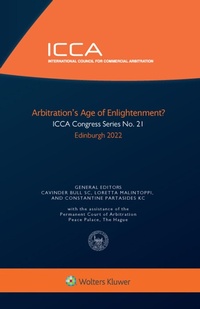
Arbitration's Age of Enlightenment?
Published on 12. September 2023
1104 pages
978-94-035-1387-4 (ISBN)
Description

Directly presenting the considered views of a broad cross-section of the international arbitration community, this timely collection of essays addresses the criticism of the arbitral process that has been voiced in recent years, interpreting the challenge as an invitation to enlightenment. The volume records the entire proceedings of the twenty-fifth Congress of the International Council for Commercial Arbitration (ICCA), held in Edinburgh in September 2022.Topics range from the impact of artificial intelligence to the role of international arbitration in restraining resort to unilateralism, protectionism, and nationalism. The contributors tackle such contentious issues as the following:time and cost;gender and cultural diversity;confidentiality vs. transparency;investor-State dispute settlement procedures;the proposed establishment of a permanent international investment court system;how cross-fertilisation across different disciplines may impact international arbitration;determining whether a document request seeks documents that are relevant and material to the outcome of a dispute;whether we would be better off if investment arbitration were to disappear; andimplications for international arbitration of the Russian invasion of Ukraine.There is consideration of global issues that are likely to give rise to disputes in the future, including climate change, environmental protection, access to depleting water resources, energy and mining transition, and human rights initiatives. Several contributions focus on developments in specific countries (China, India) and regions (Africa, the Middle East).Arbitrators, corporate counsel, and policymakers will appreciate this opportunity to engage with current thinking on key issues in international commercial and investment arbitration, especially given the diversity of thought presented by authors from all over the world.
More details
Other editions
Additional editions

Cavinder Bull | Loretta Malintoppi | Constantine Partasides
Arbitration's Age of Enlightenment?
Book
09/2023
Kluwer Law International
€303.06
Shipment within 15-20 days
Content
- Intro
- Half-Title Page
- Title Page
- Copyright Page
- Preface
- ICCA Congress
- Table of Contents
- Part I Opening Keynote Address
- Chapter 1 Arbitration's Age of Enlightenment: A Celebration or a Challenge?
- Part II Plenary: Arbitration's Age of Enlightenment . and Adaptation?
- Chapter 2 A Search for International Enlightenment Through Arbitration: Andrew Carnegie, the Alabama Claims Arbitration, and the 'Temple of Peace'
- I Introduction
- II A Brief Sketch of Carnegie's Life
- III The Alabama Claims Arbitration
- IV Attempts at Settlement
- V A Breakthrough
- VI The Arbitration Almost Derailed
- VII The Arbitration Proceeds
- VIII The Arbitration's Impact on Andrew Carnegie
- Chapter 3 How Does International Arbitration Fare in a World Creeping Towards Unilateralism, Protectionism and Nationalism?
- I Introduction
- II Some of the Many Challenges Facing the World: Unilateralism, Protectionism and Nationalism
- 1 Definitions and Antitheses
- 2 Recent Surge of Government Actions with Nationalistic, Protectionist or Unilateral Overtones
- 3 Is This Trend Encroaching upon International Arbitration?
- III In Retrospect: Arbitration's Past Contribution to the Avoidance of Politicized Conflicts
- 1 Dogger Bank
- 2 The Cold War
- 3 Iran-United States Claims Tribunal
- 4 Over 1,100 Institutional and Ad Hoc Investment Cases to Date
- 5 Commercial Arbitration Cases
- IV What Can Arbitration Do to Alleviate Some of These Tensions?
- V Conclusion
- Chapter 4 "Loyauté": A Tool for Enlightenment?
- I The Nature of Procedural Loyauté
- 1 Existence of the Concept
- 2 The Difficulties in Defining Procedural Loyauté
- a The Absence of Definition or Consensus
- b A Concept Applicable to All
- c Procedural Loyauté Applies to a Variety of Situations
- i Procedural Loyauté at the Start of the Proceedings
- ii Loyauté in the Course of the Proceedings
- iii Procedural Loyauté at the Enforcement Stage
- II Critical Analysis of Loyauté and Its Mechanisms
- 1 Sanctions Having an Impact on the Merits
- 2 Allocation of Costs
- 3 Sanction of the Counsel or the Arbitrator
- Chapter 5 AI Versus IA: End of the Enlightenment?
- I Introduction
- II Dr. Kissinger Et Al and AI
- III IA and AI
- IV IA and Intelligence
- V AI Versus IA
- Part III Panel 1: Progress Made/Progress to Be Made - Exploring the Ways Forward
- Chapter 6 E + Action - Talk + Data = Enlightenment in International Arbitration
- I A 'Gospel of Doom'
- 1 'Evil News Fly Faster'
- 2 Achieving Enlightenment
- II Efficiency
- 1 A Long-Standing Concern
- 2 We Have Techniques to Control Time and Costs, but No Real Way of Monitoring Their Efficacy
- 3 Access to Information and Empirical Data
- III Equality
- 1 Not a Level Playing Field
- 2 Redressing the Balance
- 3 Removing Barriers to Appointment: Actions and Different Words
- IV The Environment
- 1 We Must Act to Limit the Impact of Our Industry on the Environment
- 2 Humanity Has Never Faced a Problem Like It
- 3 The Environmental Impact of a Major International Arbitration
- 4 Avoiding the Bystander Effect and Achieving a 'Greener' Arbitration
- V Delivering Change
- 1 Become a 'Lion of Truth'
- 2 Embrace Technology
- 3 Three Concrete Actions for Change
- Chapter 7 Some Thoughts on Progress
- I Introduction
- II Saving Costs and Time
- III Production of Documents
- IV Diversity
- V How Should International Arbitration Respond to War?
- VI Conclusion
- Part IV Once Upon a Time in International Arbitration
- Panel 2: I. Three Classics Revisited
- Chapter 8 Putting the Abu Dhabi Oil Award's Methodology to the Test of Time
- I Introduction
- II The Factual Situation and the Issues in Dispute
- 1 Facts and Historical Context
- 2 Disputed Issues
- III Interpretation
- IV Continental Shelf Doctrine
- V Applicable Law
- VI Composition of the Tribunal
- VII Conclusion
- Chapter 9 Why Investment Treaties Should Not Be Subverted by Barcelona Traction
- I The Facts
- II The Issues
- III Resolution of the issues
- IV Looking Ahead
- 1 Shareholder Actions under National and International Law
- 2 Should the Advantages of Sophisticated National Corporate Law Be Incorporated into International Rules Pertaining to the Treatment of Foreign Investment?
- 3 The Baby and the Bathwater
- Annex: Extracts from GAMI v Mexico (NAFTA), Final Award, 15 November 2004, Section 7 ("Expropriation"), pp. 45-51.
- Chapter 10 Mitsubishi and Its Learning
- I Introduction
- II The Court's Hospitality Toward Arbitration of Federal Statutory Claims
- III The "Second-Look" Doctrine
- 1 Standard of Review in a Second Look
- 2 A Second Look under European Union Law
- IV Applying the "Non-chosen" Law
- V Conclusion
- Panel 3: II. State Responsibility - Then and Now
- Chapter 11 The International Law Commission and Its Articles on State Responsibility
- I Introductory Remarks
- II The International Law Commission and Its Activities
- III The History and Result of the ILC Work on State Responsibility
- IV The Relevance of the Articles for Investment Protection and Arbitration
- Chapter 12 Some Thoughts on Frictions and Fault Lines in the Application by Investment Tribunals of the ILC Articles on State Responsibility
- I Introduction
- II Instances of 'Frictions' or 'Fault Lines'
- 1 Applicability of the ILC Articles in Investment Arbitration
- 2 Conflation of Articles 4 and 5 on Attribution of Conduct
- 3 Confusion Between the Rules of Attribution and Rules of Contractual Liability
- 4 Relationship Between Exceptions Clauses and Circumstances Precluding Wrongfulness
- 5 Availability of Countermeasures
- III Concluding Remarks
- Chapter 13 Who's Afraid of the Articles on State Responsibility
- I The Articles on State Responsibility: Outside the Comfort Zone?
- II The Standard Perspective: Do Investment Lawyers Get Their State Responsibility Right?
- III A Change of Perspective: Investment Law's Contribution to State Responsibility
- IV Useful Guidance on Select Issues: Investment Law and Its Antecedents in the 2001 ASR
- V 'Almost Ubiquitous Reliance': 'Consolidating and Refining' the Articles in Investment Treaty Jurisprudence Since 2001
- 1 Embracing the ILC Articles
- 2 Working with the Articles, and Making Them Their Own
- VI Radiating Effects?
- VII Concluding Thoughts
- Panel 4: Arbitration's Printing Press: Drawing the Line Between Confidentiality and Transparency
- Chapter 14 In Defence of Party Choice: The Continuing Importance of Confidentiality in Commercial Arbitration
- I The Quest for Transparency and Its Implications for Confidentiality
- II Arguments Made Against a Confidential Process in Commercial Arbitration
- 1 Legitimacy of the Process
- 2 Limiting Confidentiality to Achieve Greater Transparency for the Common Good
- 3 Confidentiality in Arbitration Poses a Risk to the Development of the Law
- 4 Confidentiality Is the Exception, Not the Rule in Most Jurisdictions
- III In Defence of the Contractual, Party-Led Process
- 1 The Creation of the Arbitration System
- 2 In Support of International Trade: Facilitating a Party-Led Process in the Public Interest
- 3 A Party-Led Process
- 4 In This Party and Controlled Process, What Do Parties Want in Terms of Confidentiality?
- a Having Your Cake and Eating It: Do Parties Also Want Transparency?
- IV Why Party Choice Overrides the Arguments Made Against Confidentiality
- 1 Legitimacy of the Process
- 2 Limiting Confidentiality to Achieve Greater Transparency for the Common Good
- 3 Confidentiality in Arbitration Poses a Risk to the Development of the Law
- 4 Confidentiality is the Exception, Not the Rule in Most Jurisdictions
- V Conclusion
- Chapter 15 Confidentiality in International Commercial Arbitration Does Not Undermine the Legitimacy of the Process
- Chapter 16 How Confidential Is Confidential?: Safeguards, Obstacles, and Boundaries of Confidentiality in International Commercial Arbitration
- I Introduction
- II Status Quo: How Confidential Are International Commercial Arbitration Proceedings, Anyway?
- 1 Arbitration Laws
- 2 Arbitration Rules
- a Confidentiality
- b Publication of Arbitral Awards
- 3 Parties' Agreement
- 4 Conclusion
- III Confidentiality Is a Legitimate Concern and Must Be Protected Against Ill-Founded Criticism
- 1 Parties Want: And Have a Legitimate Right - To Keep Their Disputes Confidential
- 2 Any Alleged Rights to Information by the Public Are Outweighed by the Parties' Legitimate Confidentiality Concerns
- 3 Unfounded Allegations of Secrecy Do Not Justify Foregoing Confidentiality
- 4 Confidentiality Does Not Substantially Hinder Any Development of the Law
- IV Conclusion
- Chapter 17 The Link Between Transparency and Legitimacy in International Arbitration
- I Introduction
- II Investor-State Arbitration
- 1 Approaches by Stakeholders in Investor-State Arbitration
- a Supranational Organizations
- b Individual Nations
- i Specific Measures Adopted by Nations
- c Arbitral Institutions
- d Others
- 2 Potential Impacts of Increased Transparency in Investor-State Arbitration
- III International Commercial Arbitration
- 1 Institutions Moving Towards Increased Transparency
- 2 Institutions Emphasizing Confidentiality
- 3 Potential Impacts of Increased Transparency in Commercial Arbitration
- a Increased Diversity
- b Better Predictability
- IV Conclusion
- A Letter to the Editor
- Panel 5: Post-pandemic Dispute Resolution Toolbox
- Chapter 19 Dispute Resolution Toolbox
- Chapter 20 Combined Dispute Resolution Processes: Trends and Challenges Post Pandemic
- Chapter 21 Knowledge-Based ADR Toolbox for Uncertain Times
- I Introduction
- II A Plaidoyer for Knowledge Hubs
- III An ADR Toolbox of the Construction Industry
- 1 Interdisciplinary Advice as a Contract Administration Tool
- 2 Dispute Board
- 3 A Case of the Chilean Dispute Resolution Mechanism for the Concessions of Public Works
- 4 Arbitration Procedures Designed According to Pareto Principle
- IV Conclusions
- Panel 6: State of the World in 2022 - New Developments and Reform in International Investment Arbitration
- Chapter 22 A User's Guide to What's New in the ICSID Rules 2022
- I Introduction
- II Implementation of the Amended Rules
- III Overall Approach and Structure
- IV Convention AFR
- V Institution Rules
- VI Arbitration Rules
- 1 Time Limits and Extensions of Time
- 2 Notice of Third-Party Funding
- 3 Challenge Proposals
- 4 Case Management Conferences
- 5 Document Production
- 6 Tribunal-Appointed Experts
- 7 Manifest Lack of Legal Merit
- 8 Bifurcation and Preliminary Objections
- 9 Consolidation and Coordination
- 10 Provisional Measures
- 11 Costs
- 12 Security for Costs
- 13 Transparency
- 14 Expedited Arbitration
- VII Conciliation Rules
- VIII Additional Facility Rules
- IX Fact-Finding Rules
- X Mediation Rules
- XI Conclusion
- Chapter 23 'State of the World': New Developments and Reform in International Investment Arbitration - The UNCITRAL ISDS Reform
- I Introduction
- II Why UNCITRAL
- III Scope of the Mandate
- IV Procedural Background
- 1 A Government-Led and Inclusive Process
- 2 Expertise from All Stakeholders
- 3 Transparency
- 4 Working Group III Progress During the COVID-19 Pandemic
- V State of Reform Discussions
- 1 General Status of the Reform Process
- a Concerns Identified and Desirability of Reform
- b Identified Reform Options
- c Project schedule
- d Resource Requirements and Workplan
- 2 Preliminary Consideration of Relevant Issues of Reform Elements
- 3 Reform Elements of a Procedural Nature
- a Code of Conduct
- b Third-Party Funding
- c Selection and Appointment of Arbitrators and Adjudicators
- d Dispute Prevention and Mitigation as Well as Other Means of ADR
- i Dispute Prevention and Mitigation
- ii Alternative Dispute Resolution Methods and Strengthening Recourse to Mediation
- e Multiple Proceedings and Counterclaims, Including Shareholder Claims and Reflective Loss
- f Security for Costs
- g Frivolous and Unmeritorious Claims
- h Interpretation of Investment Treaties by Treaty Parties
- i Assessment of Damages and Compensation
- 4 Reform Elements of Structural Nature
- a Standing Multilateral Investment Court and Appellate Mechanism
- i Appellate Mechanism
- ii Enforcement
- iii Financing
- iv Selection and Appointment of Adjudicators in a Standing Mechanism
- b Advisory Centre
- 5 Implementation of the Reform: A Multilateral Framework Based on the Mauritius Convention on Transparency Model, on the OECD BEPS Convention?
- VI Parallel ISDS Reform Developments
- VII Conclusion and Way Forward
- Chapter 24 ISDS Reform: Innovative Actions at the National and Bilateral Levels
- I Introduction
- 1 The 'Root' of the Matter
- 2 Reforming Nationally: Effective 'First Aid'
- II Innovative Steps Taken Nationally and Bilaterally: Case Study of Nigeria
- 1 The Nigeria-Morocco BIT
- 2 Dispute Prevention, Dispute De-escalation and Mediation
- 3 Phase 2: Reforming the Old-Generation BITs
- 4 Phase 3: Alignment and Cohesion in National and Bilateral Efforts
- 5 Coordination of Nigeria's Reforms
- III Closing Thoughts
- Chapter 25 The "State of the World" in 2022: New Developments and Reform in International Investment Arbitration-ISDS Reform Proposals: An Investor Perspective
- I Introduction
- II Background
- III Importance of FDI
- IV Assessing the Impact of the Reform Proposals
- 1 Flaws of the MIC Proposal
- a Tilts the Balance Against Investors and Implications for Their Investment Decisions
- b The MIC Would Eliminate Party Autonomy in the Selection of Adjudicators
- c The MIC Would Reduce the Pool of Qualified Arbitrators
- d The MIC Would Introduce Uncertainty Regarding the Enforceability of Arbitral Awards
- e The MIC Would Introduce Uncertainty as to How Dispute Settlement Proceedings Will Be Funded and Maintained
- 2 Flaws of the Appellate Mechanism Proposal
- a The Appellate Mechanism Tilts the Balance of the Dispute Settlement System Against Investors
- b The Appellate Mechanism Would Make Erroneous Decisions Permanent
- c The Appellate Mechanism Increases the Cost and Duration of Proceedings
- V Reforms That Would Improve the System for All Users
- 1 Multilateral Advisory Center
- 2 Code of Conduct
- 3 Prior Scrutiny of Awards
- 4 Improving Arbitrator Selection
- 5 Alternative Dispute Resolution Mechanisms
- 6 Expedited Procedures
- 7 Additional Case Management Tools
- VI The Mechanics for Implementation
- VII Conclusion
- Part V Regional Themes
- Panel 7: Regional Themes I: The Americas and Europe Between Constitutionalism and Populism
- Chapter 26 The Americas and Europe Between Constitutionalism and Populism: European Challenges to ISDS
- I Introduction
- II The Origin of ISDS, Its Justification and Objectives
- 1 ICSID
- III Causes of Dissatisfaction with ISDS Through Arbitration
- IV The European Commission's Proposal for a Multilateral Investment Court
- V The Jurisdiction of the CJEU
- VI The Achmea Case
- 1 Background
- 2 Achmea: The Factual and Legal Context
- 3 Achmea: The Advocate General's Opinion
- 4 Achmea: The Judgment of the Court
- 5 The Immediate Aftermath of Achmea
- VII The CETA Opinion
- 1 Background
- 2 CETA: Opinion 1/17 of the Court of Justice
- 3 CETA: Subsequent Events
- VIII The Micula Saga
- 1 The Factual Background
- 2 The Commission Decision and the Judgment of the General Court
- 3 The UK Proceedings and the Judgment of the UK Supreme Court
- 4 The Opinion of the Advocate General
- 5 The Judgment of the Court of Justice
- IX Concluding Reflections
- Chapter 27 The CJEU and ISDS
- I Introduction
- II The Judgment of the CJEU in Achmea, Opinion 1/17, and the Judgment of the CJEU in Komstroy
- 1 The Judgment of the CJEU in Achmea
- 2 The CJEU's Opinion 1/17
- 3 The Judgment of the CJEU in Komstroy
- III Intra-EU ISDS after Achmea and Komstroy: Practice of International Arbitral Tribunals and Reactions of EU Member States, Including Their Courts
- 1 Intra-EU ISDS after Achmea and Komstroy: Practice of International Arbitral Tribunals
- a Practice of International Arbitral Tribunals Established under Intra-EU BITs
- b Practice of International Arbitral Tribunals Established under the ECT in Intra-EU Cases
- 2 Intra-EU ISDS after Achmea and Komstroy: Reactions of EU Member States, Including Their Courts
- a Reactions of EU Member States in Relation to Specific Arbitrations
- b Reactions of EU Member States Disassociated with Specific Arbitrations
- IV Enforcement of Intra-EU ECT Awards Outside of the EU
- V Conclusion
- Chapter 28 The Interaction of European Investment Law with Public International Law
- I Introduction
- II The Development of European Investment Law under the Lisbon Treaty
- 1 The Transfer of the Authority to Regulate FDIs to the EU
- 2 The Participation of Member States in the Development of European Investment Law
- III The Relationship Between Preexisting International Agreements and European Investment Law
- 1 The EU's Relationship with International Law
- 2 The Performance of International Agreements under the Principle of Pacta Sunt Servanda
- 3 The Grandfathering of Preexisting Inter-EU BITs under European Law
- IV The Development of European Investment Law in the Context of the CETA
- 1 The Principle of Autonomy of European Law
- 2 The Right to Regulate under Domestic Laws
- 3 The Standard of Fair and Equitable Treatment
- 4 The Standard of Expropriation
- V The Opportunity For Collaboration among the Actors of International Law
- Chapter 29 From the No to the May Be: Latin America and Investment Arbitration
- I The Concept of "Latin America"
- II The "No of Tokyo"
- III The Treaty Boom
- IV The Claims Boom
- 1 Argentina
- 2 Colombia
- 3 Ecuador
- Panel 8: Regional Themes II: Asia, Africa and the Middle East: Dynamism and Consolidation
- Chapter 30 Local Characteristics of Arbitration in China and Their Influence on Legislations
- I Introduction
- II The Unique Characteristics of Commercial Arbitration in China and the Causes of the Uniqueness
- 1 Commercial Arbitration in China Has Deep Administrative Involvement
- a Arbitration Institutions Are Established by Administrative Authorities and Mostly Classified as Institutional Organizations
- b The Decision-Makers of Arbitration Institutions Are Appointed and Removed by Administrative Authorities
- 2 Commercial Arbitration in China Also Has a Duty to Stabilize Society
- a Arbitration Prioritizes Substantive Justice of the Case
- b Arbitral Tribunal Can Conduct Mediation
- 3 The Legal Framework of Arbitration in China Resembles Litigation Rules
- 4 Arbitration Institutions Play an Important Role in Commercial Arbitration in China
- a Arbitration Institutions Largely Dominate the Arbitration Procedures
- b Parties Could Only Appoint Arbitrators from the Panel of Arbitrators
- III Internationalization of Commercial Arbitration in China: Realistic Background and Demands for Reform
- 1 Economic Development and Legislative Support Nurturing the Development of International Commercial Arbitration
- a Foreign Economic Growth Directly Leads to an Increase in International Commercial and Investment Dispute Cases
- b Strengthening Legislation in the Foreign-Related Field and Improving Foreign-Related Rule of Law System Becomes a Reform Priority
- 2 Good Practice of International Commercial Arbitration in China Has Laid a Foundation for Further Reform
- a Shift from Mandatory List of Arbitrators to Recommended List of Arbitrators
- b Independence of Mediation
- c Innovation of Arbitrators' Fees
- d Introduction of Emergency Arbitrator System
- e Grant Arbitral Tribunal the Power to Order Interim Measures
- f Pilots and Exploration of Arbitrator Taking over Procedural Management
- g Attempt at Optional Appellate Arbitration in International Arbitration
- IV Realistic Necessity of Dualistic Legislation on Arbitration
- 1 Ad Hoc Arbitration Should Be Stipulated Only in International Arbitration Rules at the Current Stage
- 2 Different Rules of Determining Jurisdiction Should Be Allowed in Domestic and International Arbitration
- 3 Arbitral Tribunals Should Differ in Granting Interim Measures in Domestic and International Arbitration
- 4 Procedural Rules Should Differ in the Level of Detail in Domestic and International Arbitration
- 5 Mediation by Arbitral Tribunals Should Only Be Provided for Domestic Arbitration
- 6 The Power of Arbitral Tribunals to Investigate and Collect Evidence Is Inappropriate for International Arbitration Procedures
- 7 Rules Relating to Appraisal Are Inappropriate for International Arbitration Procedures
- 8 Only a Comprehensive Set of International Arbitration Legislation Can Provide the Necessary Rules to Support International Arbitration
- V The Feasibility of Dualistic Legislation on Arbitration
- 1 Dualistic Legislation Is Theoretically Justified
- 2 The Comparative Law Analysis of Singapore and France Shows That Dualistic Legislation Is Feasible and Beneficial
- VI Conclusion
- Chapter 31 Arbitration in India: Quo Vadis?
- I Introduction
- II The Early Years of the 1996 Act: A Tumble Down the Rabbit Hole
- III The Supreme Court Charts a Course: The Fork in the Road
- IV The 2015 Amendments: Alice Chooses Her Path
- V Judge-Made Law Has Advanced Arbitration: Alice Finds Her Way
- 1 Casting the Net Wide
- 2 Pro-enforcement Bias for Foreign Awards
- 3 Emergency Arbitrators Recognized under Part I
- 4 Court's Review of Kompetenz-Kompetenz Decisions
- 5 Party Autonomy
- VI Speed Breakers Ahead: Will Humpty Dumpty Take a Great Fall?
- 1 Perversity and Irrationality: A Trojan Horse
- 2 Enforceability of Investment Treaty Awards in India
- 3 The Arbitration Council of India
- 4 Lack of Institutionalized Arbitration
- 5 No Regulatory Matrix for Third-Party Funding
- VII The Practice of Arbitration Needs Overhauling: Through the Looking Glass
- VIII Conclusion: Wipe the Grin Off the Cheshire Cat
- Chapter 32 Of Lions, Tigers, Dragons, and Wolves: Transforming International Arbitration in Africa
- I Introduction
- II Early Arrivals
- III Enter the Dragon
- IV Tiger Rising
- V Dances with Wolves
- VI Snow Monkeys
- VII Transforming International Arbitration in Africa
- 1 The Lion King(s)
- a The Instruments
- b The Institutions
- c The Parties and Disputes
- d International Arbitration for All
- VIII Conclusion
- Chapter 33 African Practitioners, International Arbitration, and Inclusivity
- I Introduction
- II International Arbitration and African Practitioners
- 1 Framing the Problem
- 2 Data
- 3 Some Necessary Skills for Arbitrators
- III SOAS Arbitration in Africa Survey
- IV The African Promise
- V Modern Arbitration in African States
- VI Future Growth Area
- VII Conclusion
- Panel 9: The Sociology of Arbitration
- Chapter 34 The Changing Sociology of the Investment Arbitration Market: The Case of Double Hatting
- I Introduction
- II Presenting the Arbitration Market
- III Theorizing the Arbitration Market
- 1 Symbolic Capital
- 2 Insider Behaviour
- IV The Legitimacy Crisis and Double Hatting Critique
- 1 Early Critique
- 2 Maturing Critique
- 3 Diffusion of Critique
- 4 Counter-Backlash
- V The Effect of Critiques on the Investment Arbitration Market
- 1 Changes in Treaties
- 2 Self-Regulation
- 3 State Challenges
- VI Conclusions: A Changing Market
- Chapter 35 The End of Hubris in International Arbitration?: A Reply to Malcolm Langford
- I Sociology as an Empirical Discipline
- II Double Hatting as Moral Capital
- III Double Hatting and Marginality
- Chapter 36 Sociology and the Market for Commercial Arbitrators: Seeing It All Differently
- I The Sociology of Arbitration
- 1 Why Sociology?: Why Now?
- 2 Professor Langford's Study of Double Hatting
- 3 Why Quantitative Empirical Analysis?
- 4 Why Investment Arbitration?
- 5 Why Arbitrator Selection?
- II What about Commercial Arbitration?
- 1 Making Informed Choices in Appointments
- 2 A Love-Hate Relationship with Transparency
- III Information about Arbitrators
- 1 What We Knew Then and What We Know Now
- 2 Arbitrators' Websites, Institutional Panel Lists, Commercial Directories
- 3 Arbitrators' Perspectives on Current Issues
- 4 Arbitrators' Performance Statistics
- 5 Publishing Arbitral Awards
- IV Direct Experience and Seeing It All Differently
- Panel 10: Young Practitioners and Our Future
- Chapter 37 Report of the Moderator for the Young Practitioners and Our Future Panel
- I Introduction
- II Recent Trends in International Arbitration
- 1 The Proliferation of Young Entrepreneurs in the Business of Arbitration
- 2 Use of Artificial Intelligence and Digital Technologies
- 3 Climate Change and Arbitration
- III The Future of Arbitration and Institutions
- 1 Regulators in Arbitration
- 2 Geographical Diversity
- 3 Transparency and Confidentiality
- IV Concluding Remarks
- Part VI New Frontiers
- Panel 11: New Frontiers I: Arbitration in the Age of [Post-pandemic] Technology
- Chapter 38 How to Win Instructions in the Post-pandemic World
- I Introduction
- II How Has the Pandemic Changed International Arbitration?
- 1 The Rise of Virtual Hearings, and the Adoption of Technology in Hearings
- 2 Paperless Environment
- 3 Post-pandemic Business Travel
- 4 The Rise of Independent Practitioners and Boutique Firms
- III How Might Legal Operations Help You Win Instructions?
- 1 Sourcing for the Right Team
- 2 Designing the Best User Experience
- 3 Working with Legal Project Managers
- IV Conclusion
- Chapter 39 Artificial Intelligence in Arbitral Decision-Making: The New Enlightenment?
- I Introduction
- II AI Decision-Makers of the Future?
- III Paradigm Shift in Theories on Legal Decision-Making
- IV Conclusion
- Chapter 40 Decentralized Justice Systems: A New Player in the Field of Alternative Dispute Resolution?
- I Introduction
- II The World of Smart Contracts, NFTs and Cryptocurrencies: A Complex Territory for Dispute Resolution
- 1 The World of Blockchain Technology
- a The Basics of Blockchain Technology
- b Use Cases of Blockchain Technology
- 2 The Inevitable Rise of Blockchain Disputes and Their Challenges
- III The Emergence of DJS
- 1 The New Kids on the Block
- 2 The Obstacles to a Fair and Legitimate Process
- IV Conclusion: A Necessary (R)Evolution?
- Chapter 41 Artificial Intelligence and the Face of the Arbitrations of Tomorrow
- I Introduction
- II The Technology
- III When to Deploy: Answers to 'What If' Questions
- IV AI in IA: The Face of the Arbitrations of Tomorrow
- 1 Challenges to the Methodology
- 2 Data and Other Evidentiary Issues: 'Garbage In, Garbage Out'
- 3 Logistics
- Panel 12: New Frontiers II: The Subject Matters of the Disputes of Tomorrow
- Chapter 42 Harmonious Interpretation of Investment Treaties and International Human Rights Instruments Considering the Climate Change
- I Introduction
- II Climate Change
- 1 Climate Change Facts
- 2 Interrelationship Between Climate Change and Human Rights
- III Climate Change and Investment Arbitration Interaction
- 1 Claims by the Investors Against States' Climate Change-Related Measures
- 2 Environmental or Human Rights Counterclaims
- IV Rebalancing Tools
- 1 International Law and International Investment Law
- a Climate Change Related International Documents
- b International Human Rights Treaties
- c Climate-Based Litigation
- d Other International Law Sources
- e New Generation IIAs
- 2 Interpretation by the Investment Arbitration Tribunals
- a Interpretation in Cases Where States' Environmental Measures Are Challenged
- b Interpretation in Environmental/Human Rights Counterclaims
- V Conclusion
- Chapter 43 New Types of Energy Disputes: In the Era of Low Carbon Transition
- I Introduction
- II New Energies and Disputes
- III Disputes Arising from Mandatory Closures and Phase-Outs
- IV Questions
- 1 Are Legal Measures Taken by States to Promote Energy Transitions Likely to Be Undermined or Halted by Established Investment Treaty Provisions Such as Those in the Energy Charter Treaty?
- 2 In the Context of the Energy Transitions, How Are Tribunals Likely to Understand the Protections Grounded in the Notion of Legitimate Expectations?
- 3 Will Transition Policies and Measures Have Effects on Commercial Disputes among Parties to Agreements for Traditional Oil and Gas Projects?
- 4 What Impact Is This Likely to Have on the Arbitration Process Itself, If Any?
- Chapter 44 Access to and Use of Freshwater River Resources
- I Introduction
- II Recent Inter-State Cases Relating to International Watercourses
- 1 The Gabcikovo-Nagymaros Project Case
- 2 Pulp Mills on the River Uruguay
- 3 Construction of a Road in Costa Rica along the San Juan River
- 4 Dispute over the Status and Use of the Waters of the Silala
- 5 The Indus Waters Kishenganga Arbitration
- III The United Nations Convention on the Law of the Non-navigational Uses of International Watercourses and Its Jurisdictional Limitations for Dispute Settlement
- 1 The States Parties to the Convention
- 2 Equitable and Reasonable Utilization
- 3 No Significant Harm
- 4 Dispute Resolution
- IV Investor-State Disputes Involving Freshwater
- V Conclusion
- Chapter 45 New Frontiers II: The Subject Matters of the Disputes of Tomorrow - Cloud Disputes
- I Introduction
- II Cloud Computing: Definition, Use, Service and Deployment Models
- 1 Definition, Development and Use
- 2 Service Models
- a Infrastructure as a Service (IaaS)
- b Platform as a Service (PaaS)
- c Software as a Service (SaaS)
- d Anything as a Service (XaaS)
- 3 Deployment Models
- a Public Cloud
- b Private Cloud
- c Community Cloud
- d Hybrid Cloud
- 4 Complexity of the Cloud Supply Chains
- III Main Legal Issues Arising from Cloud Computing
- 1 Delivery of Service
- 2 Regulatory Issues
- 3 IP Issues
- IV Distinguishing Cloud Disputes from Telecom, Media, Technology disputes
- V International Arbitration and Cloud Disputes
- 1 Time to Resolution
- 2 Flexibility
- 3 Expertise
- 4 Confidentiality
- 5 Internationally Enforceable
- 6 Neutrality of Forum
- VI Conclusions
- Panel 13: Renaissance Arbitrator
- Chapter 46 Aristotle's Virtue Ethics in Arbitration
- I Introduction
- II Aristotle's Virtue Ethics
- III The Virtues of a Good Arbitrator
- 1 Courage (a?d?e?a, andreia)
- 2 Moderation (s?f??s???, sophrosyne)
- 3 Generosity (?e??a??d???a, gennaiodo_ría)
- 4 Magnificence (µe?a??p??pe?a, megaloprépeia)
- 5 Magnanimity (µe?a??????a, megalopsychia)
- 6 Ambition (f???d???a, filodoxía)
- 7 Patience (p?a?t?ta, praótita)
- 8 Truthfulness (a???e?a, alítheia)
- 9 Humor (e?t?ape??a, eutrapelia)
- 10 Kindness (f???a, philia)
- 11 Modesty (a?d??, aidó_s)
- 12 Justice (d??a??s???, dikaiosúní)
- Chapter 47 The Renaissance Arbitrator: Lessons from the Construction Industry and Statutory Adjudication
- I Introduction
- II The Construction Industry in the UK
- 1 Economic Significance
- 2 Dispute Resolution in the Construction Industry in the UK
- a Introduction of the Housing Grants, Construction and Regeneration Act 1996
- i Adjudication under the Housing Grants, Construction and Regeneration Act 1996
- b Reception of Statutory Adjudication
- c The Changing Face of Statutory Adjudication
- 3 Arbitration in Scotland
- a Similarities Between Arbitration and Adjudication
- III Lessons to Be Learned
- 1 Adjudication Principles of Benefit to Arbitration
- a The Decision Maker
- b Timetable, Procedure, and Costs
- IV Conclusions
- Chapter 48 Some "Wh"s of Training of Arbitrators on Bounded Rationality and Debiasing Techniques: Taking the Future of Arbitral Decision-Making Seriously
- I Introduction
- II Why?
- III What?
- IV Who, Where, When and How?
- V Difficulties and Challenges
- VI Conclusion
- Panel 14: Different Perspectives
- Chapter 49 Enlightened, but under Siege?: A User's Perspective on the International Commercial Arbitration Market
- I Introduction
- II A Complex Market
- 1 The Customer
- 2 The Seller
- 3 The Product
- 4 Neighboring Markets
- a The Market for External Advice
- b The Market for the Administration of Commercial Arbitration Proceedings
- c The Market for Third-Party Funding
- 5 First Provisional Finding: The Individual User Is a Customer Highly Dependent on Other Actors
- III The User: A Reasonably Satisfied but Critical Customer
- 1 Cost
- 2 Duration
- 3 Flexibility
- 4 Diversity
- 5 Second Provisional Finding: The User Is a Reasonably Satisfied, but Potentially Disengaged Customer
- IV The User: A Customer Looking for an Alternative Product?
- Chapter 50 State Perspective on International Commercial Arbitration: State as a Policymaker and State as a User of the System
- I Introduction
- II Current Trends and Policies in International Arbitration
- 1 Arbitration as a Tool to Attract Cross-Border Trade and Investment
- 2 States Promoting Regional Centres and Their Jurisdictions as Arbitration Venues
- 3 Tension Between Promoting International Arbitration and Developing Domestic Court Litigation
- III The State as User of Arbitration: Arbitration under State Contracts
- 1 Nature of State Contracts
- a Subject Matter of State Contracts: Public Interest Element
- b State and State Entities as Parties
- c Implication of the Breach and the Issue of Damages
- d Procedural Issues in Arbitrations Arising from State Contracts
- 2 Challenges of Arbitrating Matters Involving State Entities
- a Lack of Distinction Between Private-to-Private Arbitrations and Those Involving State Entities
- b Qualification and Capacity of Decision-Makers
- c Limited Scope and Mandate of Decision-Makers
- IV The State's Role in Reducing the Risks and in Better Managing Disputes
- V Conclusions
- Chapter 51 Protecting Party Consent: The Role of the UK Courts in International Arbitration
- I Introduction
- II The Statutory Foundations of the Modern Relationship Between UK Courts and International Arbitration
- 1 England, Wales and Northern Ireland
- 2 Scotland
- III Supporting the Modern Arbitration User in Practice
- 1 Policing the Threshold of Arbitration
- a Suspending Proceedings
- b Anti-suit Injunctions
- 2 Topping up the Tribunal's Powers During the Arbitral Proceedings
- a Evidence Gathering
- b Interim Relief
- 3 Handling Complaints after an Award Has Been Rendered
- a Challenges to Arbitrators
- b Challenges to Awards
- c Challenges to Enforcement
- IV Conclusion
- Panel 15: The Great Debate: 'A World Without Investment Arbitration?'
- Chapter 52 A World Without Investment Arbitration? An Introduction to Debate
- Chapter 53 For the Proposition: A World Without Investment Arbitration?
- I Introduction: The Current Practical Reality
- II Current Economic and Political Rationales
- 1 The 'Credible Commitment' Rationale
- a Lack of Historical Support
- b Lack of Empirical Support
- c Conclusion
- 2 The 'De-politicisation' Rationale
- III Perceived Problems with the Current System of Investment Arbitration
- 1 Six Standard Criticisms
- a Investment Arbitration Produces Inconsistent Decisions That Result in a Lack of Predictability for Investors and Host States
- b Problems with the Decision-Makers
- i The Problem of Party-Appointed Arbitrators
- ii The Perception of Career/Financial Incentives
- iii Lack of Diversity
- iv Lack of Accountability
- c Cost and Duration
- d The Ease of Commencing Arbitration and the Impact on States' Resources
- e A Preferential Forum for Foreign Investors Distorts the Market for Foreign Investment
- f Investment Arbitration Chills Regulation in the Public Interest That Is Compatible with Investment Treaties
- 2 Fundamental Issues with the Current Model
- a The Impact on Wider Interests
- b The Development of International Investment Law
- c Limitations of the Adversarial Model
- 3 Conclusion
- IV Viable Alternatives to the Current System
- 1 Local Remedies
- 2 Diplomatic Protection
- 3 Dispute Prevention, and Submission to a Joint Committee, with Inter-State Arbitration as a Last Resort
- 4 Multilateral Investment Court and Appellate Tribunal
- a Who Would Be the Adjudicators?
- b What Would Be the Relationship Between the MIC or Appellate Body and the New York Convention/ICSID Convention?
- c How Would the MIC Be Financed?
- 5 Incremental Reforms to Investment Arbitration
- V Conclusion
- Chapter 54 The World Is Better with Investment Arbitration
- I Introduction
- II Both States and Investors Have Contributed to the Proliferation of BITs and Other Treaties with Investment Chapters and to the Expansion of Investment Protections Over Time
- 1 Gunboat Diplomacy and Military Force as Means to Resolve Investment Disputes
- 2 The End of Gunboat Diplomacy and Introduction of Treaties of Friendship, Commerce and Navigation
- 3 Introduction to the Early BITs
- 4 The Development of the Modern BIT
- 5 Development of Multilateral Investment Treaties
- 6 Protections Offered by BITs
- a Fair and Equitable Treatment
- b National Treatment and Most-Favored-Nation Treatment
- c Full Protection and Security
- d Provisions Against Expropriation
- e Neutral Dispute Resolution Mechanisms
- III Investment Arbitration Is a Necessity for States
- IV Investment Arbitration Is a Necessity for Investors
- V The Criticisms of ISDS Misrepresent the Actual Reality
- 1 The Outside World Has Not Lost Confidence in the ISDS System
- 2 The Current ISDS System Is Not Inconsistent
- 3 There Are Procedures in Place to Address Arbitrator Bias and Conflicts
- 4 ISDS Does Not Chill Public Interest or Regulatory Control
- 5 Multilateral Investment Courts Will Not Make International Dispute Resolution More Consistent but Will Cause Unnecessary Delays and Burdensome Costs
- 6 UNCITRAL's Working Group III Demonstrates That There Is No Agreement on Dissolving the System of ISDS
- 7 Concerns over Damages Calculations in Arbitral Awards Can Be Resolved Within the Current ISDS System
- 8 The Overarching Realities Demonstrate That ISDS Is Necessary and Beneficial
- VI Conclusion
- Chapter 55 The Great Debate: A Commentator's Perspective
- I Setting the Context
- II The Latest State of Play in the Actual Real-Time ISDS Debate
- III A Third Dimension: The Overlooked Value of Dispute Avoidance
- IV Circling Back
- Part VII Closing Session
- Chapter 56 Closing Keynote Address
- I International Arbitration in Scotland
- II Arbitration Versus Litigation
- III The Role of Ethics
- IV Young Practitioners and the Future of Arbitration
- V Case Management: Preventing Delay and Expense
- VI Confidentiality Versus Transparency
- VII Concluding Remarks: The Future for Arbitration in Scotland?
- ICCA Edinburgh Congress List of Participants
- International Council for Commercial Arbitration (ICCA)
