

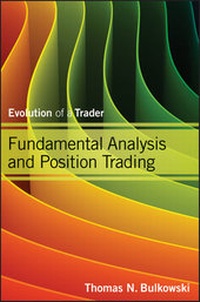
Fundamental Analysis and Position Trading
Evolution of a Trader
Published on 10. December 2012
320 pages
978-1-118-50874-9 (ISBN)
Description

Comprehensive coverage of the four major trading styles
Evolution of a Trader explores the four trading styles thatpeople use when learning to trade or invest in the stock market.Often, beginners enter the stock market by:
* Buying and holding onto a stock (value investing). That workswell until the trend ends or a bear market begins. Then theytry
* Position trading. This is the same as buy-and-hold, except thetechnique sells positions before a significant trend changeoccurs.
* Swing trading follows when traders increase their frequency oftrading, trying to catch the short-term up and down swings.Finally, people try
* Day trading by completing their trades in a single day.
This series provides comprehensive coverage of the four tradingstyles by offering numerous tips, sharing discoveries, anddiscussing specific trading setups to help you become a successfultrader or investor as you journey through each style.
Trading Basics takes an in-depth look at moneymanagement, stops, support and resistance, and offers dozens oftips every trader should know.
Fundamental Analysis and Position Trading discusses whento sell a buy-and-hold position, uncovers which fundamentals workbest, and uses them to find stocks that become10-baggers--stocks that climb by 10 times their originalvalue.
Swing and Day Trading reveals methods to time the marketswings, including specific trading setups, but it covers the basicsas well, such as setting up a home trading office and how muchmoney you can make day trading.
Reviews / Votes
"The three books in this series were written for peopleunfamiliar with the inner workings of the stock market, but willstill curl the toes of professionals, too. Research is used toprove the ideas discussed, but is presented in an easy tounderstand and light-hearted manner. You will find the booksto be as entertaining as they are informative and packed withmoneymaking tips and ideas. Use the ideas presented here tohone your trading style and improve your success. Whether youare a novice who has never purchased a stock but wants to, or aprofessional money manager who trades daily, these books are anecessary addition to any market enthusiast'sbookshelf." --Alan Battista, Stockineer.com Book ReviewMore details
Other editions
Additional editions
Book
01/2013
Wiley
€73.50
Shipment within 15-20 days
Person
THOMAS N. BULKOWSKI is a successful investor with thirtyyears of experience in the stock market. He is also the author ofthe Wiley titles, Encyclopedia of Candlestick Charts,Encyclopedia of Chart Patterns, Getting Started in Chart Patterns,Trading Classic Chart Patterns, and Visual Guide to ChartPatterns. Bulkowski is also a contributor to Active Trader,Technical Analysis of Stocks & Commodities, and otherpublications worldwide. Before earning enough from his investmentsto retire from his day job at age 36, Bulkowski was a hardwaredesign engineer with Raytheon and a senior software engineer forTandy Corporation.
Content
1 - Fundamental Analysis and Position Trading [Seite 3]
2 - Contents [Seite 7]
3 - Preface [Seite 13]
4 - Acknowledgments [Seite 19]
5 - 1 Introduction to Buy-and-Hold [Seite 21]
5.1 - What Is Buy?and?Hold? [Seite 22]
5.2 - Who Should Buy and Hold? [Seite 22]
5.3 - My Numbers: Background and Terms [Seite 23]
5.4 - Now What? [Seite 23]
6 - 2 Stock Selection [Seite 25]
6.1 - What Comes After Large Price Moves? [Seite 26]
6.2 - Myth: Stocks That Drop Least in A Bear Market Then Soar [Seite 27]
6.3 - Stock Selection the Easy Way [Seite 28]
6.4 - Two Tips for Stock Selection [Seite 29]
6.5 - Buy Fallen Angels [Seite 30]
6.6 - What Chart Patterns Apear Before Mergers and Buyouts? [Seite 30]
6.6.1 - Overpaying? [Seite 32]
6.7 - What Are Insiders Doing? [Seite 33]
6.8 - Chapter Checklist [Seite 35]
7 - 3 Book Value [Seite 37]
7.1 - Book Value Defined [Seite 38]
7.2 - Value Assets Properly [Seite 38]
7.3 - Investing Using Book Value [Seite 39]
7.4 - When Is Book Value Important? [Seite 39]
7.5 - The Value of Hidden Assets [Seite 40]
7.6 - Limits of Book Value [Seite 41]
7.7 - Buybacks Lower Book Value [Seite 42]
7.8 - Historical Research [Seite 42]
7.9 - Price to Book Value: A Good Measure [Seite 44]
7.10 - Small Caps: Best Choice [Seite 45]
7.11 - Low Stock Price Rules! [Seite 47]
7.12 - Book Value and Return on Equity [Seite 48]
7.13 - What Is the Best Price to Book Value? [Seite 49]
7.14 - Combinations and Performance [Seite 50]
7.15 - Trading Strategy: Beating the Dow [Seite 51]
7.16 - The Eight?Stock Setup [Seite 52]
7.17 - Hold Time for Best Results [Seite 54]
7.18 - Chapter Checklist [Seite 55]
8 - 4 Capital Spending [Seite 57]
8.1 - Is Decreasing Capital Spending the Holy Grail? [Seite 57]
8.2 - Capital Spending Trends versus Performance [Seite 58]
8.3 - Frequency Distribution [Seite 59]
8.4 - Performance by Market Cap [Seite 60]
8.5 - Chapter Checklist [Seite 61]
9 - 5 Cash Flow [Seite 63]
9.1 - Historical Research Review [Seite 64]
9.2 - Cooking the Books [Seite 65]
9.3 - The Numbers [Seite 66]
9.4 - Is Increasing Cash Flow Good? [Seite 66]
9.4.1 - Median Performance [Seite 67]
9.5 - Performance by Market Cap [Seite 68]
9.5.1 - What Is the Best Cash Flow Value? [Seite 69]
9.6 - Chapter Checklist [Seite 69]
10 - 6 Dividends [Seite 71]
10.1 - Stock Dividends: An Explanation [Seite 72]
10.2 - Historical Research Review [Seite 72]
10.3 - High Yield, High Performance? [Seite 73]
10.4 - Testing: Yield and Pay out Ratio [Seite 74]
10.5 - Which Is Best: Dividends or No Dividends? [Seite 75]
10.6 - Surprise: Dividend Cuts Work! [Seite 75]
10.7 - When Disaster Strikes [Seite 77]
10.8 - Performance by Market Cap [Seite 78]
10.9 - Chapter Checklist [Seite 79]
11 - 7 Long?Term Debt [Seite 81]
11.1 - The Numbers [Seite 81]
11.2 - Is Debt Good? [Seite 82]
11.3 - Sinking Ship: Taking on Debt [Seite 82]
11.4 - Debt by Market Capitalization [Seite 83]
11.4.1 - Debt-Free Market Caps [Seite 84]
11.5 - Chapter Checklist [Seite 85]
12 - 8 Price?to?Earnings Ratio [Seite 87]
12.1 - History Lesson [Seite 87]
12.2 - Do Low P/E Stocks Outperform? [Seite 88]
12.3 - P/E Trends Down: Good or Bad? [Seite 89]
12.4 - Price and Earnings Combinations: Yawn [Seite 89]
12.5 - Buy Small Caps with Low P/E [Seite 90]
12.6 - High P/E: Time to Sel? [Seite 91]
12.7 - Three P/E Tips [Seite 91]
12.8 - Chapter Checklist [Seite 92]
13 - 9 Price?to?Sales Ratio [Seite 93]
13.1 - Good Benchmark: PSRs Below 1.0 [Seite 94]
13.2 - PSR Trend: Down is Best [Seite 95]
13.3 - Small Caps, Small PSRs Rule! [Seite 95]
13.3.1 - Market Cap versus Sales [Seite 96]
13.4 - Checklist: PSRs by Industry [Seite 97]
13.5 - Chapter Checklist [Seite 98]
14 - 10 Return on Shareholders' Equity [Seite 101]
14.1 - Low ROE Stocks Outperform: Why? [Seite 102]
14.2 - ROE Trend Over Time: Yawn [Seite 103]
14.3 - ROE Performance by Market Capitalization [Seite 103]
14.4 - Chapter Checklist [Seite 104]
15 - 11 Shares Outstanding [Seite 105]
15.1 - Performance versus Shares Outstanding [Seite 105]
15.2 - Event Pattern: Dutch Auction Tender Offers [Seite 107]
15.3 - Should You Sell? [Seite 107]
15.4 - Sell at What Price? [Seite 110]
15.5 - Event Pattern: Common Stock Offerings [Seite 111]
15.6 - Performance and Market Capitalization [Seite 113]
15.7 - Chapter Checklist [Seite 114]
16 - 12 Fundamental Analysis Summary [Seite 115]
16.1 - Performance Rank: One-Year Hold [Seite 115]
16.2 - Performance Rank: Three?Year Hold [Seite 117]
16.3 - Performance Rank: Five?Year Hold [Seite 119]
17 - 13 How to Double Your Money [Seite 121]
17.1 - How Long to Double? [Seite 121]
17.2 - What Is the Best Buy Price? [Seite 122]
17.3 - Which Market Caps Do Best? [Seite 123]
17.4 - Focus on Fundamentals: Which Are Best? [Seite 124]
17.4.1 - Price to Book Value [Seite 124]
17.4.2 - Capital Spending [Seite 124]
17.4.3 - Price to Cash Flow [Seite 125]
17.4.4 - Dividends [Seite 126]
17.4.5 - Long?Term Debt [Seite 126]
17.4.6 - Price?to?Earnings Ratio [Seite 127]
17.4.7 - Price?to?Sales Ratio [Seite 128]
17.4.8 - Return on Equity [Seite 129]
17.4.9 - Shares Outstanding [Seite 130]
17.5 - Warning: Losses Ahead. What You Need to Know [Seite 130]
17.6 - Testing the Setup [Seite 132]
17.7 - Chapter Checklist [Seite 133]
18 - 14 Finding10?Baggers [Seite 135]
18.1 - How Long to 10x? [Seite 136]
18.2 - What Is Highest Starting Price? [Seite 136]
18.3 - What Happens the First Year? [Seite 137]
18.4 - Rising Over Time: How Fast? [Seite 138]
18.5 - 10?Baggers by Market Cap [Seite 139]
18.6 - Fundamental Ratios Common to 10?Baggers [Seite 139]
18.6.1 - Price to Book Value [Seite 139]
18.6.2 - Capital Spending [Seite 140]
18.6.3 - Price to Cash Flow [Seite 141]
18.6.4 - Dividends [Seite 142]
18.6.5 - Long?Term Debt [Seite 142]
18.6.6 - Net Profit [Seite 143]
18.6.7 - Price to Earnings [Seite 143]
18.6.8 - Sales [Seite 144]
18.6.9 - Price?to?Sales Ratio [Seite 145]
18.6.10 - Return on Equity [Seite 145]
18.6.11 - Shares Outstanding [Seite 146]
18.7 - Industries Most Likely to Make 10?Baggers [Seite 147]
18.8 - The Most Popular Years for 10?Baggers [Seite 148]
18.9 - Surprising Finding about 10?Bagger Losses [Seite 149]
18.10 - Backward Testing [Seite 149]
18.11 - Chapter Checklist [Seite 150]
19 - 15 Trading 10?Baggers [Seite 153]
19.1 - 10?Bagger Birth [Seite 153]
19.1.1 - 10?Baggers Start from a Flat Base [Seite 155]
19.1.2 - Some 10?Baggers Prefer a V?Shaped Start [Seite 156]
19.1.3 - Moving Up: A Higher Valley Turn [Seite 158]
19.2 - Life of a 10?Bagger [Seite 159]
19.2.1 - Weekly Measured Move Up [Seite 159]
19.2.2 - MMU Measure Rule [Seite 162]
19.2.3 - Two?Hump Shape [Seite 163]
19.2.4 - Trading Humps [Seite 165]
19.2.5 - Line Shape [Seite 166]
19.2.6 - Rounded?Turn Shape [Seite 167]
19.2.7 - Stair?Step Shape [Seite 169]
19.3 - 10?Bagger Death [Seite 170]
19.3.1 - The Numbers [Seite 172]
19.4 - Chart Patterns in 10?Baggers [Seite 172]
19.4.1 - Head?and?Shoulders Top [Seite 172]
19.4.2 - Double Top and the 2B Rule [Seite 173]
19.4.3 - Triple Top [Seite 174]
19.4.4 - Inverted V [Seite 175]
19.4.5 - Rounded Turn [Seite 176]
19.4.6 - Ugly Double Top [Seite 176]
19.5 - Chapter Checklist [Seite 176]
20 - 16 Selling Buy and Hold [Seite 181]
20.1 - The Weinstein Setup [Seite 181]
20.1.1 - Stage 2 [Seite 182]
20.1.2 - Stage 3 [Seite 183]
20.1.3 - Stage 4 [Seite 183]
20.1.4 - Testing [Seite 184]
20.2 - Example: The Southwest Airlines Trade [Seite 185]
20.2.1 - Indicators [Seite 186]
20.3 - Example: Savient Pharmaceuticals [Seite 187]
20.4 - 1?2?3 Trend Change for Downtrends [Seite 188]
20.5 - 1?2?3 Trend Change for Uptrends [Seite 190]
20.5.1 - 1?2?3 Testing [Seite 190]
20.6 - The Cloudbank Setup [Seite 192]
20.6.1 - Identification [Seite 192]
20.6.2 - The Shape of Bottoms [Seite 193]
20.6.3 - Investing in Cloudbanks [Seite 194]
20.6.4 - The Numbers [Seite 196]
20.6.5 - Buying Cloudbanks [Seite 197]
20.6.6 - Selling Cloudbanks [Seite 198]
20.7 - Using Trailing Stops to Sell [Seite 198]
20.8 - Timely Trend?Line Exits [Seite 200]
20.9 - Can Moving Averages Help? [Seite 201]
20.10 - Follow Insider Transactions [Seite 203]
20.11 - Selling: Two Ratio Tips [Seite 204]
20.12 - Selling Down from a High [Seite 205]
20.12.1 - Selling Methodology [Seite 205]
20.12.2 - Selling Results [Seite 206]
20.13 - Chapter Checklist [Seite 207]
21 - 17 Fundamentals: What I Use [Seite 209]
21.1 - Two Book Value Tips [Seite 210]
21.2 - Do Not Get Singed by Burn Rate [Seite 210]
21.3 - Drop Capital Spending! [Seite 211]
21.4 - Current Ratio 2.0 [Seite 211]
21.5 - Prospecting for Growth Using Dividends [Seite 211]
21.6 - Rising Earnings, Net Profit [Seite 212]
21.7 - P/E Ratio versus Industry [Seite 212]
21.8 - Litigation: Stop Pissing People Off! [Seite 213]
21.9 - Avoid Too Much Long?Term Debt [Seite 213]
21.10 - Market Capitalization: Big Returns by Going Small [Seite 214]
21.11 - Research Spending [Seite 214]
21.12 - Sales? Think Money [Seite 215]
21.13 - Price?to?Sales Ratio: What About Debt? [Seite 215]
21.14 - Stock Price: 5 to 20 [Seite 215]
21.15 - Volume: Thin Ice Ahead! [Seite 216]
21.16 - Chapter Checklist [Seite 216]
22 - 18 Introduction to Position Trading [Seite 219]
22.1 - What Is Position Trading? [Seite 219]
22.2 - Who Should Position Trade and Why? [Seite 220]
22.3 - What Position Trading Will Not Do [Seite 222]
22.4 - Example Position Trade [Seite 222]
22.5 - Chapter Checklist [Seite 225]
23 - 19 Getting Started in Position Trading [Seite 227]
23.1 - Check the News or Lose! [Seite 228]
23.2 - Trend? What Trend? [Seite 229]
23.2.1 - Ripples [Seite 229]
23.2.2 - Waves [Seite 230]
23.2.3 - Tides [Seite 231]
23.3 - Trade with the Primary Trend [Seite 231]
23.4 - Take Your Pick: Bottom Fishing or Momentum? [Seite 232]
23.5 - What Is Market Influence on Stocks? [Seite 233]
23.6 - What Chart Patterns Are Best for Position Trades? [Seite 234]
23.7 - Busted Chart Patterns Revisited [Seite 236]
23.8 - Trading Example: Finding Value in Disaster [Seite 238]
23.8.1 - Financials [Seite 239]
23.8.2 - The Buy [Seite 240]
23.8.3 - The Sale [Seite 240]
23.9 - Chapter Checklist [Seite 241]
24 - 20 Ten Factors Make Chart Patterns Work [Seite 243]
24.1 - What Is a Double Bottom? [Seite 244]
24.1.1 - Double Bottom Reversals [Seite 245]
24.2 - Ten Factors Revealed [Seite 246]
24.2.1 - Trend Start [Seite 246]
24.2.2 - Flat Base [Seite 248]
24.2.3 - Horizontal Consolidation Regions [Seite 248]
24.2.4 - Position in Yearly Range [Seite 249]
24.2.5 - Height [Seite 249]
24.2.6 - Volume Trend [Seite 250]
24.2.7 - Breakout Day Volume [Seite 250]
24.2.8 - Throwbacks [Seite 250]
24.2.9 - Breakout?Day Gaps [Seite 251]
24.2.10 - Market Cap [Seite 251]
24.3 - Scoring System Checklist [Seite 252]
24.4 - Scoring Performance [Seite 252]
24.5 - Higher Scores Work Best [Seite 254]
24.6 - Case Study: Stillwater Mining [Seite 255]
24.7 - Case Study: LSB Industries [Seite 257]
24.8 - Case Study: Lumber Liquidators [Seite 258]
24.9 - Chapter Checklist [Seite 260]
25 - 21 Three Winning Trades and a Funeral [Seite 263]
25.1 - The Intel Fiasco [Seite 264]
25.2 - Hudson Highland Hiccup [Seite 265]
25.2.1 - Buy More [Seite 267]
25.3 - CNO Financial Group [Seite 268]
25.3.1 - That's a Wrap [Seite 270]
25.4 - Complete Production Services [Seite 270]
25.4.1 - The Exit [Seite 272]
25.5 - Chapter Checklist [Seite 274]
26 - 22 What Not to Do: Three Botched Trades [Seite 275]
26.1 - Medivation: Selling Too Late [Seite 275]
26.1.1 - Emergency Room [Seite 277]
26.2 - Coldwater Creek: Selling Too Soon [Seite 278]
26.2.1 - Psst. Time to Exit [Seite 279]
26.3 - Hovnanian: Selling at the Bottom [Seite 280]
26.3.1 - Checkout Time [Seite 282]
26.4 - Chapter Checklist [Seite 284]
27 - 23 What We Learned [Seite 285]
28 - Visual Appendix of Chart Patterns [Seite 303]
29 - Bibliography [Seite 309]
30 - About the Author [Seite 313]
31 - Index [Seite 315]
2 - Contents [Seite 7]
3 - Preface [Seite 13]
4 - Acknowledgments [Seite 19]
5 - 1 Introduction to Buy-and-Hold [Seite 21]
5.1 - What Is Buy?and?Hold? [Seite 22]
5.2 - Who Should Buy and Hold? [Seite 22]
5.3 - My Numbers: Background and Terms [Seite 23]
5.4 - Now What? [Seite 23]
6 - 2 Stock Selection [Seite 25]
6.1 - What Comes After Large Price Moves? [Seite 26]
6.2 - Myth: Stocks That Drop Least in A Bear Market Then Soar [Seite 27]
6.3 - Stock Selection the Easy Way [Seite 28]
6.4 - Two Tips for Stock Selection [Seite 29]
6.5 - Buy Fallen Angels [Seite 30]
6.6 - What Chart Patterns Apear Before Mergers and Buyouts? [Seite 30]
6.6.1 - Overpaying? [Seite 32]
6.7 - What Are Insiders Doing? [Seite 33]
6.8 - Chapter Checklist [Seite 35]
7 - 3 Book Value [Seite 37]
7.1 - Book Value Defined [Seite 38]
7.2 - Value Assets Properly [Seite 38]
7.3 - Investing Using Book Value [Seite 39]
7.4 - When Is Book Value Important? [Seite 39]
7.5 - The Value of Hidden Assets [Seite 40]
7.6 - Limits of Book Value [Seite 41]
7.7 - Buybacks Lower Book Value [Seite 42]
7.8 - Historical Research [Seite 42]
7.9 - Price to Book Value: A Good Measure [Seite 44]
7.10 - Small Caps: Best Choice [Seite 45]
7.11 - Low Stock Price Rules! [Seite 47]
7.12 - Book Value and Return on Equity [Seite 48]
7.13 - What Is the Best Price to Book Value? [Seite 49]
7.14 - Combinations and Performance [Seite 50]
7.15 - Trading Strategy: Beating the Dow [Seite 51]
7.16 - The Eight?Stock Setup [Seite 52]
7.17 - Hold Time for Best Results [Seite 54]
7.18 - Chapter Checklist [Seite 55]
8 - 4 Capital Spending [Seite 57]
8.1 - Is Decreasing Capital Spending the Holy Grail? [Seite 57]
8.2 - Capital Spending Trends versus Performance [Seite 58]
8.3 - Frequency Distribution [Seite 59]
8.4 - Performance by Market Cap [Seite 60]
8.5 - Chapter Checklist [Seite 61]
9 - 5 Cash Flow [Seite 63]
9.1 - Historical Research Review [Seite 64]
9.2 - Cooking the Books [Seite 65]
9.3 - The Numbers [Seite 66]
9.4 - Is Increasing Cash Flow Good? [Seite 66]
9.4.1 - Median Performance [Seite 67]
9.5 - Performance by Market Cap [Seite 68]
9.5.1 - What Is the Best Cash Flow Value? [Seite 69]
9.6 - Chapter Checklist [Seite 69]
10 - 6 Dividends [Seite 71]
10.1 - Stock Dividends: An Explanation [Seite 72]
10.2 - Historical Research Review [Seite 72]
10.3 - High Yield, High Performance? [Seite 73]
10.4 - Testing: Yield and Pay out Ratio [Seite 74]
10.5 - Which Is Best: Dividends or No Dividends? [Seite 75]
10.6 - Surprise: Dividend Cuts Work! [Seite 75]
10.7 - When Disaster Strikes [Seite 77]
10.8 - Performance by Market Cap [Seite 78]
10.9 - Chapter Checklist [Seite 79]
11 - 7 Long?Term Debt [Seite 81]
11.1 - The Numbers [Seite 81]
11.2 - Is Debt Good? [Seite 82]
11.3 - Sinking Ship: Taking on Debt [Seite 82]
11.4 - Debt by Market Capitalization [Seite 83]
11.4.1 - Debt-Free Market Caps [Seite 84]
11.5 - Chapter Checklist [Seite 85]
12 - 8 Price?to?Earnings Ratio [Seite 87]
12.1 - History Lesson [Seite 87]
12.2 - Do Low P/E Stocks Outperform? [Seite 88]
12.3 - P/E Trends Down: Good or Bad? [Seite 89]
12.4 - Price and Earnings Combinations: Yawn [Seite 89]
12.5 - Buy Small Caps with Low P/E [Seite 90]
12.6 - High P/E: Time to Sel? [Seite 91]
12.7 - Three P/E Tips [Seite 91]
12.8 - Chapter Checklist [Seite 92]
13 - 9 Price?to?Sales Ratio [Seite 93]
13.1 - Good Benchmark: PSRs Below 1.0 [Seite 94]
13.2 - PSR Trend: Down is Best [Seite 95]
13.3 - Small Caps, Small PSRs Rule! [Seite 95]
13.3.1 - Market Cap versus Sales [Seite 96]
13.4 - Checklist: PSRs by Industry [Seite 97]
13.5 - Chapter Checklist [Seite 98]
14 - 10 Return on Shareholders' Equity [Seite 101]
14.1 - Low ROE Stocks Outperform: Why? [Seite 102]
14.2 - ROE Trend Over Time: Yawn [Seite 103]
14.3 - ROE Performance by Market Capitalization [Seite 103]
14.4 - Chapter Checklist [Seite 104]
15 - 11 Shares Outstanding [Seite 105]
15.1 - Performance versus Shares Outstanding [Seite 105]
15.2 - Event Pattern: Dutch Auction Tender Offers [Seite 107]
15.3 - Should You Sell? [Seite 107]
15.4 - Sell at What Price? [Seite 110]
15.5 - Event Pattern: Common Stock Offerings [Seite 111]
15.6 - Performance and Market Capitalization [Seite 113]
15.7 - Chapter Checklist [Seite 114]
16 - 12 Fundamental Analysis Summary [Seite 115]
16.1 - Performance Rank: One-Year Hold [Seite 115]
16.2 - Performance Rank: Three?Year Hold [Seite 117]
16.3 - Performance Rank: Five?Year Hold [Seite 119]
17 - 13 How to Double Your Money [Seite 121]
17.1 - How Long to Double? [Seite 121]
17.2 - What Is the Best Buy Price? [Seite 122]
17.3 - Which Market Caps Do Best? [Seite 123]
17.4 - Focus on Fundamentals: Which Are Best? [Seite 124]
17.4.1 - Price to Book Value [Seite 124]
17.4.2 - Capital Spending [Seite 124]
17.4.3 - Price to Cash Flow [Seite 125]
17.4.4 - Dividends [Seite 126]
17.4.5 - Long?Term Debt [Seite 126]
17.4.6 - Price?to?Earnings Ratio [Seite 127]
17.4.7 - Price?to?Sales Ratio [Seite 128]
17.4.8 - Return on Equity [Seite 129]
17.4.9 - Shares Outstanding [Seite 130]
17.5 - Warning: Losses Ahead. What You Need to Know [Seite 130]
17.6 - Testing the Setup [Seite 132]
17.7 - Chapter Checklist [Seite 133]
18 - 14 Finding10?Baggers [Seite 135]
18.1 - How Long to 10x? [Seite 136]
18.2 - What Is Highest Starting Price? [Seite 136]
18.3 - What Happens the First Year? [Seite 137]
18.4 - Rising Over Time: How Fast? [Seite 138]
18.5 - 10?Baggers by Market Cap [Seite 139]
18.6 - Fundamental Ratios Common to 10?Baggers [Seite 139]
18.6.1 - Price to Book Value [Seite 139]
18.6.2 - Capital Spending [Seite 140]
18.6.3 - Price to Cash Flow [Seite 141]
18.6.4 - Dividends [Seite 142]
18.6.5 - Long?Term Debt [Seite 142]
18.6.6 - Net Profit [Seite 143]
18.6.7 - Price to Earnings [Seite 143]
18.6.8 - Sales [Seite 144]
18.6.9 - Price?to?Sales Ratio [Seite 145]
18.6.10 - Return on Equity [Seite 145]
18.6.11 - Shares Outstanding [Seite 146]
18.7 - Industries Most Likely to Make 10?Baggers [Seite 147]
18.8 - The Most Popular Years for 10?Baggers [Seite 148]
18.9 - Surprising Finding about 10?Bagger Losses [Seite 149]
18.10 - Backward Testing [Seite 149]
18.11 - Chapter Checklist [Seite 150]
19 - 15 Trading 10?Baggers [Seite 153]
19.1 - 10?Bagger Birth [Seite 153]
19.1.1 - 10?Baggers Start from a Flat Base [Seite 155]
19.1.2 - Some 10?Baggers Prefer a V?Shaped Start [Seite 156]
19.1.3 - Moving Up: A Higher Valley Turn [Seite 158]
19.2 - Life of a 10?Bagger [Seite 159]
19.2.1 - Weekly Measured Move Up [Seite 159]
19.2.2 - MMU Measure Rule [Seite 162]
19.2.3 - Two?Hump Shape [Seite 163]
19.2.4 - Trading Humps [Seite 165]
19.2.5 - Line Shape [Seite 166]
19.2.6 - Rounded?Turn Shape [Seite 167]
19.2.7 - Stair?Step Shape [Seite 169]
19.3 - 10?Bagger Death [Seite 170]
19.3.1 - The Numbers [Seite 172]
19.4 - Chart Patterns in 10?Baggers [Seite 172]
19.4.1 - Head?and?Shoulders Top [Seite 172]
19.4.2 - Double Top and the 2B Rule [Seite 173]
19.4.3 - Triple Top [Seite 174]
19.4.4 - Inverted V [Seite 175]
19.4.5 - Rounded Turn [Seite 176]
19.4.6 - Ugly Double Top [Seite 176]
19.5 - Chapter Checklist [Seite 176]
20 - 16 Selling Buy and Hold [Seite 181]
20.1 - The Weinstein Setup [Seite 181]
20.1.1 - Stage 2 [Seite 182]
20.1.2 - Stage 3 [Seite 183]
20.1.3 - Stage 4 [Seite 183]
20.1.4 - Testing [Seite 184]
20.2 - Example: The Southwest Airlines Trade [Seite 185]
20.2.1 - Indicators [Seite 186]
20.3 - Example: Savient Pharmaceuticals [Seite 187]
20.4 - 1?2?3 Trend Change for Downtrends [Seite 188]
20.5 - 1?2?3 Trend Change for Uptrends [Seite 190]
20.5.1 - 1?2?3 Testing [Seite 190]
20.6 - The Cloudbank Setup [Seite 192]
20.6.1 - Identification [Seite 192]
20.6.2 - The Shape of Bottoms [Seite 193]
20.6.3 - Investing in Cloudbanks [Seite 194]
20.6.4 - The Numbers [Seite 196]
20.6.5 - Buying Cloudbanks [Seite 197]
20.6.6 - Selling Cloudbanks [Seite 198]
20.7 - Using Trailing Stops to Sell [Seite 198]
20.8 - Timely Trend?Line Exits [Seite 200]
20.9 - Can Moving Averages Help? [Seite 201]
20.10 - Follow Insider Transactions [Seite 203]
20.11 - Selling: Two Ratio Tips [Seite 204]
20.12 - Selling Down from a High [Seite 205]
20.12.1 - Selling Methodology [Seite 205]
20.12.2 - Selling Results [Seite 206]
20.13 - Chapter Checklist [Seite 207]
21 - 17 Fundamentals: What I Use [Seite 209]
21.1 - Two Book Value Tips [Seite 210]
21.2 - Do Not Get Singed by Burn Rate [Seite 210]
21.3 - Drop Capital Spending! [Seite 211]
21.4 - Current Ratio 2.0 [Seite 211]
21.5 - Prospecting for Growth Using Dividends [Seite 211]
21.6 - Rising Earnings, Net Profit [Seite 212]
21.7 - P/E Ratio versus Industry [Seite 212]
21.8 - Litigation: Stop Pissing People Off! [Seite 213]
21.9 - Avoid Too Much Long?Term Debt [Seite 213]
21.10 - Market Capitalization: Big Returns by Going Small [Seite 214]
21.11 - Research Spending [Seite 214]
21.12 - Sales? Think Money [Seite 215]
21.13 - Price?to?Sales Ratio: What About Debt? [Seite 215]
21.14 - Stock Price: 5 to 20 [Seite 215]
21.15 - Volume: Thin Ice Ahead! [Seite 216]
21.16 - Chapter Checklist [Seite 216]
22 - 18 Introduction to Position Trading [Seite 219]
22.1 - What Is Position Trading? [Seite 219]
22.2 - Who Should Position Trade and Why? [Seite 220]
22.3 - What Position Trading Will Not Do [Seite 222]
22.4 - Example Position Trade [Seite 222]
22.5 - Chapter Checklist [Seite 225]
23 - 19 Getting Started in Position Trading [Seite 227]
23.1 - Check the News or Lose! [Seite 228]
23.2 - Trend? What Trend? [Seite 229]
23.2.1 - Ripples [Seite 229]
23.2.2 - Waves [Seite 230]
23.2.3 - Tides [Seite 231]
23.3 - Trade with the Primary Trend [Seite 231]
23.4 - Take Your Pick: Bottom Fishing or Momentum? [Seite 232]
23.5 - What Is Market Influence on Stocks? [Seite 233]
23.6 - What Chart Patterns Are Best for Position Trades? [Seite 234]
23.7 - Busted Chart Patterns Revisited [Seite 236]
23.8 - Trading Example: Finding Value in Disaster [Seite 238]
23.8.1 - Financials [Seite 239]
23.8.2 - The Buy [Seite 240]
23.8.3 - The Sale [Seite 240]
23.9 - Chapter Checklist [Seite 241]
24 - 20 Ten Factors Make Chart Patterns Work [Seite 243]
24.1 - What Is a Double Bottom? [Seite 244]
24.1.1 - Double Bottom Reversals [Seite 245]
24.2 - Ten Factors Revealed [Seite 246]
24.2.1 - Trend Start [Seite 246]
24.2.2 - Flat Base [Seite 248]
24.2.3 - Horizontal Consolidation Regions [Seite 248]
24.2.4 - Position in Yearly Range [Seite 249]
24.2.5 - Height [Seite 249]
24.2.6 - Volume Trend [Seite 250]
24.2.7 - Breakout Day Volume [Seite 250]
24.2.8 - Throwbacks [Seite 250]
24.2.9 - Breakout?Day Gaps [Seite 251]
24.2.10 - Market Cap [Seite 251]
24.3 - Scoring System Checklist [Seite 252]
24.4 - Scoring Performance [Seite 252]
24.5 - Higher Scores Work Best [Seite 254]
24.6 - Case Study: Stillwater Mining [Seite 255]
24.7 - Case Study: LSB Industries [Seite 257]
24.8 - Case Study: Lumber Liquidators [Seite 258]
24.9 - Chapter Checklist [Seite 260]
25 - 21 Three Winning Trades and a Funeral [Seite 263]
25.1 - The Intel Fiasco [Seite 264]
25.2 - Hudson Highland Hiccup [Seite 265]
25.2.1 - Buy More [Seite 267]
25.3 - CNO Financial Group [Seite 268]
25.3.1 - That's a Wrap [Seite 270]
25.4 - Complete Production Services [Seite 270]
25.4.1 - The Exit [Seite 272]
25.5 - Chapter Checklist [Seite 274]
26 - 22 What Not to Do: Three Botched Trades [Seite 275]
26.1 - Medivation: Selling Too Late [Seite 275]
26.1.1 - Emergency Room [Seite 277]
26.2 - Coldwater Creek: Selling Too Soon [Seite 278]
26.2.1 - Psst. Time to Exit [Seite 279]
26.3 - Hovnanian: Selling at the Bottom [Seite 280]
26.3.1 - Checkout Time [Seite 282]
26.4 - Chapter Checklist [Seite 284]
27 - 23 What We Learned [Seite 285]
28 - Visual Appendix of Chart Patterns [Seite 303]
29 - Bibliography [Seite 309]
30 - About the Author [Seite 313]
31 - Index [Seite 315]
