

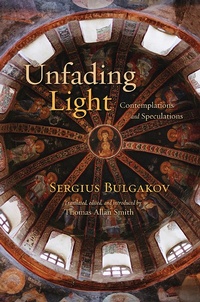
Unfading Light
Contemplations and Speculations
Published on 12. December 2012
378 pages
978-1-4674-3660-1 (ISBN)
Description

With its scholarly discussions of myth, German idealist philosophy, negative theology, and mysticism, shot through with reflections on personal religious experiences, Unfading Light documents what a life in Orthodoxy came to mean for Sergius Bulgakov on the tumultuous eve of the 1917 October Revolution. Written in the final decade of the Russian Silver Age, the book is a typical product of that era of experimentation in all fields of culture and life. Bulgakov referred to the book as miscellanies, a patchwork of chapters articulating in symphonic form the ideas and personal experiences that he and his entire generation struggled to comprehend. Readers may be reminded of St. Augustine's Confessions and City of God as they follow Bulgakov through the challenges and opportunities presented to Orthodoxy by modernity.
More details
Other editions
Additional editions
Book
12/2012
William B Eerdmans Publishing Co
€52.50
Article not available at the moment
Person
Sergius Bulgakov (1871-1944) is widely regarded as the twentieth century's leading Orthodox theologian.
Content
- Intro
- Title Page
- Copyright
- Dedication
- Contents
- A Note from the Translator
- Bulgakov's Sources
- Translator's Introduction: Bulgakov's Journey towards the Unfading Light
- From the Author
- Introduction: The Nature of Religious Consciousness
- I. How Is Religion Possible?
- Calls and Encounters (from an account of a conversion)
- II. Transcendent and Immanent
- III. Faith and Feeling
- IV. Religion and Ethics
- V. Faith and Dogma
- VI. The Nature of Myth
- VII. Religion and Philosophy
- First Section: Divine Nothing
- I. The Fundamental Antinomy of Religious Consciousness
- II. Negative (Apophatic) Theology
- 1. Negative Theology in Plato and Aristotle
- 2. Plotinus (Third Century A.D.)
- 3. Philo of Alexandria (First Century)
- 4. The Idea of Negative Theology in the Alexandrian School of Christian Theology (Third Century)
- A. Clement of Alexandria
- B. Origen
- 5. Fathers of the Church: St. Basil the Great, St. Gregory the Theologian, St. Gregory of Nyssa (Fourth Century)
- 6. Areopagitica
- 7. St. Maximus the Confessor (Seventh Century)
- 8. St. John Damascene (Eighth Century)
- 9. St. Gregory Palamas (Fourteenth Century)
- 10. Johannes Scotus Eriugena (Ninth Century)
- 11. Nicholas of Cusa (Fifteenth Century)
- 12. Jewish Mysticism: Cabbala
- 13. Negative Theology in German and English Mysticism
- A. "German Theology" (Das Büchlein vom vollkommenen Leben von Deutschherr) ca. Fifteenth Century
- B. Meister Eckhart and His School (Tauler, Suso)
- C. Sebastian Frank (Sixteenth Century)
- D. Angelus Silesius (Seventeenth Century)
- E. Jacob Böhme (Sixteenth-Seventeenth Centuries)
- F. John Pordage (Seventeenth Century)
- 14. Kant and Negative Theology
- III. Divine Nothing
- 1. Johannes Scotus Eriugena
- 2. Meister Eckhart
- 3. Jacob Böhme
- Second Section: The World
- I. The Creatureliness of the World
- 1. Creation
- 2. Creaturely Nothing
- 3. The World as Theophany and Theogony
- 4. Time and Eternity
- 5. Freedom and Necessity
- II. The Sophianicity of the Creature
- 1. Sophia
- 2. What Is Matter?
- 3. Matter and the Body
- 4. The Nature of Evil
- Third Section: The Human Being
- I. The First Adam
- 1. The Image of God in the Human Being
- 2. Sex in the Human Being
- 3. Human and Angel
- 4. The Likeness of God in the Human Being
- 5. The Fall of Humankind
- 6. Light in the Darkness
- 7. The Old Testament and Paganism
- II. The Second Adam
- 1. The Creation of the World and the Incarnation of God
- 2. The Salvation of Fallen Humankind
- III. Human History
- 1. Concrete Time
- 2. Economy and Art
- 3. Economy and Theurgy
- 4. Art and Theurgy
- 5. Power and Theocracy
- 6. Society and Ecclesiality
- 7. The End of History
- IV. Completion
- Notes
- Notes to the Translator's Introduction
- Notes to "From the Author"
- Notes to the Introduction
- Notes to the First Section
- Notes to the Second Section
- Index of Names
- Index of Scripture References
- Old Testament
- Apocrypha
- New Testament
- Index of Liturgical Texts
