

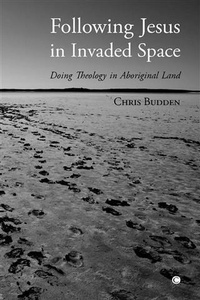
Following Jesus in Invaded Space
Doing Theology on Aboriginal Land
Published on 31. July 2014
179 pages
978-0-227-90310-0 (ISBN)
Description

Christianity is never just about beliefs, but habits and practices - for better or worse. Theology always reflects the social location of the theologian - including her privileges and prejudices - all the time working with a particular, often undisclosed, notion of what is normal. Therefore, theology is never 'neutral' - it defends particular constructions of reality, and it promotes certain interests.
'Following Jesus in Invaded Space' asks what - and whose - interests theology protects when it is part of a community that invaded the land of indigenous peoples. Developing a theological method and position that self-consciously acknowledges the church's role in occupying Aboriginal land in Australia, it dares to speak of God, church, and justice in the context of past history and continuing dispossession. Hence, a 'Second People's theology' emerges through constant and careful attention to experiences of invasion and dislocation brought into dialogue with the theological landscape or tradition of the church.
Being a descendant of some of the first English invaders in Australia and a witness to the continuing inadequate recognition of the Church's past mistakes in this country, theologian Chris Budden felt a strong need to write this book. Leaving the past behind does not mean ignoring it, and an acknowledgement of mistakes is a prerequisite to any fruitful discourse between invaders and invaded.
In our endeavours to help the marginalised and the indigenous, Budden warns us against the arrogance of pitying them as 'poor superstitious things' who can only be helped by our own superior concept of divine grace. As Budden puts it: 'We need to keep listening for voices that remind us that our normal is not necessarily everybody's normal.' His book encourages us to recognise and appreciate the diverse perspectives of minority theologians. It is not just about giving a voice to these people. It is about being able to hear their own voice, to understand it, and then reinterpret our own tradition according to it.
'Following Jesus in Invaded Space' asks what - and whose - interests theology protects when it is part of a community that invaded the land of indigenous peoples. Developing a theological method and position that self-consciously acknowledges the church's role in occupying Aboriginal land in Australia, it dares to speak of God, church, and justice in the context of past history and continuing dispossession. Hence, a 'Second People's theology' emerges through constant and careful attention to experiences of invasion and dislocation brought into dialogue with the theological landscape or tradition of the church.
Being a descendant of some of the first English invaders in Australia and a witness to the continuing inadequate recognition of the Church's past mistakes in this country, theologian Chris Budden felt a strong need to write this book. Leaving the past behind does not mean ignoring it, and an acknowledgement of mistakes is a prerequisite to any fruitful discourse between invaders and invaded.
In our endeavours to help the marginalised and the indigenous, Budden warns us against the arrogance of pitying them as 'poor superstitious things' who can only be helped by our own superior concept of divine grace. As Budden puts it: 'We need to keep listening for voices that remind us that our normal is not necessarily everybody's normal.' His book encourages us to recognise and appreciate the diverse perspectives of minority theologians. It is not just about giving a voice to these people. It is about being able to hear their own voice, to understand it, and then reinterpret our own tradition according to it.
Reviews / Votes
"I've puzzled about why there has been such a relatively sparse body of contextual and 'placebased' theology emerging from white Australia. Perhaps what has been lacking is the appropriate approach to the Australian landscape. I believe that Chris Budden's theology of 'Second Peoples' provides that approach. This book opens up a project that will hopefully animate a fresh, vigorous, and distinctively Australian theological conversation, especially between First and Second Peoples. But Budden's work is relevant to all of us who dwell on lands that have been invaded and occupied, and who are struggling to understand how to live the Christian tradition as inheritors of a legacy of conquest and continuing racism. This is an important contribution to imagining our future as a post-Constantinian church."Ched Myers, author of Who Rolled Away the Stone?
"Budden is to be highly commended for his honesty and self-critique throughout. ... Over all, Following Jesus in Invaded Space provides an engaging introduction to issues of aboriginal reconciliation in Australia and in the Uniting Church. More importantly, it offers a passionate voice for justice and reconciliation."
Alexander S. Jensen, in The Expository Times, Vol 124 (1)
"For those researching the anthropology of Australian Christianity, and there is a growing interest in this area, Budden's book should be regarded as a must-read. ... anthropologists may learn much from this passionate voice."
Philip Fountain, Asia Research Institute, National University of Singapore, in Anthropological Forum, August 2013
"Following Jesus in Invaded Space asks what - and whose - interests theology protects when it is part of a community that invaded the land of indigenous people. Developing a theological method and position that self-consciously acknowledges the church's role in occupying Aboriginal land in Australia, it dares to speak of God, church, and justice in the context of past history and continuing dispossession. Hence, a 'Second People's theology' emerges through constant and careful attention to experiences of invasion and dislocation brought into dialogue with the theological landscape or tradition of the church."
Theological Book Review, Vol 25, No 2
More details
Language
English
Place of publication
Cambridge
United Kingdom
Target group
College/higher education
File size
1,20 MB
ISBN-13
978-0-227-90310-0 (9780227903100)
Copyright in bibliographic data and cover images is held by Nielsen Book Services Limited or by the publishers or by their respective licensors: all rights reserved.
Schweitzer Classification
Other editions
Additional editions
Book
07/2011
James Clarke & Co Ltd
€48.52
Shipment within 10-20 days
Person
Chris Budden is a parish minister of the Uniting Church in Australia, and an Associate Researcher in the Public and Contextual Theology Strategic Research Centre at Charles Sturt University. He is the author of a number of articles in public theology.
Content
Acknowledgments
Introduction: The Task and Its Difficulties
Part One: Context and Theological Method
Introduction
1. The Context: Location and Dislocation in Indigenous Space
2. Fitting Invasion and Dislocation into the European "World"
3. Theology as the Art of Naming Where God Is
Part Two: Issues in Contextual Theology: God, Justice, Church, and Relationships
Introduction
4. Does God Actually Matter?
5. Justice, Order, and Humanity
6. The Practice of Being Church
7. Reconciliation, Covenant, and Treaty
Postscript: What Have We Learned from This Journey?
Bibliography
Introduction: The Task and Its Difficulties
Part One: Context and Theological Method
Introduction
1. The Context: Location and Dislocation in Indigenous Space
2. Fitting Invasion and Dislocation into the European "World"
3. Theology as the Art of Naming Where God Is
Part Two: Issues in Contextual Theology: God, Justice, Church, and Relationships
Introduction
4. Does God Actually Matter?
5. Justice, Order, and Humanity
6. The Practice of Being Church
7. Reconciliation, Covenant, and Treaty
Postscript: What Have We Learned from This Journey?
Bibliography
