

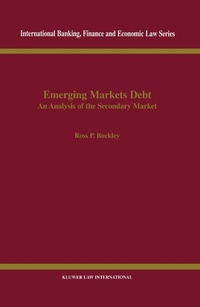
Emerging Markets Debt
An Analysis of the Secondary Market
Published on 1. June 1999
350 pages
978-90-411-7290-7 (ISBN)
Description

The emerging markets have attained prominence of late as the recent troubles in the principal emerging markets in Asia, Russia and Latin America have threatened global stability. This book is the first detailed study of the secondary market in emerging markets debt and offers a unique insight into one of the world's more significant, and less understood, financial markets. It offers a comprehensive analysis of the market from 1983 to date.
In the aftermath of the debt crisis of the 1980s the banking community discovered the first disposal technique for the sovereign debt of less developed countries - a secondary market in that debt. This market played a major role in the history and amelioration of the debt crisis, the Mexican problems in the mid-1990s, and the recent Asian economic crisis. The market focus of this study is on the indebtedness of Latin American nations, which has formed the backbone of secondary market activity, and the recent developments in Asia. The regulatory focus is on U.S. banks and banking regulation. This book is essential reading for anyone involved with emerging markets debt: bankers, traders, investors, corporate and sovereign issuers, finance lawyers and banking regulators.
In the aftermath of the debt crisis of the 1980s the banking community discovered the first disposal technique for the sovereign debt of less developed countries - a secondary market in that debt. This market played a major role in the history and amelioration of the debt crisis, the Mexican problems in the mid-1990s, and the recent Asian economic crisis. The market focus of this study is on the indebtedness of Latin American nations, which has formed the backbone of secondary market activity, and the recent developments in Asia. The regulatory focus is on U.S. banks and banking regulation. This book is essential reading for anyone involved with emerging markets debt: bankers, traders, investors, corporate and sovereign issuers, finance lawyers and banking regulators.
More details
Other editions
Additional editions
Ross Buckley
Emerging Markets Debt:An Analysis of the Secondary Market
An Analysis of the Secondary Market
Book
06/1999
1st Edition
Kluwer Law International
€124.66
Shipment within 10-20 days
Content
- Cover
- Half Title Page
- Editorial Board
- Title Page
- Copyright Page
- Dedication
- Table of Contents
- Acknowledgements
- INTRODUCTION
- PART I BACKGROUND AND CONTEXT OF THE SECONDARY MARKET
- Chapter 1 THE DEBT CRISIS
- I. BIRTH OF THE CRISIS - AUGUST 1982
- II. HISTORY OF SOVEREIGN DEBT CRISES
- III. THE DEBT OF THE 1970S - ITS ORIGIN AND DESTINATIONS
- A. The Lenders
- B. The Borrowers
- IV CAUSES OF THE CRISIS
- A. Recycling of OPEC Funds
- B. Bank Behaviour
- C. Debtor Nation Policies
- D. External Factors
- V. SCALE OF THE CRISIS
- Chapter 2 THE RESCHEDULING YEARS
- I. THE INITIAL RESPONSE - AUGUST 1982
- II. THE ONGOING RESPONSE
- A. Paris Club Reschedulings
- B. The Role of the IMF
- C. A Typical Rescheduling Package
- III. THE COSTS AND IMPACT OF THE RESCHEDULING YEARS
- A. The Repayment Question
- IV. RESCHEDULING AND THE SECONDARY MARKET
- A. The Consolidation of Indebtedness in Fewer Agreements
- B. The Standardisation of Loan Agreements
- PART II THE EVOLUTION OF THE MARKET
- Chapter 3 ORIGINS OF THE MARKET: 1982 to May 1985
- I. EARLY TRANSACTIONS
- II. IMPETUS FOR THE MARKET
- A. Outright Sale of Debt by Banks
- B. Portfolio Adjustment by Banks
- III. MARKET CHARACTERISTICS
- A. Hand-crafted, Individually Documented Transactions
- B. Trades Structured as Ratio Swaps
- C. Absence of Market Structure and Rules
- D. Confidentiality
- E. Market Volume and Debt Traded
- IV. PARTICIPANTS
- V. IMPACT OF THE MARKET
- Chapter 4 THE EARLY YEARS: May 1985 to May 1987
- I. MAJOR EVENTS IN THIS PERIOD
- A. May 1985 Accounting Guideline
- B. Mexican Troubles
- C. The Baker Plan
- D. Peru's Debt Service Limits
- E. Brazil's Payment Freeze
- II. IMPETUS FOR THE MARKET
- A. Different Regulatory Treatment Between Countries
- B. The Persistence of New Money Calls
- C. Tax Swaps
- D. The Exchange of Perpetual Floating Rate Notes for LDC Debt
- E. The Expansion of Debt-Equity Conversion Schemes
- III. MARKET CHARACTERISTICS
- A. Demand for Debt for Debt-Equity Conversions
- B. Hand-crafted Transactions
- C. Absence of Structure and Rules
- D. Confidentiality
- E. Volume and Nature of Loans Traded
- IV. PARTICIPANTS
- V. IMPACT OF THE MARKET
- Chapter 5 THE FORMATIVE YEARS: May 1987 to March 1989
- I. MAJOR EVENTS IN THIS PERIOD
- A. May 1987: Banks Increase Loan Loss Reserves
- B. The Effect of the Secondary Market on the May Reserves
- C. The Effect of the May Reserves on the Market
- D. Aztec Bonds - 1988
- II. IMPETUS FOR THE MARKET
- A. Debt Conversion Schemes
- B. Debt Buy-Backs
- C. Bicicletas
- III. MARKET CHARACTERISTICS
- A. Hand-crafted Transactions
- B. Absence of Structure and Rules
- C. Confidentiality
- D. Debt Traded and Market Volumes
- IV PARTICIPANTS
- V. IMPACT OF THE MARKET
- Chapter 6 THE BRADY ERA, LOANS TO BONDS: March 1989 to October 1991
- I. MAJOR EVENTS IN THIS PERIOD
- A. The Brady Plan
- B. Further Loan Loss Provisions
- C. Non-Payment of Interest by Brazil and Argentina
- D. Change in Role of IMF and World Bank
- E. Return of the Major Debtors to the Voluntary Capital Markets
- F. Securitisation of Brady Bonds
- G. The Advent of LDC Derivatives
- H. LDC Debt Traders Association Formed
- II. IMPETUS FOR THE MARKET
- A. Debt Buy-Backs
- B. Privatisations
- C. Debt-Equity Swaps
- D. Swaps Between Debtors
- E. Portfolio Adjustment
- F. The Supply of Debt
- III. MARKET CHARACTERISTICS
- A. Nature of Transactions
- B. The Formal Market Structure
- C. Confidentiality
- D. A New Name for the Market
- E. Greater Market Efficiency
- F. Advent of Quotation Screens
- G. Sustained Rally in Prices
- H. Price Volatility
- I. Market Volume and Debt Traded
- J. Brady Bonds in the Secondary Market
- IV. PARTICIPANTS
- A. Traders
- B. Brokers
- C. Sellers
- D. Buyers
- V. IMPACT OF THE MARKET
- Chapter 7 THE DEVELOPING MARKET: October 1991 to December 1993
- I. MAJOR EVENTS IN THIS PERIOD
- A. The Brazilian Collapse of 1991
- B. Causes of the October 1991 Collapse
- C. Brady Restructuring Agreement with Argentina
- D. Preliminary Brady Restructuring Agreement with Brazil
- E. Debtor Nations Sued
- F. Return to Voluntary Markets
- II. IMPETUS FOR THE MARKET
- III. MARKET CHARACTERISTICS
- A. Market Structure
- B. The Growth in Bond Trading
- C. Profitability of Brady Bonds for Investors
- D. Location of Market
- E. Screen Trading
- F. Derivatives
- G. The Metamorphosis of LDC Trading Desks
- H. Efficiency of Market
- J. Market Volume and Debt Traded
- IV. PARTICIPANTS
- A. Traders
- B. Sellers
- C. Buyers
- V. IMPACT OF THE MARKET
- Chapter 8 THE MATURING MARKET: January 1994 to December 1995
- I. MAJOR EVENTS IN THIS PERIOD
- A. The Collapse of 1994
- B. The Devaluation of the Peso
- C. The Tequila Effect
- D. Brady-style Reschedulings
- E. The ING Takeover of Barings
- II. IMPETUS FOR THE MARKET
- A. Debt Buy-backs
- B. New Brady Restructurings
- C. The Role of Arbitrageurs
- D. New Issue Bonds
- E. Local Market Instruments
- F. Growing Number of Emerging Market Debtors
- III. MARKET CHARACTERISTICS
- A. The Equity-like Nature of Emerging Markets Debt
- B. Market Structure
- C. Market Practices
- D. Prices and Investor Profitability
- E. Derivatives
- F. Market Volume and Debt Traded
- G. Increasing Importance of Research
- H. Correlation between Regions
- IV. PARTICIPANTS
- A. Traders
- B. Sellers
- C. Buyers
- D. Clearing Systems
- V. IMPACT OF THE MARKET
- VI CONCLUSION
- Chapter 9 FROM NICHE TO MAINSTREAM MARKET: January 1996 to Early 1998
- I MAJOR EVENTS IN THIS PERIOD
- A. The Central Role of Cross-over Investors
- B. The Dramatic Growth in New Issues
- C. The Asian Economic Crisis
- D. Brady Bond Exchanges
- E. Emerging Markets Clearing Corporation
- F. The Return of Syndicated Loans
- II. IMPETUS FOR THE MARKET
- A. Brady Bond Buy-backs
- B. Local Market Instruments
- III MARKET CHARACTERISTICS
- A. Market Structure
- B. Market Volume and Debt Traded
- IV. PARTICIPANTS
- A. Traders
- B. Sellers
- C. Buyers
- D. Brokers
- V. IMPACT OF THE MARKET
- VI CONCLUSION
- PART III THEMES IN THE EVOLUTION OF THE MARKET
- Chapter 10 THE IMPACT OF THE MARKET
- I MARKET-FACILITATED TRANSACTIONS
- I.A DEBT-EQUITY SCHEMES, PRIVATISATIONS AND OTHER DEBT EXCHANGES
- A. Debt-equity Schemes
- B. Privatisations
- C. Other Debt Exchanges
- I.B DEBT BUY-BACKS
- I.C SECURITISATION OF LOANS UNDER THE BRADY PLAN
- I.D BRADY BOND EXCHANGES
- II. MARKET EFFECTS ON BANKS
- A. Effect on Banks of Market-facilitated Transactions
- B. Pressure to Increase Loan Loss Provisions
- C. Exit for Certain Banks
- III. MARKET EFFECTS ON THE DEBTOR NATIONS
- A. Dissuasive Effect of Deep Debt Discounts on Foreign Investment
- B. Discipline on Domestic Economic Policies
- C. Redirection of Capital Flows
- D. Increasing Linkage between the Various Emerging Market Nations
- Chapter 11 THE LAW AND PRACTICE OF DEBT TRADING
- I. THE LAW OF LOAN TRADING
- A. Novation
- B. Assignment
- C. Participation
- II. The Practice of Loan Trading
- B. The Processing of Loan Transfers
- III. THE LAW OF BOND TRADING
- IV. THE PRACTICE OF BOND TRADING
- Chapter 12 THE CHARACTERISATION OF THE MARKET
- I. IS LOAN TRADING SUBJECT TO THE SECURITIES LAWS?
- A. Are Assignment Agreements Securities?
- B. Is Bond Trading Subject to the Securities Laws?
- II. CLASSIFICATION OF THE MARKET
- III. ONE MARKET OR MANY
- Chapter 13 ABUSES OF THE MARKET
- I. INSIDER TRADING
- A. Other Insider Trading Opportunities
- B. Incidence of Insider Trading
- C. Formal Regulation of Insider Trading
- D. Penalties for Insider Trading at Common Law
- E. Penalties for Insider Trading Under the Securities Laws
- F. Chinese Walls
- II. FRONT RUNNING
- III. OFFENCES BY EMPLOYEES AGAINST EMPLOYERS
- A. The Angotti Case
- B. The Young Case
- IV. Market Manipulation
- A. Ramping
- B. Reasons to Control Market Manipulation
- C. Sanctions for Market Manipulation
- V. CONCLUSION
- Chapter 14 REGULATION OF THE MARKET
- I. THE ABSENCE OF REGULATION
- A. The Divided Regulatory Regime
- II. THE DEVELOPMENT OF REGULATION IN THE U.S.
- A. Infringement of Local Regulations
- B. U. S. Regulatory Efforts
- III. REGULATION OF THE TRADERS
- IV SELF-REGULATION VERSUS GOVERNMENT REGULATION
- A. The Emerging Markets Traders Association
- B. EMTA's Self-regulatory Efforts
- C. EMTA as a Self-Regulatory Organisation
- V. POSTPONING MARKET EQUILIBRIUM - THE EFFECT OF ACCOUNTING REGULATIONS
- CONCLUSION
- I. THE MARKET'S ROLE IN THE DEBT CRISIS
- II. BONDS FOR LOANS
- III. UNRELIABILITY OF CONVENTIONAL WISDOM
- IV. THE ABSENCE OF REGULATION
- V. MARKET REGULATION: A BURDEN OR A BOON
- Epilogue - Russia and Beyond
- Appendix
- FURTHER READING
- INDEX
- Back Cover
