

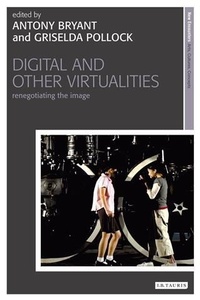
Digital and Other Virtualities
Renegotiating the Image
Published on 30. May 2010
302 pages
978-0-85771-209-7 (ISBN)
Description

If virtuality is being celebrated as heralding a radically new era, rich with new possibilities and futures hitherto unimagined through cybernetics, networking and digitalizaton, such claims are also being viewed with deep scepticism and countered by renewed interest in the groundedness and referentiality of the concept of the index.
In this transdisciplinary book, major artists, filmmakers, film theorists, philosophers, literary critics, information theorists and cultural analysts examine the twists and turns of the contesting terms of virtuality and indexicality in contemporary cultural theory in relation to history, trauma, sexuality, textuality, anxiety, simulated lives, code, digital cinema, science fiction, and contemporary art. Antony Bryant, Juli Carson, N. Katherine Hayles, Anna Johnson, Mary Kelly, Brian Massumi, Claire Pajaczkowska, Griselda Pollock, Adrian Rifkin, Martha Rosler, Alison Rowley, Trinh T. Minha, Samuel Weber, and Paul Willemen, draw on concrete practices, ranging from film, video and chatrooms to airport spaces, conceptual art and textiles, to offer critically engaged, sometimes sceptical, analyses of contemporary image worlds in the light of a continuing allegiance to grounded histories and critical practice.
In this transdisciplinary book, major artists, filmmakers, film theorists, philosophers, literary critics, information theorists and cultural analysts examine the twists and turns of the contesting terms of virtuality and indexicality in contemporary cultural theory in relation to history, trauma, sexuality, textuality, anxiety, simulated lives, code, digital cinema, science fiction, and contemporary art. Antony Bryant, Juli Carson, N. Katherine Hayles, Anna Johnson, Mary Kelly, Brian Massumi, Claire Pajaczkowska, Griselda Pollock, Adrian Rifkin, Martha Rosler, Alison Rowley, Trinh T. Minha, Samuel Weber, and Paul Willemen, draw on concrete practices, ranging from film, video and chatrooms to airport spaces, conceptual art and textiles, to offer critically engaged, sometimes sceptical, analyses of contemporary image worlds in the light of a continuing allegiance to grounded histories and critical practice.
More details
Series
Language
English
Place of publication
United Kingdom
Publishing group
Bloomsbury Publishing PLC
File size
39,38 MB
ISBN-13
978-0-85771-209-7 (9780857712097)
Copyright in bibliographic data and cover images is held by Nielsen Book Services Limited or by the publishers or by their respective licensors: all rights reserved.
Schweitzer Classification
Other editions
Additional editions
Book
05/2010
I.B. Tauris
€193.13
Article exhausted; check different version
Persons
Griselda Pollock is Professor of Social and Critical Histories of Art and, since 2001, Director, Centre CATH (Cultural Analysis, Theory & History) at the University of Leeds, UK. Known for her critical interventions in feminist, social, Jewish and postcolonial studies in art's histories, her work ranges from nineteenth and twentieth century fields to that of contemporary art and cinema, museum studies and cultural theory. Her publications include Old Mistresses, Vision and Difference, Avant-Garde Gambits, Generations and Geographies, and Differencing the Canon.
Content
Series Preface - Griselda Pollock
Introduction - Antony Bryant and Griselda Pollock
1 Traumas of Code - N. Katherine Hayles
2 Of Mice and Mien: Or Perhaps of Mouses and Mien?
(anyway with apologies to John Steinbeck) - Antony Bryant
3 A Virtual Indication - Samuel Weber
4 The Future Birth of the Affective Fact: The Political Ontology of Threat - Brian Massumi
5 For a Comparative Film Studies - Paul Willeman
6 'Night Passage': The Depth of Time - Trinh T. Minh-ha interviewed by Alison Rowley
Notes
Index
Introduction - Antony Bryant and Griselda Pollock
1 Traumas of Code - N. Katherine Hayles
2 Of Mice and Mien: Or Perhaps of Mouses and Mien?
(anyway with apologies to John Steinbeck) - Antony Bryant
3 A Virtual Indication - Samuel Weber
4 The Future Birth of the Affective Fact: The Political Ontology of Threat - Brian Massumi
5 For a Comparative Film Studies - Paul Willeman
6 'Night Passage': The Depth of Time - Trinh T. Minh-ha interviewed by Alison Rowley
Notes
Index
