

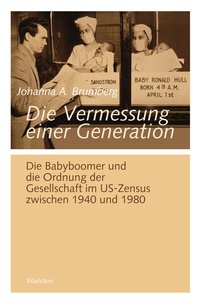
Die Vermessung einer Generation
Die Babyboomer und die Ordnung der Gesellschaft im US-Zensus zwischen 1940 und 1980
1st Edition
Published on 7. July 2015
334 pages
978-3-8353-2768-9 (ISBN)
Description

Eine Historisierung der Wissensgenerierung durch den Bevölkerungszensus.
Wie kam es zur Entdeckung der Babyboom-Generation in den USA? Johanna A. Brumberg findet eine Antwort auf diese Frage, indem sie die Verwandlung des statistischen Aufmerksamkeitsregimes zwischen den 1940er und 1980er Jahren genauer untersucht, das den Babyboom überhaupt erst sichtbar machte und die in den geburtenstarken Jahren geborenen Menschen auf eine bestimmte Weise beschrieb.
Die Studie befasst sich mit der Produktion und Verbreitung von sozialem Wissen durch den US-amerikanischen Bevölkerungszensus und liefert damit ein Beispiel für die »Verwissenschaftlichung des Sozialen« sowie für den Prozesscharakter der Generationsrede. Erst die statistische Praxis der gesellschaftlichen Selbstbeobachtung ermöglicht es, den Babyboom als Ergebnis eines zunehmenden Kinderwunsches der white middle class in den suburbanen Vorstädten wahrzunehmen.
Brumberg leistet mit ihrer fundierten Studie einen wesentlichen Beitrag zur Wissenschaftsgeschichte der Bevölkerungsstatistik in den USA und entschlüsselt zugleich dominante Vorstellungen über die Ordnung der US-amerikanischen Gesellschaft in der zweiten Hälfte des 20. Jahrhunderts.
More details
Other editions
Additional editions
Johanna A. Brumberg
Die Vermessung einer Generation
Die Babyboomer und die Ordnung der Gesellschaft im US-Zensus zwischen 1940 und 1980
Book
07/2015
1st Edition
Wallstein
€36.90
Article exhausted; check different version
Person
Author
Johanna A. Brumberg, geb. 1981, studierte Geschichte, Öffentliches Recht und Politikwissenschaften in Regensburg, Uppsala und Göttingen. Ihre Dissertation entstand am DFG-Graduiertenkolleg »Generationengeschichte« in Göttingen, an der University of Michigan in Ann Arbor sowie am Deutschen Historischen Institut in Washington D.C.
ISNI:
ISNI:
Content
- Umschlag
- Titel
- Impressum
- Inhalt
- I. Einleitung
- II. Die Entdeckung eines Babybooms. Überraschender Geburtenanstieg im Zensus von 1940
- 1. Inventarisierte Gesellschaft. Die Verwissenschaftlichung des Zensus in der New Deal-Ära
- 2. Die Sorge vor dem race suicide. Beobachtung der Geburtenrate im Zensus
- 3. White, Negro oder Mexican? Die Produktion eines Geburtenanstiegs unter white Americans
- III. Die Kinder von Suburbia. Kindersegen in den Vorstadtfamilien im Zensus von 1950
- 1. Zwischen Babyboom und Malthusianismus. Erneute Erhebung von Fertilitätsdaten?
- 2. Kleinfamilie trotz Babyboom. Familie und Kinderzahlen in den Zensusstatistiken
- 3. Suburbaner Babyboom. Klassifizierung von ländlicher und städtischer Bevölkerung
- IV. Die Geburt der Wohlstandskinder. Kinder, class und Lebensstandard im Zensus von 1960
- 1. Überbevölkerung in den USA? Steigender Bedarf an Fertilitätsstatistiken
- 2. Babyboom in der middle und upper class. Statusvermessung seit der Nachkriegszeit
- 3. Kinderwunsch trotz Wohlstand. Die statistische Betrachtung des Lebensstandards
- V. Kein zweiter Babyboom. Neues Aufmerksamkeitsregime im Zensus von 1970 und 1980
- 1. Verletzung der Privatsphäre? Der Protest gegen die Geburtenfrage im Zensus von 1970
- 2. Das Ende einer Ära. Keine Veröffentlichung von Geburten und Fertilitätsdaten nach dem Zensus von 1980
- 3. Problematischer white middle class-Blick. Die Neuausrichtung des Bevölkerungszensus
- VI. Schlussbemerkungen
- Danksagung
- Die Erhebung eines Zensus in Bildern
- Quellenverzeichnis
- Literaturverzeichnis
