

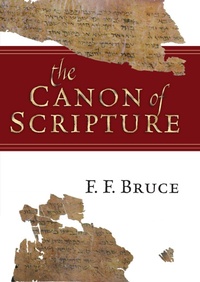
The Canon of Scripture
Description

- Winner of two 1990 Christianity Today Awards: Readers' Choice (1st place; theology doctrine) and Critics' Choice (1st place; theology doctrine).
- A 1989 ECPA Gold Medallion Award winner
How did the books of the Bible come to be recognized as Holy Scripture?Who decided what shape the canon should take?What criteria influenced these decisions?After nearly nineteen centuries the canon of Scripture remains an issue of debate. Protestants, Catholics, andOrthodox all have slightly differing collections of documents in their Bibles. Martin Luther, one of the early leaders of the Protestant Reformation, questioned the inclusion of the book of James in the canon. And many Christians today, while confessing the authority of all of Scripture, tend to rely on only a few books and particular themes while ignoring the rest.Scholars have raised many other questions as well. Research into second-century Gnostic texts have led some to argue that politics played a significant role in the formation of the Christian canon. Assessing the influence of ancient communities and a variety of disputes on the final shaping of the canon call for ongoing study.In this significant historical study, F. F. Bruce brings the wisdom of a lifetime of reflection and biblical interpretation to bear on questions and confusion surrounding the Christian canon of Scripture. Adept in both Old and New Testament studies, he brings a rare comprehensive perspective to the task.Though some issues have shifted since the initial publication of this classic book, it remains a significant landmark and touchstone for further studies.
More details
Other editions
Additional editions
Person
F. F. Bruce (1910-1990) was known worldwide as the "dean of evangelical scholarship"-a reputation earned by a lifetime of scholarship, teaching, and writing. Trained in classics at the University of Aberdeen and Cambridge University, he taught atthe Universities of Edinburgh, Leeds, and Sheffield before serving for nearly twenty years as the Rylands Professor of Biblical Criticism and Exegesis at the University of Manchester in England. During his distinguished career, he wrote many outstanding commentaries and books, including Paul, Apostle of the Heart Set Free; Israel and the Nations; New Testament History; The Books and the Parchments: How We Got Our English Bible; Jesus and Christian OriginsOutside the New Testament; and The New Testament Documents: Are They Reliable? He also served as general editor of The New International Commentary on the New Testament.
Content
Preface Abbreviations Part One: Introduction 1. Holy Scripture Part Two: Old Testament 2. The Law and the Prophets 3. The Greek Old Testament 4. The Old Testament Becomes a New Book 5. The Christian Canon of the Old Testament: A. In the East 6. The Christian Canon of the Old Testament: B. In the Latin West 7. Before and After the Reformation Part Three: New Testament 8. Writings of the New Era 9. Marcion 10. Valentinus and His School 11. The Catholic Response 12. The Muratorian Fragment 13. Irenaeus, Hippolytus, Novatian 14. Tertullian, Cyprian and Others 15. The Alexandrian Fathers 16. Eusebius of Caesarea 17. Athanasius and After 18. The West in the Fourth Century to Jerome 19. Augustine to the End of the Middle Ages 20. The New Testament Canon in the Age of Printing PartFour: Conclusion 21. Criteria of Canonicity 22. A Canon Within the Canon? 23. Canon, Criticism and Interpretation Appendix 1: The 'Secret' Gospel of Mark Appendix 2: Primary Sense and Plenary Sense Bibliography Index
