

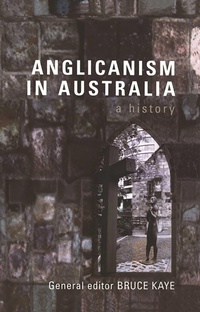
Anglicanism In Australia
A History
Published on 5. June 2013
464 pages
978-0-522-86360-4 (ISBN)
Description

This benchmark work is unlike anything previously attempted. It is the first comprehensive national history of Anglicans in Australia.
Anglicanism in Australia is an important contribution to our social history. Its authors have moved beyond biography and histories of individual congregations to create a broad, complex, layered history. They assess Anglicanism's contribution to Australian social, political and cultural life. They explore the processes by which a highly centralised English institution has been reshaped by the environment and experience of this country.
The book begins with a fascinating and thoroughly researched narrative account-which moves from the arrival with the First Fleet of an Anglican chaplain, right through to the 1990s. Along the way it charts, among many other events, the nineteenth-century church buffeted by the pendulum swings of 'state aid'; the nationalistic fervour of wartime, and the political radicalism of the 1960s.
In its second half, Anglicanism in Australia looks at Anglicans dealing with a broad spectrum of issues: the family, questions of gender, Indigenous peoples, the visual arts, the search for a national identity. It acknowledges the wide variety of Anglican views and reveals how regional identity, a powerful force in many other areas of Australian life, has expressed itself both positively and negatively during the past two centuries.
Anglicanism in Australia will be an indispensible research tool for Australian social historians, an invaluable general reference work and, above all, a treasury for those close to the Anglican Church or interested in church history.
To find out more about Anglicanism in Australia visit The Anglican Church of Australia's website - http://www.anglican.org.au/
Anglicanism in Australia is an important contribution to our social history. Its authors have moved beyond biography and histories of individual congregations to create a broad, complex, layered history. They assess Anglicanism's contribution to Australian social, political and cultural life. They explore the processes by which a highly centralised English institution has been reshaped by the environment and experience of this country.
The book begins with a fascinating and thoroughly researched narrative account-which moves from the arrival with the First Fleet of an Anglican chaplain, right through to the 1990s. Along the way it charts, among many other events, the nineteenth-century church buffeted by the pendulum swings of 'state aid'; the nationalistic fervour of wartime, and the political radicalism of the 1960s.
In its second half, Anglicanism in Australia looks at Anglicans dealing with a broad spectrum of issues: the family, questions of gender, Indigenous peoples, the visual arts, the search for a national identity. It acknowledges the wide variety of Anglican views and reveals how regional identity, a powerful force in many other areas of Australian life, has expressed itself both positively and negatively during the past two centuries.
Anglicanism in Australia will be an indispensible research tool for Australian social historians, an invaluable general reference work and, above all, a treasury for those close to the Anglican Church or interested in church history.
To find out more about Anglicanism in Australia visit The Anglican Church of Australia's website - http://www.anglican.org.au/
More details
Other editions
Additional editions
Book
06/1998
Melbourne University Press
€42.00
Article not available at the moment
Person
Bruce Kaye
Content
- Intro
- Anglicanism in Australia
- Contents
- Illustrations
- General Introduction
- Acknowledgements
- Note on Contributors
- Narrative
- Introduction
- 1 The Anglican Ascendancy 1788-1835
- Colonial Chaplaincy
- Church and Society
- Eroding Anglican Hegemony
- Diversifying Colonial Leadership
- Laity and Clergy
- Missionary Activities
- Church and Convicts
- 2 State Support for Churches 1836-1860
- The Consequences of State Aid
- The Changing Skyline
- The 1850 Conference
- The End of State Aid
- 3 Secular Advance and Diocesan Response 1861-1900
- Colonial Society and Culture
- Dioceses: the Central Agency of Anglicanism
- New Models of Church Government
- The Training and Deployment of Clergy
- Parish Growth
- Money
- Education
- Social Service
- Social Questions
- 4 Imperial Fervour and Anglican Loyalty 1901-1929
- Church and Society
- Suburban Parishes and their Incomes
- 'Diocesanism' and rural ministry
- The Debate over a Constitution for an Autonomous Church
- Anglicans in Public Life
- Imperial Loyalty
- Education and Outreach
- 5 Local Differences, Social and National Identity 1930-1966
- The Great Depression
- An Emerging Radical Voice
- A Constitution for the Australian Church
- World War II
- Post-war Recovery and Burgeoning Parish Life
- Breaking the English 'Nexus'
- The Beginnings of Decline
- 6 Pluralism and New Alignments in Society and Church 1967 to the Present
- The National Church
- Church Life
- The Ordination of Women
- Ecumenism
- Worship
- Social and Religious Change
- Themes
- Introduction
- 7 The Emergence and Character of Australian Anglican Identity
- Education-the Bishop and the Governor in 1839
- From Regional to National Church Structures
- Ecumenical Encounters
- The Emerging Identity
- 8 Australian Anglican Theology
- Theology is a Conversation about Self and the Other
- Anglicans conversing with Themselves
- The Main Task of the Minister is Preaching
- Meeting God in Propositions and Experience
- Justice in an Anxious and Divided World
- 9 Australian Anglicanism in a World-wide Context
- The Evolution of Pan-Anglicanism in Britain
- The Evolution of Conflicting Missionary Strategies in Australia
- The Australian Church in the Church Congresses in England12
- Overseas Missions
- Fisher's Pan-Anglicanism
- The Church of England in South Africa
- The Australian Board of Missions and the Church Missionary Society
- Partnership in Mission
- Word and Deed
- The Uniqueness of Christ
- 10 Anglicanism and Indigenous Peoples
- The Early Colonial Years, 1788-1850
- A Few Devoted Individuals, 1850-1900
- The Age of the Institutions, 1901-1950
- Working for Justice, 1950-1970
- The Path to Reconciliation, 1970-1998
- 11 Anglicanism, the Visual Arts and Architecture
- A Question of Theology as well as Art
- Practically-based Controls: Architecture
- Style and Fashion: Culture Conformity or Resistance?
- Towards a Distinctive Heritage
- 12 Anglicanism and Gender Issues
- Domestic Christianity
- The Early Nineteenth Century
- Mothers, Fathers and Maternalists, 1880-1920
- Reshaping Domestic Christianity, 1920-1960
- Women at home
- Women in ministry
- Debating Great Truths, 1960-2000
- 13 Anglicanism and the Shaping of Australian Society
- Problems and Issues
- Church and Class
- Church and Society
- Education
- Federation and War
- Imperialism, Nationalism and Race
- Secularism and Multiculturalism
- Adjusting to a Changed Society
- Notes
- Bibliography
- Reports
- Books, Articles and Theses
- Index
