

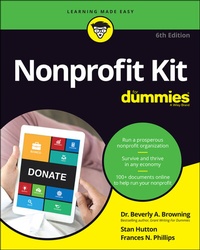
Nonprofit Kit For Dummies
Description

Helping you successfully start a nonprofit organization the right way or strengthening the governing, financial, and capacity-building framework of your existing nonprofit organization!
Ready to do some good? Ready to give back to the community? You better be! Because in Nonprofit Kit For Dummies you'll find the tools and strategies you need to organize and shift your nonprofit into high gear. Buckle up and hit the gas as you master the latest techniques in nonprofit startup, recruiting the right board members, identifying collaborative stakeholders, grant writing, online fundraising, and marketing. You'll learn to improve your management practices, raise more money, give more effectively, and plan more creatively.
This book's supplementary online resources include expertly written organization plans, financial procedure outlines and guides, and event planning tools you can implement immediately to help your nonprofit help more people. It also walks you through how to:
- Find up-to-date info on the latest web-based campaign tools, like Kickstarter, Kiva, and others
- Use templates, checklists, and plans to organize your nonprofit's finances, employee relations, and legal structure
- Survive and thrive during challenging times, like those caused by pandemics and natural disasters
Starting and running a nonprofit organization takes heart, courage, and know-how. You've got the first two taken care of. Let Nonprofit Kit For Dummies help you with the knowledge as you lift your nonprofit to new heights.
More details
Other editions
Additional editions
Content
- Intro
- Title Page
- Copyright Page
- Table of Contents
- Introduction
- About This Book
- Foolish Assumptions
- Icons Used in This Book
- Beyond the Book
- Where to Go from Here
- Part 1 Getting Familiar with the Nonprofit Framework
- Chapter 1 Journeying into the World of Nonprofit Organizations
- What Is a Nonprofit Organization?
- Comparing for-profits to nonprofits
- Introducing the coveted 501(c)(3) status for nonprofits
- Knowing Your Mission Before Entering the Nonprofit World
- Setting up a nonprofit
- Making plans and being flexible
- Embracing and Sharing Your Inspiration
- Finding the Resources to Do the Job
- Who is giving to nonprofit organizations?
- Supporting your mission with fundraising
- Chapter 2 Understanding What It Takes to Start a Nonprofit
- Weighing the Pros and Cons of Starting a Nonprofit
- Doing Your Homework First
- Analyzing the competition
- Identifying the right people to help you
- Figuring out how you'll survive financially
- Acknowledging the reality of what's ahead
- Planning, plotting, and projecting
- Understanding Nonprofit Ownership
- Benefiting the public for the greater good
- Being accountable and transparent
- Looking at the Many Varieties of Nonprofits
- Identifying nonprofits by their numbers
- Adding rules and regulations to add to your file
- Comparing Nonprofits and For-Profits
- How they're alike
- How they differ
- Using a Fiscal Sponsor: An Alternative Approach
- Examining common details of a fiscal sponsorship relationship
- Finding a fiscal sponsor
- Chapter 3 Prioritizing Building Your Board of Directors
- Appreciating the Duties of a Nonprofit Board of Directors
- Primary role: Preserving public trust
- Secondary role: Dealing with planning, hiring, and other board tasks
- Sharing responsibilities among the board, staff, and volunteers
- Recruiting the Right People for Your Board
- Incorporating diversity, equity, and inclusion in the board's composition
- Keeping it fresh: Terms of service
- Big boards or little boards
- Choosing officers and committees
- Introducing new and prospective members to the board and the organization
- Putting Staff Members on Your Board
- Using Your Board to Full Capacity
- Encouraging commitment from board members
- Holding effective board meetings
- Chapter 4 Creating Your Mission Statement and Vision Statement
- Honing Your Mission Statement
- Keeping your mission statement short and sweet
- Stating your mission - the goal for services
- Specifying who will be served by the nonprofit
- Explaining how you'll accomplish your mission
- Incorporating diversity, equity, and inclusion (DEI) into your mission statement
- Imagining Your Future with a Vision Statement
- Capturing your vision statement
- Asking "Where are we going?" and "Why?"
- Inviting Stakeholders to the Planning Table
- Encouraging and embracing stakeholder input
- Working together to finalize your statements
- Living by Your Mission and Staying Fixed on the Vision
- Chapter 5 Incorporating and Applying for Tax-Exemption Status
- Creating a New Entity: The Nonprofit Corporation
- Following your state's or territory's laws
- Understanding the required governing documents
- Deciding whether to have members in your corporation
- Finding the best name
- Writing the Articles of Incorporation
- Crafting a heading
- Article I
- Article II
- Article III
- Article IV
- Article V
- Article VI
- Article VII
- Article VIII
- Signed, sealed, and delivered
- Securing Your Employer Identification Number (EIN)
- Writing Your Organization's Bylaws
- Holding Your First Board Meeting
- Applying for Tax Exemption
- Tackling Form 1023 online
- Discerning between public charities and private foundations
- Establishing public charity status
- Describing your activities
- Reporting salaries and conflicts of interest
- Dealing with financial information
- Collecting the other materials
- Paying the fee
- Navigating possible contribution barriers until tax-exemption status is approved
- Chapter 6 Adhering to Nonprofit Status Requirements
- Disclosing What You Need to Disclose
- What you do need to show
- What you don't need to show
- Using the web to satisfy disclosure requirements
- Avoiding Excessive Payments and Politicking
- Determining reasonable pay and benefits
- Using caution when getting involved in politics
- Why all the fuss? Understanding the increased scrutiny by the IRS
- Reporting to the IRS
- Filing Form 990-N
- Taking it easy with the Form 990-EZ return
- Tackling the long Form 990
- Getting your Form 990 to the IRS
- Reporting to Your State, Territory, and Local Governments
- Part 2 Bringing Your A-Game to Nonprofit Management
- Chapter 7 From the Top: Examining the Nonprofit Management Structure
- Managing a Nonprofit: A Bird's-Eye View
- Appreciating the Governing Board's Role and Responsibilities
- Understanding the board's management oversight duties
- Protecting your board from liability
- Redefining the Nonprofit Founder's Role
- Adding an Advisory Board
- Expanding to Take On an Executive Director
- Chapter 8 Strategic Planning: Embracing the Ongoing Process
- Understanding the Importance of Planning
- Making Your Organization's Strategic Plan
- Getting ready
- Working with your nonprofit's mission and vision statements
- Hearing from all your stakeholders
- Surveying the external situation
- Looking at the internal situation
- Calling in the SWOT team
- Putting the plan in writing
- Adjusting your strategic plan when necessary
- Putting Plans into Action
- Defining and setting goals, objectives, strategies, and outcomes
- Creating a work plan
- Planning for Programs
- Working as a team
- Assessing needs
- Brainstorming the resources needed to implement new programs
- Facility Planning: Finding a Place to Do Your Work
- How much space and of what kind?
- Location, location, location
- Owning, leasing, or taking a free ride
- Making a move
- Deciding to take on a capital project
- Chapter 9 Evaluating Your Work: Are You Meeting Your Goals?
- Knowing the Importance of Evaluation
- Working Through the Evaluation Process
- Selecting the right kind of evaluation
- Planning for evaluation
- Crafting valuable questions
- Choosing evaluators: Inside or outside?
- Conducting Your Evaluation
- Analyzing Results and Putting Them to Work
- Interpreting results
- Using your evaluation to strengthen your work
- Telling the truth
- Sharing the evaluation results with your stakeholders
- Chapter 10 You Can Count on Me! Working with Volunteers
- Knowing Why People Volunteer
- Designing a Volunteer Program
- Considering a volunteer coordinator
- Determining your need for volunteers
- Writing volunteer job descriptions
- Organizing volunteers
- Hunting for Volunteers
- Getting the word out
- Looking for volunteers at other organizations
- Finding volunteers with special skills
- Hiring interns
- Interviewing and Screening Volunteers
- Managing Your Volunteers
- Providing adequate training
- Keeping good records
- Insuring your volunteers
- Saying farewell to bad volunteers
- Showing Appreciation for Your Volunteers
- Chapter 11 Working with Paid Staff and Contractors
- Determining Your Staffing Needs
- Getting Your Nonprofit Ready for Paid Employees
- Developing your personnel policies
- Exploring payroll setup options
- Providing benefits and perquisites
- Preparing to Hire
- Composing a job description
- Considering necessary qualifications
- Establishing nonprofit salary levels
- Announcing the position
- Making the Hire
- Looking at résumés
- Interviewing candidates
- Digging deeper with references
- Making your decision
- Onboarding a New Hire
- Confirming employment terms in writing
- Getting your new hire started on the job
- Evaluating your new hire's progress
- Looking to the future: Creating a professional development plan
- Managing Employees
- Recognizing what a manager or supervisor does
- Clarifying the lines of communication
- Following the reprimand-and-dismissal process
- Working with Independent Contractors
- Differentiating an independent contractor from an employee
- Establishing the roles for independent contractors
- Finding a consultant: Ask around
- Interviewing consultants
- Developing and executing the contract
- Chapter 12 Money Matters: Preparing Budgets and Financial Reports
- Making a Budget = Having a Plan
- Beginning with zero
- Defining a good budget
- Budgeting based on your history
- Understanding and isolating general administrative and fundraising costs
- Accounting for in-kind contributions
- Creating Budgets for Programs or Departments
- Working Frequently with Your Budget
- Projecting Cash Flow
- Constructing your cash flow projection
- Deciding what to do if you don't have enough
- Borrowing to make ends meet
- Putting money away to make a nonprofit strong
- Keeping Your Books Organized and Up to Date
- Differentiating the various accounting systems
- Considering accounting software or an accountant
- Reviewing the Numbers: Financial Statements and Audits
- Preparing financial statements
- Seeing the value of an audit
- Knowing whether you need an audit
- Reading Your Financial Statements
- Getting to know the parts of a standard financial statement
- Asking the right financial questions
- Managing Financial Systems
- Chapter 13 Marketing and Branding
- Taking Care of the Basics
- Designing a logo and letterhead
- Preparing an organization overview or brochure
- Creating a website
- Producing annual reports and newsletters
- Taking care of your service population - your most important marketing tool
- Discovering Who You Are: First Steps to Marketing
- Recognizing the current market
- Defining whom you want to reach and how
- Reaching Your Audience via Mass Media
- Planning for effective publicity
- Developing a media list
- Understanding how the media works
- Submitting materials to your media contacts
- Getting your event into community event calendars
- Putting together public service announcements (PSAs)
- Using Social Media for Fun and Profit
- Developing a social media policy
- Planning your social media posts
- Choosing your social media platforms
- Protecting your online reputation
- Part 3 Raising Funds Successfully
- Chapter 14 Creating a Fundraising Plan
- Recognizing Who Can Raise Funds
- Naming Possible Funding Sources
- Weighing Your Fundraising Capacity
- Drafting a Fundraising Plan
- Setting a preliminary monetary goal
- Asking whom you and your board members know
- Researching and refining your prospect list
- Plotting fundraising costs
- Moving to an Action Plan
- Planting the Seeds for a New Nonprofit
- Hitting up family and friends before asking others
- Raising funds with special events
- Getting to know community foundations
- Assessing your capabilities to apply for government grants
- Chapter 15 Raising Funds from Individual Donors
- Understanding Why People Give
- Stating Your Case
- Creating an Elevator Speech
- Identifying Possible Donors
- Drawing circles of connections
- Getting a list of potential donors from your board of directors
- Growing a Major Gift
- Deciding who should do the asking
- Preparing to make your request
- Breaking the ice
- Adopting the right attitude
- Timing the request: An inexact science
- Treading lightly when making the ask
- Expressing gratitude for the gift
- Raising Funds by Mail
- Taking the direct-mail route
- Inspiring volunteers to steer a letter-writing campaign
- Raising Money the "E" Way (Easily and Electronically)
- Building and maintaining relationships by using email and related tools
- Building your email address lists
- Using your website as a cultivation tool
- Setting up an online donation portal
- Soliciting text message donations
- Telemarketing: Dialing for Dollars
- Perfecting a script
- Training your board and volunteers as callers
- Collecting the pledges
- Chapter 16 Planning Onsite and Virtual Special Events
- Thinking through the Whole Event
- Using your budget to guide decisions
- Sticking to your budget
- Soliciting in-kind gifts for your event
- Building your event committee
- Setting a date and location
- Setting Up Your Timeline
- The first three months
- Months four and five
- Four weeks before the event
- The week before the event
- Spreading the Word
- Setting social media to blast
- Finding a news angle
- Getting a mention on radio or TV
- After the Event is Over
- Chapter 17 Sleuthing for Grant Funding
- Assessing Your Nonprofit's Grant-Seeking Readiness
- Planning for a Foundation Grant Proposal
- Learning about funding priorities
- Familiarizing yourself with types of foundations
- Using the Foundation Directory Online to assemble a broad list of prospects
- Digging deeper to narrow your prospects
- Going for a Government Grant
- Federal grants
- Nonfederal government grants
- Chapter 18 Writing an Award-Winning Grant Proposal
- Attending to Pre-Proposal Tasks
- Perfecting the letter of inquiry
- Passing the applicant eligibility screening questionnaire
- The Pitch: Writing a Competitive Grant Proposal
- Starting out with the cover letter and executive summary
- Introducing your organization and its operating history
- Documenting the need for funding
- Setting goals, SMART objectives, and proposed outcomes
- Presenting (ta-da!) your project idea with evidence-based solutions
- Presenting the management plan
- Explaining how results will be measured
- Talking about the budget
- Showing where the rest of the money comes from: The sustainability section
- Appending requested attachments
- Familiarizing Yourself with Other Types of Written Funding Requests
- Trolling for corporate grants or sponsors
- Seeking general operating support
- Asking for capacity building funding
- Seed money: Proposing to form a new nonprofit
- Following Through after Receiving Funding
- Chapter 19 Capital Campaigns: Finding Lasting Resources
- Beginning the Funding Plan
- Preplanning your campaign
- Developing a rough budget
- Testing feasibility
- Analyzing the results of your study
- Developing a Case Statement
- Building the Pyramid of Gifts
- Starting at the top
- Applying for grants as part of your capital campaign
- Ending the quiet phase and moving into the public phase
- Realizing the Benefits and Risks of Capital Campaigns
- Part 4 The Part of Tens
- Chapter 20 Ten Tips for Pivoting in Times of Uncertainty
- Create an Emergency Operations Plan
- Communicate When Making Hard Decisions
- Step Back and Regroup
- Set a Manageable Fundraising Goal
- Collaborate with Others in Your Field
- Share a Back Office
- Place a Program within Another Agency
- Merge with Another Nonprofit
- Close with Dignity If Necessary
- Complete the Government's Closing Paperwork
- Chapter 21 Ten Tips for Raising Seed Money
- Ask
- Hit Up People You Know
- Tell Your Story and Don't Ramble
- Show How You're Improving Lives
- Use Numbers to Convey Urgency and Compassion
- Research, Research, Research
- Know Your Donors' Point of View
- Build a Donor Pyramid
- Make It Easy to Respond
- Keep Good Records
- Chapter 22 Ten Tips for Protecting Your Nonprofit
- Assessing Your Risks
- Planning for Emergencies
- Filing Annual Federal Forms
- Filing Annual State Forms
- Paying Employment Taxes
- Reporting Payments to Consultants
- Maintaining Transparency
- Responding to Negative Press
- Protecting Your Online Reputation
- Determining Insurance Needs
- Part 5 Appendixes
- Appendix A Glossary
- Appendix B About the Online Content
- Index
- EULA
