

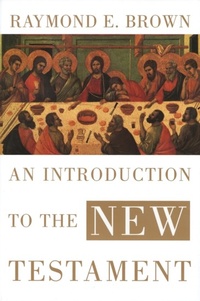
Introduction to the New Testament
1st Edition
Published on 1. August 2015
925 pages
978-0-300-17458-8 (ISBN)
Description

From the experience of a lifetime of scholarship, preaching, teaching, and writing, Raymond E. Brown covers the entire scope of the New Testament with ease and clarity. He walks readers book by book through the basic content and issues of the New Testament. While a wealth of information is contained in these pages, the work's most impressive features are the basic summaries of each book, a historical overview of the ancient Greco-Roman world, discussions of key theological issues, and the rich supplementary materials, such as illustrative tables, maps, bibliographies, and appendixes. Using this basic data, Brown answers questions raised by today's readers, relates the New Testament to our modern world, and responds to controversial issues, such as those raised by the Jesus Seminar.Every generation needs a comprehensive, reliable Introduction to the New Testament that opens the biblical text to the novice. Raymond E. Brown's An Introduction to the New Testament is the most trustworthy and authoritative guidebook for a generation seeking to understand the Christian Bible.Universally acknowledged as the dean of New Testament scholarship, Father Brown is a master of his discipline at the pinnacle of his career. Who else could cover the entire scope of the New Testament with such ease and clarity? This gifted communicator conveys the heartfelt concern of a beloved teacher for his students, as he walks the reader through the basic content and issues of the New Testament. Those opening to the New Testament for the first time and those seeking deeper insights could not ask for more in a primer to the Christian Bible.
More details
Other editions
Additional editions
Raymond E. Brown
An Introduction to the New Testament
Book
10/1997
Yale University Press
€68.50
Shipment within 10-20 days
Content
- Cover
- Half Title
- Title
- Copyright
- Dedication
- Table of Contents
- Foreword and Acknowledgments
- INTRODUCTORY BACKGROUND MATERIAL
- Abbreviations
- Useful Information about the Bible as a Whole
- Chronological Table of People and Events Pertinent to the NT
- Maps of Palestine and the Mediterranean Area
- PART I: PRELIMINARIES FOR UNDERSTANDING THE NEW TESTAMENT
- Chapter 1. The Nature and Origin of the New Testament
- (A) The Nature of the New Testament
- (B) How the First Christian Books Were Written, Preserved, and Collected
- Bibliography
- Chapter 2. How To Read the New Testament
- (A) Survey of Methods of Interpretation (Hermeneutics)
- (B) Special Issues Raised by Views on Inspiration and Revelation
- (C) The Literal Sense
- (D) Wider Meanings beyond the Literal
- Bibliography
- Chapter 3. The Text of the New Testament
- (A) Manuscript1 Evidence for the Text
- (B) Observations about the Use of the Evidence
- Bibliography
- Chapter 4. The Political and Social World of New Testament Times
- (A) The Political World
- (B) The Social World
- Bibliography
- Chapter 5. The Religious and Philosophical World of New Testament Times
- (A) Jewish Religious World
- (B) NonJewish Religious World
- (C) Greco-Roman Philosophies, Philo, and Gnosticism
- Bibliography
- PART II: THE GOSPELS AND RELATED WORKS
- Chapter 6. Gospels in General
- Synoptic Gospels in Particular
- Use of the Word "Gospel"
- Origin of the Gospel Genre
- The Three Stages of Gospel Formation
- The Synoptic Problem
- The Existence of "Q"
- Bibliography
- Chapter 7. The Gospel According to Mark
- General Analysis of the Message
- Sources
- How To Interpret Mark
- Authorship
- Locale or Community Involved
- Date of Writing
- Issues and Problems for Reflection
- Bibliography
- Chapter 8. The Gospel According to Matthew
- General Analysis of the Message
- Sources and Compositional Features
- Authorship
- Locale or Community Involved
- Date of Writing
- Issues and Problems for Reflection
- Bibliography
- Chapter 9. The Gospel According to Luke
- General Analysis of the Message
- Sources and Compositional Features
- Authorship
- Locale or Community Involved
- Purpose
- Date of Writing
- Issues and Problems for Reflection
- Bibliography
- Chapter 10. The Acts of the Apostles
- General Analysis of the Message
- Sources and Compositional Features
- "Luke" the Historian
- Authorship
- Issues and Problems for Reflection
- Bibliography
- Chapter 11. The Gospel According to John
- Stylistic Features
- General Analysis of the Message
- Is John a Genuine Gospel? Combined Sources or Development of Tradition?
- Comparison of John to the Synoptic Gospels
- Unity and Cohesiveness of John
- Authorship and the Beloved Disciple
- Influences on Johannine Thought
- History of the Johannine Community
- Issues and Problems for Reflection
- Bibliography
- Chapter 12. First Epistle (Letter) of John
- General Analysis of the Message
- Composition
- Issues and Problems for Reflection
- Bibliography (Johannine Epistles and I John)
- Chapter 13. Second Letter of John
- The Background
- General Analysis of the Message
- Presbyters
- Issue for Reflection
- Bibliography
- Chapter 14. Third Letter of John
- General Analysis of the Message
- Diagnosis of the Situation
- Issue for Reflection
- Bibliography
- PART III: THE PAULINE LETTERS
- Chapter 15. Classifications and Format of New Testament Letters
- (A) Classifications
- (B) Format
- (1) Opening Formula (Praescriptio)
- (2) Thanksgiving
- (3) Body or Message
- (4) Concluding Formula
- (C) How This Volume Will Treat the Individual Letters
- Bibliography
- Chapter 16. General Issues in Paul's Life and Thought
- (A) The Life of Paul
- (B) The Theology of Paul
- Bibliography
- Chapter 17. An Appreciation of Paul
- (A) Images of Paul
- (B) Paul's Motivation
- (C) Paul's Living Heritage
- Chapter 18. First Letter to the Thessalonians
- The Background
- General Analysis of the Message
- Issues and Problems for Reflection
- Bibliography
- Chapter 19. Letter to the Galatians
- The Background
- General Analysis of the Message
- The Aftermath of Galatians in Paul's Career
- To Where and When?
- The "Faith [pistis] of Christ" (2:16, etc.)
- Issues and Problems for Reflection
- Bibliography
- Chapter 20. Letter to the Philippians
- The Background
- General Analysis of the Message
- Hymns in NT Letters and the Christological Hymn of 2:5-11
- From Where and When?
- Unity: One Letter or Two or Three?
- Issues and Problems for Reflection
- Bibliography
- Chapter 21. Letter to Philemon
- The Background
- General Analysis of the Message
- Social Import of Paul's View of Slavery
- From Where and When?
- Subsequent Career of Onesimus
- Issues and Problems for Reflection
- Bibliography
- Chapter 22. First Letter to the Corinthians
- The Background
- General Analysis of the Message
- Those Criticized by Paul at Corinth
- Paul's Critique of Fornicators and Homosexuals (6:9-10)
- Charisms at Corinth (Chaps. 12 and 14) and Today
- The "Hymn" to Love (Chap. 13)
- Paul and the Risen Jesus (Chap. 15)
- Issues and Problems for Reflection
- Bibliography
- Chapter 23. Second Letter to the Corinthians
- The Background
- General Analysis of the Message
- One Letter or a Compilation of Several Letters?
- Imagery in 4:16-5:10
- Paul's Collection of Money for Jerusalem (Chaps. 8-9)
- The Opponents or False Apostles in Chaps. 10-13
- Issues and Problems for Reflection
- Bibliography
- Chapter 24. Letter to the Romans
- The Background
- General Analysis of the Message
- The Unity of Romans and Chap. 16
- Justification/Uprightness/Righteousness/Justice
- Paul's View of Jewish Observance of the Law
- Original Sin and 5:12-21
- Issues and Problems for Reflection
- Bibliography
- Chapter 25. Pseudonymity and DeuteroPauline Writing
- (A) Pseudonymous Composition in General
- (B) Problems about Pseudonymity
- Bibliography
- Chapter 26. Second Letter to the Thessalonians
- General Analysis of the Message
- Did Paul Write II Thessalonians?
- The Purpose of II Thessalonians
- Issues and Problems for Reflection
- Bibliography
- Chapter 27. Letter to the Colossians
- The Background
- General Analysis of the Message
- The Christological Hymn (1:15-20)
- The False Teaching (2:8-23)
- Household Code (3:18-4:1)
- Did Paul Write Colossians?
- From Where and When?
- Issues and Problems for Reflection
- Bibliography
- Chapter 28. Epistle (Letter) to the Ephesians
- General Analysis of the Message
- Ecclesiology of Ephesians and Early Catholicism
- To Whom and By Whom?
- What Genre?
- Background of the Ideas
- Issues and Problems for Reflection
- Bibliography
- Chapter 29. Pastoral Letter: To Titus
- The Pastoral Letters in General: Title, Interrelationship
- The Background (of Titus)
- General Analysis of the Message
- Presbyter/bishops in the Pastorals
- Issues and Problems for Reflection
- Bibliography on the Pastoral Letters in General and on Titus
- Chapter 30. Pastoral Letter: The First to Timothy
- The Background
- General Analysis of the Message
- Who Wrote Titus and I Timothy?
- Implications of Pseudepigraphy for the Pastoral Letters
- Issues and Problems for Reflection
- Chapter 31. Pastoral Letter: The Second to Timothy
- II Timothy and Possibilities about the Pastorals
- General Analysis of the Message
- Inspired Scripture (3:15-16)
- Issues and Problems for Reflection
- Bibliography
- PART IV: THE OTHER NEW TESTAMENT WRITINGS
- Chapter 32. Letter (Epistle) to the Hebrews
- General Analysis of the Message
- Literary Genre, Structure
- Thought Milieu
- By Whom, From Where, and When?
- To Which Addressees?
- Issues and Problems for Reflection
- Bibliography
- Chapter 33. First Letter of Peter
- The Background
- General Analysis of the Message
- The Suffering Described: Imperial Persecution or Alienation?
- I Pet 3:19
- 4:6 and the Descent of Christ into Hell
- Relation to the Pauline Tradition
- From and To Whom, Where, and When?
- Issues and Problems for Reflection
- Bibliography
- Chapter 34. Epistle (Letter) of James
- The Background
- General Analysis of the Message
- Jas 2:24 and Paul on Faith and Works
- Jas and Matt on the Jesus Tradition
- Anointing the Sick (5:14-16)
- Literary Genre
- By and To Whom, Where, and When?
- Canonicity of Jas
- Issues and Problems for Reflection
- Bibliography
- Chapter 35. Letter (Epistle) of Jude
- The Background
- General Analysis of the Message
- Jude's Use of Noncanonical Literature
- Literary Genre
- By and To Whom, From Where, and When?
- Canonicity of Jude
- Bibliography
- Chapter 36. Second Epistle (Letter) of Peter
- The Background
- General Analysis of the Message
- By and To Whom, Where, and When?
- Canonicity and Early Catholicism
- Issues and Problems for Reflection
- Bibliography
- Chapter 37. The Book of Revelation (The Apocalypse)
- The Literary Genre of Apocalyptic
- General Analysis of the Message
- Structure of the Book
- The Role of Liturgy
- Millenarianism (The Thousand-Year Reign: 20:4-6)
- Authorship
- Date and Life-Situation: Persecution under Domitian?
- Issues and Problems for Reflection
- Bibliography
- APPENDIXES
- I. The Historical Jesus
- Two Hundred Years (1780-1980) of the Modern Quest
- After 1980: The Jesus Seminar and Related Scholars
- After 1980: Miscellaneous Views
- Evaluative Observations
- Bibliography
- II. Jewish and Christian Writings Pertinent to the NT
- Jewish Writings
- Christian (and Gnostic) Writings
- Bibliography
- INDEXES
- Bibliographical Index of Authors
- A
- B
- C
- D
- E
- F
- G
- H
- I
- J
- K
- L
- M
- N
- O
- P
- Q
- R
- S
- T
- U
- V
- W
- Y
- Z
- Index of Subjects
- A
- B
- C
- D
- E
- F
- G
- H
- I
- J
- K
- L
- M
- N
- O
- P
- Q
- R
- S
- T
- V
- W
- ILLUSTRATIVE TABLES
- 1. Chronology of People and Events Pertinent to the New Testament
- 2. Material Usually Allotted to Q
- 3. Luke's Infancy Narrative Structure
- 4. Luke's Use of Mark
- 5. Paul's Activities in the Letters and Acts
- 6. Pauline Chronology
- 7. Comparing Ephesians and Colossians
- 8. The Letters to the Angels of the Churches (Rev 2-3)
