

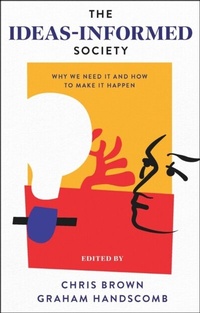
The Ideas-Informed Society
Why We Need It and How to Make It Happen
1st Edition
Published on 28. September 2023
384 pages
978-1-83753-010-6 (ISBN)
Description

Democratic societies thrive when citizens actively and critically engage with new ideas, developments and claims to truth. Not only can such practices result in more effective choice-making, but they can also lead to widespread support for progressive beliefs, such as social justice. With Western societies in the midst of environmental, social and political crises, it seems more pertinent than ever that citizens become 'ideas-informed'.
Presenting concepts from academia, industry, and practice, The Ideas-Informed Society closes the gap between the ideal of the ideas-informed society and the current reality. By exploring what it means to be ideas-informed and the benefits for both individuals and society, the chapters conceive what an ideal ideas-informed society would look like, what are the key ingredients of an ideas-informed society, and how to make it happen.
Presenting concepts from academia, industry, and practice, The Ideas-Informed Society closes the gap between the ideal of the ideas-informed society and the current reality. By exploring what it means to be ideas-informed and the benefits for both individuals and society, the chapters conceive what an ideal ideas-informed society would look like, what are the key ingredients of an ideas-informed society, and how to make it happen.
More details
Language
English
Place of publication
Bingley
United Kingdom
Target group
Professional and scholarly
File size
4,19 MB
ISBN-13
978-1-83753-010-6 (9781837530106)
Copyright in bibliographic data and cover images is held by Nielsen Book Services Limited or by the publishers or by their respective licensors: all rights reserved.
Schweitzer Classification
Other editions
Additional editions
Book
09/2023
Emerald Publishing Limited
€39.00
Shipment within 3-4 weeks
Persons
Chris Brown is Professor in Education at University of Warwick, UK and Distinguished Visiting Professor, University of Tuebingen. Chris' research focuses on improving outcomes for the disadvantaged and marginalised, and he has been awarded numerous prizes for its innovative nature. He is regularly invited to keynote at major international academic conferences and has presented his research at several literature and spoken word festivals.
Graham Handscomb is Honorary Professor with University College London (UCL) and Visiting Professor at University of Bolton, and Durham University, UK. He was previously Professor of Education and Dean of The College of Teachers. He is a fellow of numerous organisations and universities, has written many books and articles for over 30 years and is editor of a number of journals including Professional Development Today. Graham also runs a consultancy service where he provides interim management for medium to large organisations, including schools, local authorities and universities, to help implement complex business critical change in cost effective, tight timescales. He pioneered the concept of the Research Engaged School which has become an internationally adopted practice and policy model.
Graham Handscomb is Honorary Professor with University College London (UCL) and Visiting Professor at University of Bolton, and Durham University, UK. He was previously Professor of Education and Dean of The College of Teachers. He is a fellow of numerous organisations and universities, has written many books and articles for over 30 years and is editor of a number of journals including Professional Development Today. Graham also runs a consultancy service where he provides interim management for medium to large organisations, including schools, local authorities and universities, to help implement complex business critical change in cost effective, tight timescales. He pioneered the concept of the Research Engaged School which has become an internationally adopted practice and policy model.
Content
Foreword; Sir Anthony Seldon
?PART 1: The Concept of an Ideas-Informed Society
Chapter 1. Potent Ideas, Engaged Citizens, Healthy Societies; Chris Brown and Graham Handscomb
Chapter 2. The Value of Uncertainty and the Tyranny of the Closed Mind; Sir Les Ebdon OBE
Chapter 3. A Little Conceptual Housekeeping: ideas and their contexts; Lesley Saunders
Chapter 4. Battle of Ideas: Shaping the future through debate; Alastair Donald
PART 2: Truth-telling, Democracy and Community
Chapter 5. Battle of Ideas: Weaponising the Free Speech Fallacy; Sam Fowles
Chapter 6. Reversing Polarisation: How Challenging Ideas Can Help People Find Common Purpose; Sir Paul Collier
Chapter 7. When Ideas Fail; Iain King CBE
Chapter 8. Bearing the Truth and Building Truth-telling Communities; Helen Cameron
Chapter 9. Informed Society and Representative Democracy: the role of parliaments; Stephane Goldstein and Anne-Lise Harding
Chapter 10. Questions worth asking and conversations that matter: generating ideas in cohesive communities; Tim Slack and Fiona Thomas
Chapter 11. An entrepreneur's journey: delivering ideas to change a VUCA world; Paul Lindley OBE
Chapter 12. Education for Democracy: Schools as Communities of Inquiry; Vivienne Baumfield
PART 3: Creativity, Arts and the Environment
Chapter 13. In Praise of Inutility: Learning from Dickens; Judith Mossman
Chapter 14. The power of visual ideas - Searching for a sense of place and belonging ; Rafael Klein
Chapter 15. Curiosity and Stories: Working with art and archaeology to encourage the growth of cultural capital in local communities; John Castling and Jilly Johnston
Chapter 16. Getting the (Positive) Word Out: The IdeaSpies Platform ; Lynn Wood and Sabra Brock
Chapter 17. How to succeed in a volatile world? Utilising the 7 Pillars of Positive Resilience to make the ideas-informed society a reality; Belinda Board
Chapter 18. As we sit in the in-between; Benjamin Freud and Charlotte Hankin
PART 4: Education and empowering young people
Chapter 19. Ideas-informed? - Ideas are not enough!; Valerie Hannon and Anthony Mackay AM
Chapter 20. Unleashing ideas through Youth Led Social Innovation; Katherine Crisp
Chapter 21. Developing Ideas-Informed Young Citizens; John Baumber
Chapter 22. The Future Skills Society Needs and Its Critical Implications; Jude Hillary
Chapter 23. Education policy for a new age of enlightenment; Raphael Wilkins
Chapter 24. Ideas in Action: Critically Reflective Practice; Neil Thompson
Chapter 25. Turning Schools Inside Out - Community Curriculum Making; David Leat, Alison Whelan, Ulrike Thomas, Carolynn Kerr, and Ruth Webb
Chapter 26. The Case for Place: How we can improve our ideas about 'place' in education policymaking; Will Millard
?PART 1: The Concept of an Ideas-Informed Society
Chapter 1. Potent Ideas, Engaged Citizens, Healthy Societies; Chris Brown and Graham Handscomb
Chapter 2. The Value of Uncertainty and the Tyranny of the Closed Mind; Sir Les Ebdon OBE
Chapter 3. A Little Conceptual Housekeeping: ideas and their contexts; Lesley Saunders
Chapter 4. Battle of Ideas: Shaping the future through debate; Alastair Donald
PART 2: Truth-telling, Democracy and Community
Chapter 5. Battle of Ideas: Weaponising the Free Speech Fallacy; Sam Fowles
Chapter 6. Reversing Polarisation: How Challenging Ideas Can Help People Find Common Purpose; Sir Paul Collier
Chapter 7. When Ideas Fail; Iain King CBE
Chapter 8. Bearing the Truth and Building Truth-telling Communities; Helen Cameron
Chapter 9. Informed Society and Representative Democracy: the role of parliaments; Stephane Goldstein and Anne-Lise Harding
Chapter 10. Questions worth asking and conversations that matter: generating ideas in cohesive communities; Tim Slack and Fiona Thomas
Chapter 11. An entrepreneur's journey: delivering ideas to change a VUCA world; Paul Lindley OBE
Chapter 12. Education for Democracy: Schools as Communities of Inquiry; Vivienne Baumfield
PART 3: Creativity, Arts and the Environment
Chapter 13. In Praise of Inutility: Learning from Dickens; Judith Mossman
Chapter 14. The power of visual ideas - Searching for a sense of place and belonging ; Rafael Klein
Chapter 15. Curiosity and Stories: Working with art and archaeology to encourage the growth of cultural capital in local communities; John Castling and Jilly Johnston
Chapter 16. Getting the (Positive) Word Out: The IdeaSpies Platform ; Lynn Wood and Sabra Brock
Chapter 17. How to succeed in a volatile world? Utilising the 7 Pillars of Positive Resilience to make the ideas-informed society a reality; Belinda Board
Chapter 18. As we sit in the in-between; Benjamin Freud and Charlotte Hankin
PART 4: Education and empowering young people
Chapter 19. Ideas-informed? - Ideas are not enough!; Valerie Hannon and Anthony Mackay AM
Chapter 20. Unleashing ideas through Youth Led Social Innovation; Katherine Crisp
Chapter 21. Developing Ideas-Informed Young Citizens; John Baumber
Chapter 22. The Future Skills Society Needs and Its Critical Implications; Jude Hillary
Chapter 23. Education policy for a new age of enlightenment; Raphael Wilkins
Chapter 24. Ideas in Action: Critically Reflective Practice; Neil Thompson
Chapter 25. Turning Schools Inside Out - Community Curriculum Making; David Leat, Alison Whelan, Ulrike Thomas, Carolynn Kerr, and Ruth Webb
Chapter 26. The Case for Place: How we can improve our ideas about 'place' in education policymaking; Will Millard
