

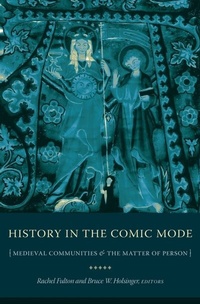
History in the Comic Mode
Medieval Communities and the Matter of Person
1st Edition
Published on 25. September 2015
408 pages
978-0-231-50847-6 (ISBN)
Description

In this groundbreaking collection, twenty-one prominent medievalists discuss continuity and change in ideas of personhood and community and argue for the viability of the comic mode in the study and recovery of history. These scholars approach their sources not from a particular ideological viewpoint but with an understanding that all topics, questions, and explanations are viable. They draw on a variety of sources in Latin, Arabic, French, German, Middle English, and more, and employ a range of theories and methodologies, always keeping in mind that environments are inseparable from the making of the people who inhabit them and that these people are in part constituted by and understood in terms of their communities.
Essays feature close readings of both familiar and lesser known materials, offering provocative interpretations of John of Rupescissa's alchemy; the relationship between the living and the saintly dead in Bernard of Clairvaux's sermons; the nomenclature of heresy in the early eleventh century; the apocalyptic visions of Robert of Uzès; Machiavelli's De principatibus; the role of "demotic religiosity" in economic development; and the visions of Elizabeth of Schönau. Contributors write as historians of religion, art, literature, culture, and society, approaching their subjects through the particular and the singular rather than through the thematic and the theoretical. Playing with the wild possibilities of the historical fragments at their disposal, the scholars in this collection advance a new and exciting approach to writing medieval history.
Essays feature close readings of both familiar and lesser known materials, offering provocative interpretations of John of Rupescissa's alchemy; the relationship between the living and the saintly dead in Bernard of Clairvaux's sermons; the nomenclature of heresy in the early eleventh century; the apocalyptic visions of Robert of Uzès; Machiavelli's De principatibus; the role of "demotic religiosity" in economic development; and the visions of Elizabeth of Schönau. Contributors write as historians of religion, art, literature, culture, and society, approaching their subjects through the particular and the singular rather than through the thematic and the theoretical. Playing with the wild possibilities of the historical fragments at their disposal, the scholars in this collection advance a new and exciting approach to writing medieval history.
All prices
More details
Other editions
Additional editions
Rachel Fulton | Bruce W. Holsinger
History in the Comic Mode
Medieval Communities and the Matter of Person
Book
05/2007
Columbia University Press
€76.86
Article not available at the moment
Persons
Rachel Fulton is associate professor of history at the University of Chicago. She is the author of From Judgment to Passion: Devotion to Christ and the Virgin Mary, 800-1200, and she is currently studying the making of prayer in the medieval West, with special emphasis on prayer to the Virgin Mother of God.Bruce Holsinger is professor of English and music at the University of Virginia. He is the author of Music, Body, and Desire in Medieval Culture: Hildegard of Bingen to Chaucer, as well as The Premodern Condition: Medievalism and the Making of Theory. He is writing a book on liturgy and vernacularity in premodern England.
Fulton is Associate Professor of History at the University of Chicago. Her Ph.D. is from Columbia. She is the author of From Judgment to Passion (Columbia, 2002), which won the Journal of the History of Ideas Morris D. Forkorsch Prize.Holsinger is Professor of English and Music at the University of Virginia. His Ph.D. is from Columbia. He is the author of Music, Body, and Desire in Medieval Culture (Stanford, 2002), which won the AMS's Philip Brett Award, the Modern Language Association's Prize for a First Book, and the Medieval Academy of America's John Nicholas Brown Prize, and of Premodernities: Archaeology of an Avant-Garde (Chicago, 2005).
Fulton is Associate Professor of History at the University of Chicago. Her Ph.D. is from Columbia. She is the author of From Judgment to Passion (Columbia, 2002), which won the Journal of the History of Ideas Morris D. Forkorsch Prize.Holsinger is Professor of English and Music at the University of Virginia. His Ph.D. is from Columbia. He is the author of Music, Body, and Desire in Medieval Culture (Stanford, 2002), which won the AMS's Philip Brett Award, the Modern Language Association's Prize for a First Book, and the Medieval Academy of America's John Nicholas Brown Prize, and of Premodernities: Archaeology of an Avant-Garde (Chicago, 2005).
Content
List of Illustrations
Acknowledgments
Introduction: Medieval Communities and the Matter of Person, by Bruce Holsinger and Rachel Fulton
Part I. Saints, Visionaries, and the Making of Holy Persons
1. Forgetting Hathumoda: The Afterlife of the First Abbess of Gandersheim, by Frederick S. Paxton
2. "If one member glories.": Community Between the Living and the Saintly Dead in Bernard of Clairvaux's Sermons for the Feast of All Saints, by Anna Harrison
3. The Pope's Shrunken Head: The Apocalyptic Visions of Robert of Uzès, by Raymond Clemens
4. Thomas of Cantimpré and Female Sanctity, by John Coakley
5. The Changing Fortunes of Angela of Foligno, Daughter, Mother, and Wife, by Catherine M. Mooney
6. "A Particular Light of Understanding": Margaret of Cortona, the Franciscans, and a Cortonese Cleric, by Mary Harvey Doyno
Part II. Community, Cultus, and Society
7. Fragments of Devotion: Charters and Canons in Aquitaine, 876-1050, by Anna Trumbore Jones
8. Naming Names: The Nomenclature of Heresy in the Early Eleventh Century, by Thomas Head
9. Economic Development and Demotic Religiosity, by Richard Landes
10. Back-Biting and Self-Promotion: The Work of Merchants of the Cairo Geniza, by Jessica Goldberg
11. John of Salisbury and the Civic Utility of Religion, by Mark Silk
Part III. Cognition, Composition, and Contagion
12. Understanding Contagion: The Contaminating Effect of Another's Sin, by Susan R. Kramer
13. Calvin's Smile, by John Jeffries Martin
14. Why All the Fuss About the Mind? A Medievalist's Perspective on Cognitive Theory, by Anne L. Clark
15. Aspects of Blood Piety in a Late-Medieval English Manuscript: London, British Library MS Additional 37049, by Marlene Villalobos Hennessy
16. Machiavelli, Trauma, and the Scandal of The Prince: An Essay in Speculative History, by Alison K. Frazier
Part IV. The Matter of Person
17. Low Country Ascetics and Oriental Luxury: Jacques de Vitry, Marie of Oignies, and the Treasures of Oignies, by Sharon Farmer
18. Crystalline Wombs and Pregnant Hearts: The Exuberant Bodies of the Katharinenthal Visitation Group, by Jacqueline E. Jung
19. Gluttony and the Anthropology of Pain in Dante's Inferno and Purgatorio, by Manuele Gragnolati
20. "Human Heaven": John of Rupescissa's Alchemy at the End of the World, by Leah DeVun
21. Magic, Bodies, University Masters, and the Invention of the Late Medieval Witch, by Steven P. Marrone
Afterword: History in the Comic Mode, by Rachel Fulton and Bruce Holsinger
Notes
Contributors
Index
Acknowledgments
Introduction: Medieval Communities and the Matter of Person, by Bruce Holsinger and Rachel Fulton
Part I. Saints, Visionaries, and the Making of Holy Persons
1. Forgetting Hathumoda: The Afterlife of the First Abbess of Gandersheim, by Frederick S. Paxton
2. "If one member glories.": Community Between the Living and the Saintly Dead in Bernard of Clairvaux's Sermons for the Feast of All Saints, by Anna Harrison
3. The Pope's Shrunken Head: The Apocalyptic Visions of Robert of Uzès, by Raymond Clemens
4. Thomas of Cantimpré and Female Sanctity, by John Coakley
5. The Changing Fortunes of Angela of Foligno, Daughter, Mother, and Wife, by Catherine M. Mooney
6. "A Particular Light of Understanding": Margaret of Cortona, the Franciscans, and a Cortonese Cleric, by Mary Harvey Doyno
Part II. Community, Cultus, and Society
7. Fragments of Devotion: Charters and Canons in Aquitaine, 876-1050, by Anna Trumbore Jones
8. Naming Names: The Nomenclature of Heresy in the Early Eleventh Century, by Thomas Head
9. Economic Development and Demotic Religiosity, by Richard Landes
10. Back-Biting and Self-Promotion: The Work of Merchants of the Cairo Geniza, by Jessica Goldberg
11. John of Salisbury and the Civic Utility of Religion, by Mark Silk
Part III. Cognition, Composition, and Contagion
12. Understanding Contagion: The Contaminating Effect of Another's Sin, by Susan R. Kramer
13. Calvin's Smile, by John Jeffries Martin
14. Why All the Fuss About the Mind? A Medievalist's Perspective on Cognitive Theory, by Anne L. Clark
15. Aspects of Blood Piety in a Late-Medieval English Manuscript: London, British Library MS Additional 37049, by Marlene Villalobos Hennessy
16. Machiavelli, Trauma, and the Scandal of The Prince: An Essay in Speculative History, by Alison K. Frazier
Part IV. The Matter of Person
17. Low Country Ascetics and Oriental Luxury: Jacques de Vitry, Marie of Oignies, and the Treasures of Oignies, by Sharon Farmer
18. Crystalline Wombs and Pregnant Hearts: The Exuberant Bodies of the Katharinenthal Visitation Group, by Jacqueline E. Jung
19. Gluttony and the Anthropology of Pain in Dante's Inferno and Purgatorio, by Manuele Gragnolati
20. "Human Heaven": John of Rupescissa's Alchemy at the End of the World, by Leah DeVun
21. Magic, Bodies, University Masters, and the Invention of the Late Medieval Witch, by Steven P. Marrone
Afterword: History in the Comic Mode, by Rachel Fulton and Bruce Holsinger
Notes
Contributors
Index

