

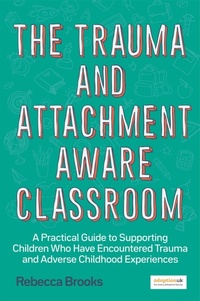
The Trauma and Attachment-Aware Classroom
A Practical Guide to Supporting Children Who Have Encountered Trauma and Adverse Childhood Experiences
Published on 19. September 2019
200 pages
978-1-78592-877-2 (ISBN)
Description

Trauma can have a significant impact on the stability of a child's development and can put additional pressures on the education staff working with them.
Showing you how you can best support children who have experienced adverse childhood experiences, this guide is full of practical guidance on how you can adapt your teaching with this group.
Covering a range of issues a child may have, such as foetal alcohol spectrum disorder, pathological demand avoidance, attachment difficulties and many more, this book provides the trauma-informed tools you need to care for these children and to give the best possible opportunities from their education.
It also addresses the difference children may experience in learning, how they behave, how teachers can ensure home--school cooperation, and how teachers can act in a trauma-informed manner.
Showing you how you can best support children who have experienced adverse childhood experiences, this guide is full of practical guidance on how you can adapt your teaching with this group.
Covering a range of issues a child may have, such as foetal alcohol spectrum disorder, pathological demand avoidance, attachment difficulties and many more, this book provides the trauma-informed tools you need to care for these children and to give the best possible opportunities from their education.
It also addresses the difference children may experience in learning, how they behave, how teachers can ensure home--school cooperation, and how teachers can act in a trauma-informed manner.
More details
Edition
Digital original
Language
English
Place of publication
London
United Kingdom
Target group
College/higher education
Professional and scholarly
Primary & secondary/elementary & high school
Edition type
Digital original
File size
1,08 MB
ISBN-13
978-1-78592-877-2 (9781785928772)
Copyright in bibliographic data and cover images is held by Nielsen Book Services Limited or by the publishers or by their respective licensors: all rights reserved.
Schweitzer Classification
Other editions
Additional editions
Rebecca Brooks
The Trauma and Attachment-Aware Classroom
A Practical Guide to Supporting Children Who Have Encountered Trauma and Adverse Childhood Experiences
Book
09/2019
Jessica Kingsley Publishers
€26.50
Shipment within 15-20 days
Person
Rebecca Brooks is an adoptive parent, former teacher and Adoption UK's Education Policy Advisor.
Content
- Cover
- Title Page
- Contents
- A Note About the UK Education System
- Introduction
- 1. The Impact of Early Trauma
- Trauma, attachment and the developing child
- When attachments are insecure
- Toxic stress
- Toxic shame
- Beyond attachment
- 2. Diagnoses and Difficulties
- Developmental Trauma Disorder
- Complex Post Traumatic Stress Disorder
- Attachment difficulties and disorders
- Foetal Alcohol Spectrum Disorders
- Pathological Demand Avoidance
- Speech, language and communication
- Sensory processing difficulties
- Executive functioning difficulties
- Physical development
- Special educational needs
- 3. Relationships are Key
- The home-school relationship
- Key attachment figures in school
- Relationships for all
- Relationships with peers
- 4. Thinking Differently
- PACE
- Non-Violent Resistance
- Windows of tolerance
- Regulate, Relate, Reason
- 5. Settling In
- Setting up your room
- Gathering information
- Building relationships
- Expectations
- Effective interventions and support from the start
- 6. Rewards and Consequences
- Systems of escalating consequences
- Time out, detentions, internal and external exclusions
- Public behaviour tracking and classroom wall charts
- Praise and rewards
- 7. Transitions
- Transitions from home to school and school refusal
- Transitions from one activity to another
- Transitions from school terms to holidays and back again
- Transitions to a new class or school
- 8. Tricky Curriculum
- Curriculum hotspots
- Reading material and films
- Mothers' Day and Fathers' Day
- 9. Variety and Change
- Theme days and special weeks
- Christmas and other celebrations
- School trips and holidays
- Staff absence
- 10. Classroom Confrontations
- Angry outbursts and violence
- Rudeness and arguing
- Lying
- The silent treatment, quiet defiance and stubborn refusals
- Running and hiding
- Low-level disruption, chatter and noise
- Stealing and damaging property
- Over-reacting, crying and whining
- 11. Outside Spaces
- Unstructured free time
- Moving around school
- Bullying and peer relationships
- Food issues
- Toilet troubles
- 12. Testing Times
- Homework and revision
- Coursework and timed work
- Coping with tests and exams
- 13. Secondary Trauma is Real
- References
- Further Resources
- Subject Index
- Author Index
- Join Our Mailing List
- Acknowledgements
- Copyright ©
- Also Co-Published With Adoption UK
